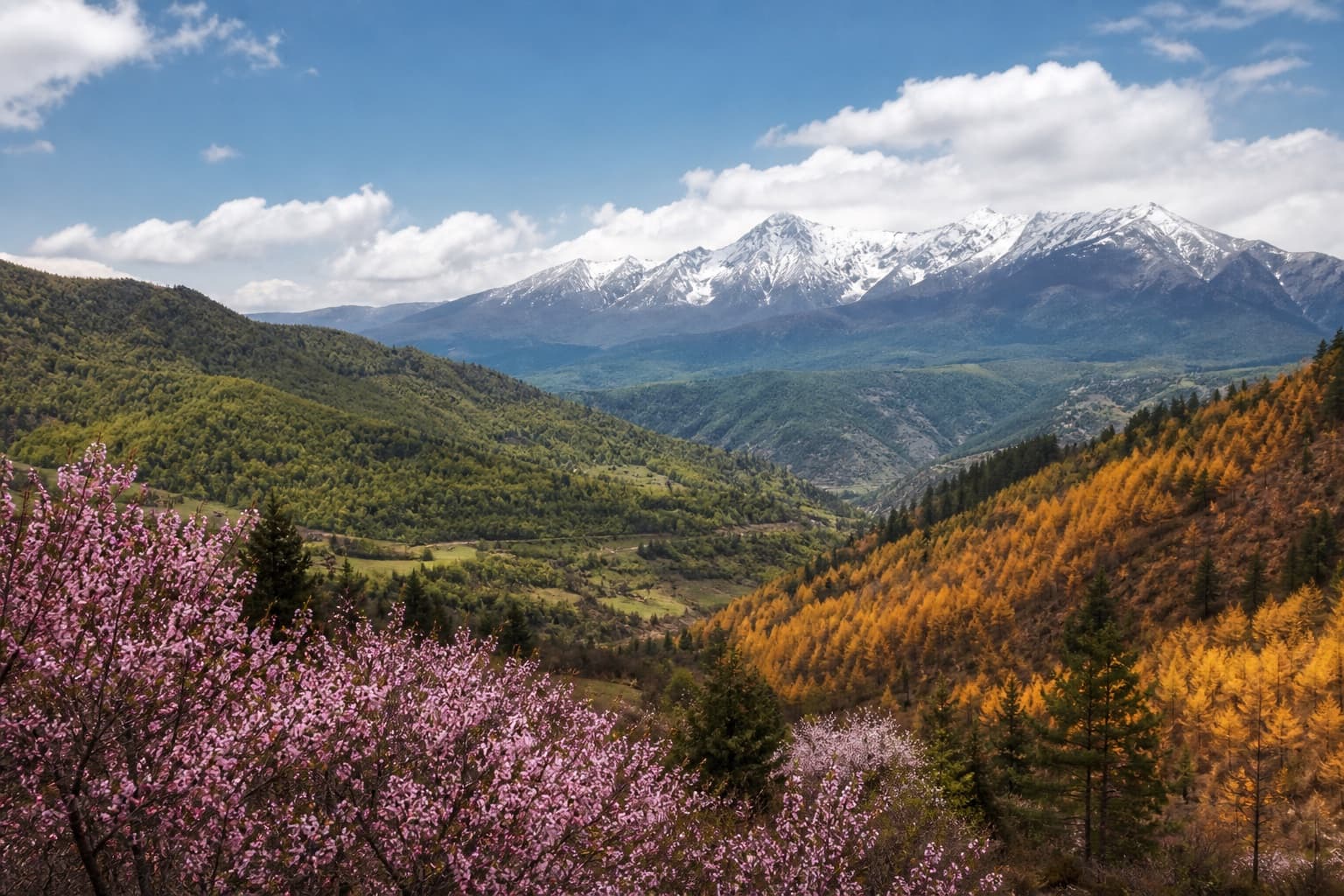
There is no single best month for all of Yunnan
Yunnan’s climate changes more with elevation and latitude than the province name suggests. Tropical Xishuangbanna, spring-like Kunming, the Dali–Lijiang plateau, high Shangri-La, and the deep Nujiang valleys can feel like different countries on the same date.
The best time depends on the route and the experience: reflective rice terraces, alpine flowers, tea landscapes, mushrooms, autumn color, warm winter markets, hiking, or clear mountain views. Start with the region, then choose the season—not the other way around.
The broad seasonal pattern
Winter and early spring are generally drier, with clearer light in many regions but cold nights at altitude
Late spring brings flowers and greener landscapes, while high mountain areas may still be cold or snowy
Summer is lush and often comfortable in the highlands, but it is also the main rainy and road-risk season
Autumn can bring harvest landscapes and clearer periods, though the timing varies by elevation and year
Southern Yunnan stays warmer than the northwest and can work especially well for winter travel
Spring: terraces, flowers, and sharp temperature changes
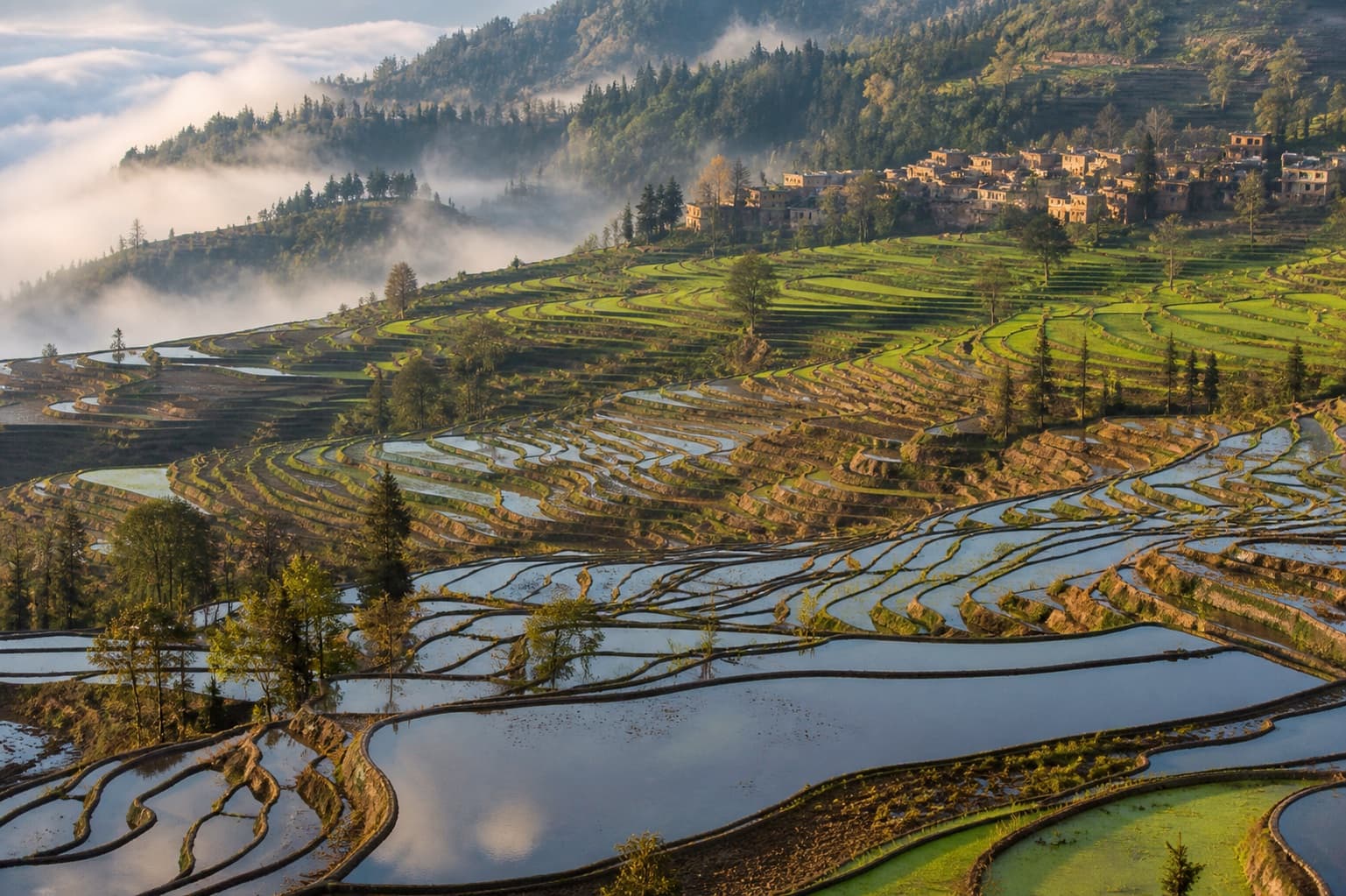
Spring is useful for combining central and southern Yunnan. Water-filled terraces around Yuanyang can create mirror-like views before planting patterns change, while eastern Yunnan and lower valleys develop strong flower seasons. Dali and Kunming often feel comfortable during the day.
High-altitude northwest Yunnan can still be wintry. Snow, cold wind, and large day–night temperature differences may remain even when lower cities feel mild. Festival dates and flowering peaks shift each year, so treat them as reasons to monitor current reports rather than promises attached to a fixed week.
Summer: green highlands and serious rain planning
Summer can be beautiful in Shangri-La, the Dali–Lijiang region, tea country, and rainforest areas. Alpine meadows and farmland are green, waterfalls carry more water, and higher elevations can offer relief from heat elsewhere in China.
The trade-off is rain. Strong or prolonged rainfall can cause poor visibility, slippery trails, flight disruption, road closures, landslides, rockfall, and debris flows. Nujiang, Deqin, remote valleys, gorge roads, and other mountain routes need flexible timing and current local advice. Never continue into an area covered by an official warning simply because the hotel is already paid.
Autumn: harvest, food, and changing mountain conditions
Autumn often suits travelers who want markets, harvest landscapes, wild-mushroom dishes at the safer end of the season, tea and coffee country, and a mix of cultural and outdoor travel. The light can be clearer after the main rains, but there is no guaranteed ‘clear season’ across the whole province.
Ginkgo color in Tengchong, rice harvests, and village celebrations occur according to weather and local calendars. At high elevation, nights cool quickly and early snow is possible. A route that works in Kunming and Dali may need winter layers by the time it reaches Shangri-La or Deqin.
Winter: warm south, dry-season light, and cold highlands
Winter is one of the clearest examples of Yunnan’s vertical climate. Xishuangbanna, Hekou, and other lower southern areas can provide warm days, tropical gardens, tea landscapes, and busy markets. Kunming attracts migratory birds and often has strong daytime sun.
Northwestern Yunnan can be cold, dry, windy, and icy. Mountain roads, shaded paths, and high passes may be affected by snow or freeze–thaw conditions. Some rural accommodation is less heated than international visitors expect. Confirm heating, hot water, vehicle suitability, and whether the intended road or trail is operating before building a winter route around a single scenic viewpoint.
Pack in layers for vertical climate
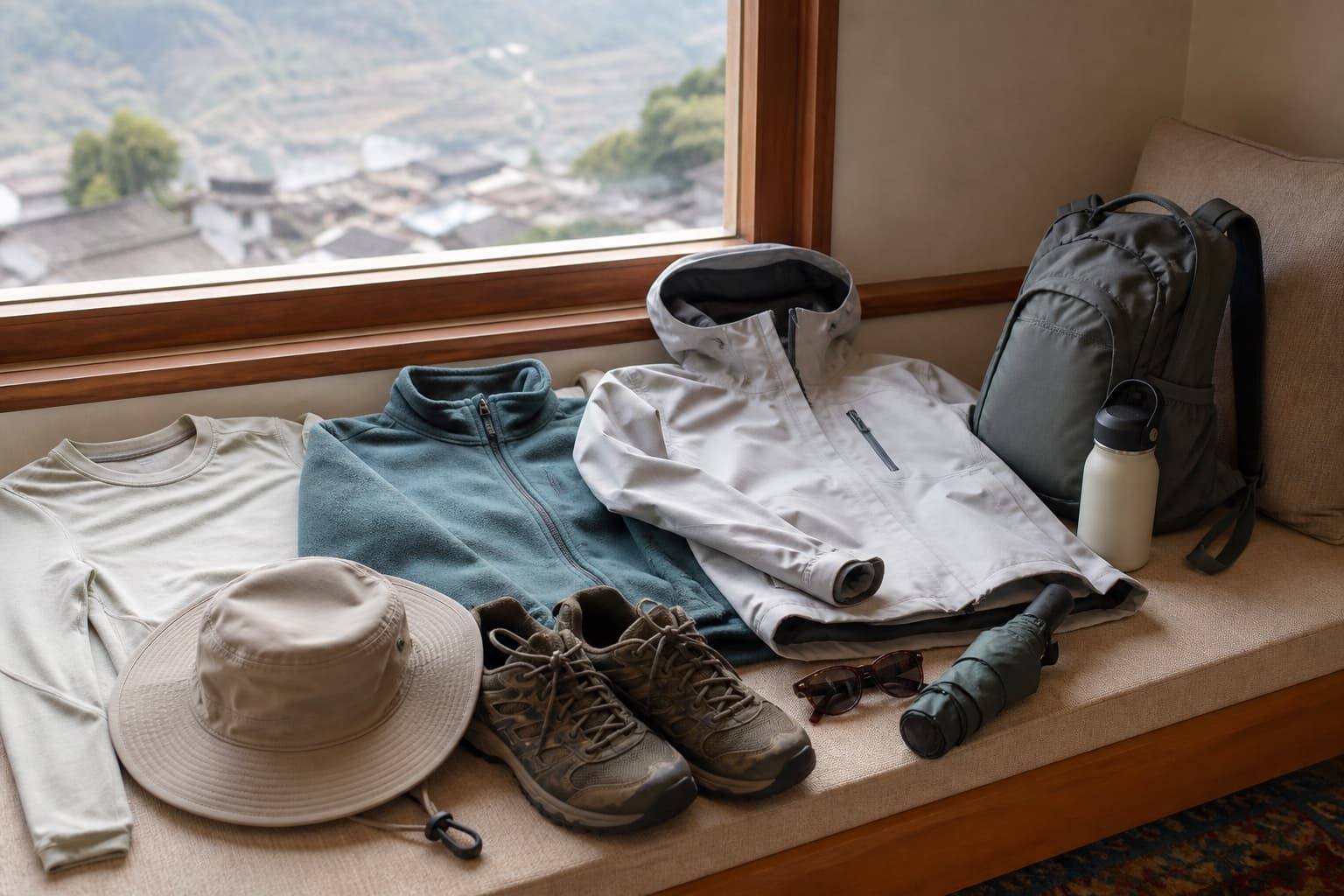
Use a light base layer, an insulating layer, and wind or rain protection that can be combined. Add sun protection because elevation and clear days can make exposure stronger than the air temperature suggests.
Rainy-season travelers need shoes with grip, a waterproof layer that can be reached quickly, and protection for documents and electronics. Winter travelers need warm evening layers even when the daytime forecast looks pleasant.
Check the least urban and highest stop on the route. That place—not the arrival city—should determine the minimum packing standard.
Match the season to the experience
Rice terraces: check current planting, water, and harvest conditions rather than assuming one universal date
Alpine flowers: late spring and summer are broad windows, but elevation and weather decide the actual peak
Wild mushrooms: eat them only when properly identified and fully cooked by a responsible restaurant
Ginkgo and autumn color: confirm locally shortly before travel because the peak can be brief
Birdwatching: migration patterns and viewing rules vary by site and year
Festivals: use official local announcements for dates, access controls, and visitor arrangements
Crowds are a calendar issue as much as a weather issue
Chinese public holidays, school holidays, major festivals, and short-lived natural events can produce demand that is not obvious from the season alone. Transport and well-located accommodation may become difficult even when the overall month is considered shoulder season.
If the trip overlaps a national holiday or a famous event, reserve the critical pieces early and keep the route simple. Outside peak periods, do not assume every hotel, trail, seasonal restaurant, or scenic shuttle operates at full frequency. Lower demand can mean a quieter trip, but it can also mean reduced services.