

Choose accommodation by role, not only by price
This guide focuses on accommodation in mainland China; Hong Kong and Macao use different entry and local-registration systems. A property can be a city base, an airport buffer, a rail connection, a historic experience, a resort, or a rural stay. Decide which role matters before comparing room photographs.
In a large city, distance to the right metro line or neighborhood can matter more than distance to the geographic center. In an old town or scenic area, vehicle access, stairs, noise, and the walk from the drop-off point may matter more than the view.
Common accommodation styles
International and full-service hotels for predictable facilities, staffed reception, and transport support
Independent city hotels for location and value, with facilities varying by property
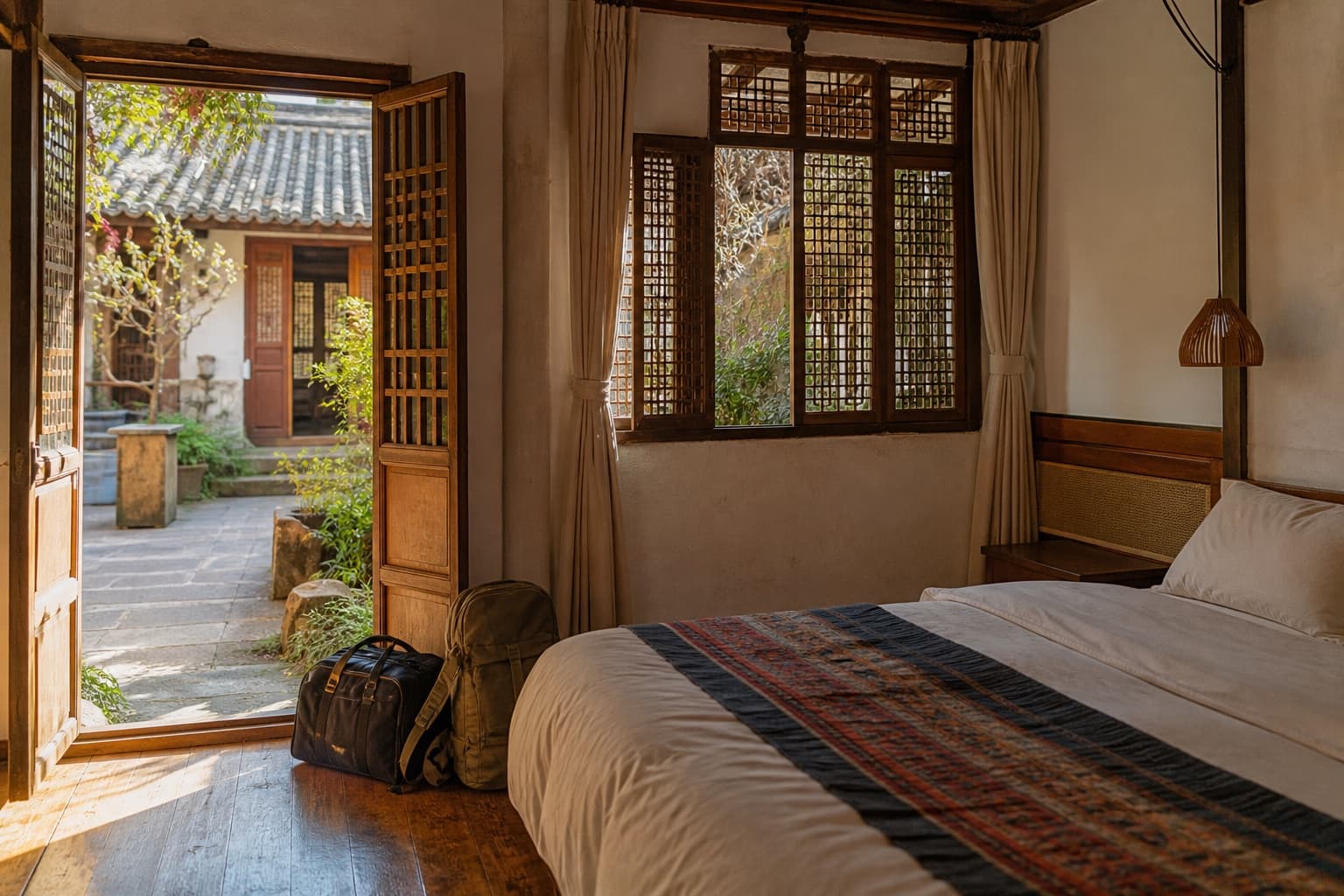
Historic courtyard, old-town, hutong, water-town, or heritage stays where access and soundproofing need extra checks
Rural guesthouses and homestays where registration, road access, meals, heating, and language support should be confirmed
Resorts and scenic-area properties where distance from town can increase both immersion and transfer cost
Apartments and private homes, which require the host and traveler to understand non-hotel accommodation registration
Major cities: choose the neighborhood that serves the itinerary
For Beijing, Shanghai, Xi’an, Chengdu, Guangzhou, and other large cities, map the hotel against the places you will actually visit, the station or airport used, and the transport line that connects them. A central address can still create long daily crossings.
Check the correct branch, entrance, and Chinese address. Hotels with similar English names may be far apart, and a map pin may point to the building rather than the vehicle entrance.
Historic quarters: atmosphere comes with practical trade-offs
Old towns, hutongs, water towns, and heritage districts can offer character and evening atmosphere, but they may also include pedestrian lanes, steps, restricted vehicle access, small rooms, or late-night noise. Ask for the exact walking distance from the drop-off point and whether staff can help with luggage.
A modern district just outside the historic core can be better for families, early departures, accessibility, and drivers. Choose intentionally rather than assuming the most photographed street is the most convenient base.
Regional climate changes what comfort means
Northern winters may require strong heating and protection from dry indoor air. Southern summers can make effective air-conditioning, ventilation, and mosquito control important. High-altitude stays may be cold at night, while tropical and coastal areas can be humid.
Confirm the features that matter to the actual route: heating or air-conditioning, lift access, hot-water reliability, window screens, power, bathroom layout, breakfast timing, and distance to medical or transport services.
Passport registration and non-hotel stays
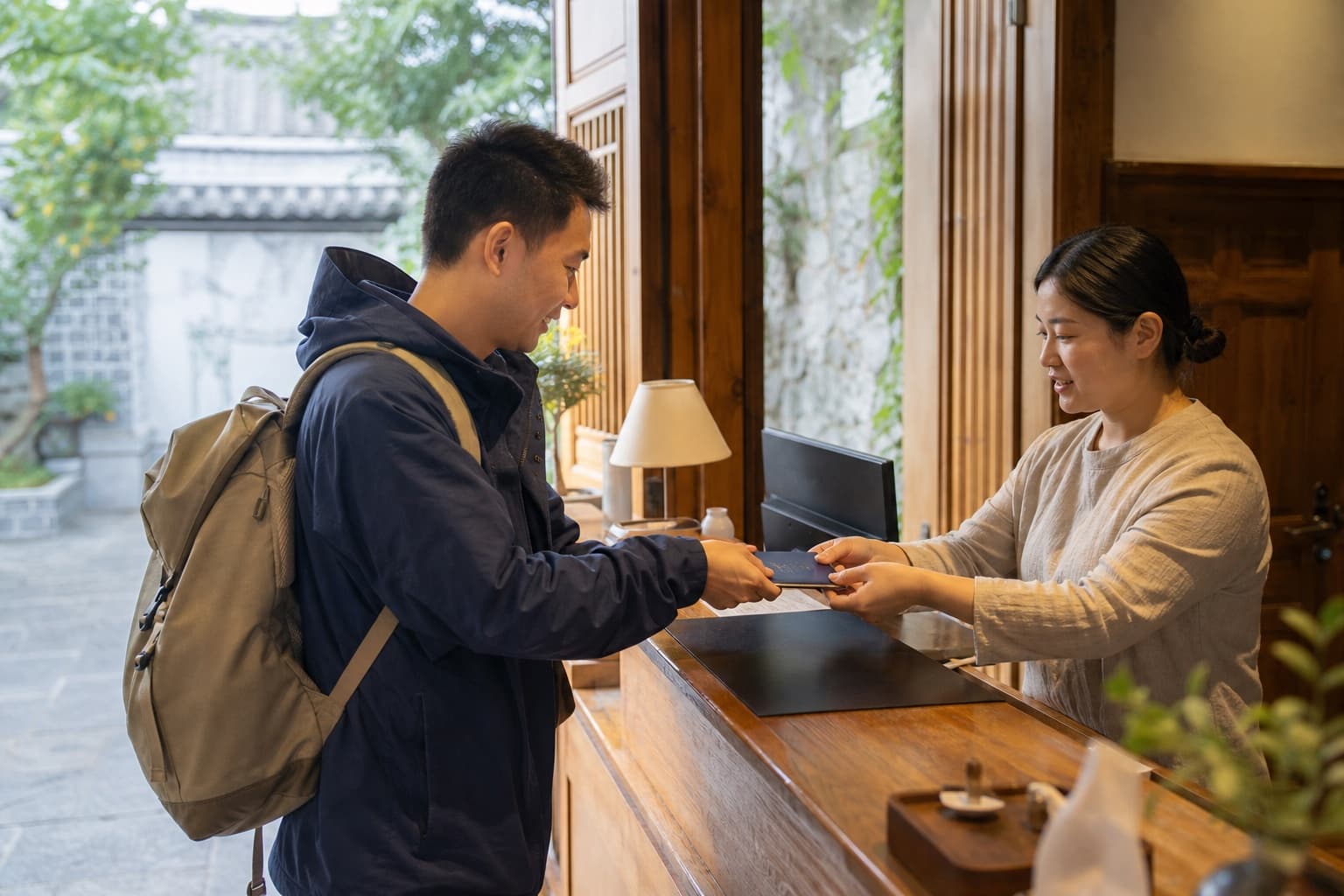
In mainland China, hotels register foreign guests at check-in using a valid passport or other accepted travel document. Keep the original document available and make sure the booking name matches it.
When staying in a private home, rental, or other non-hotel accommodation, the traveler or host must complete accommodation registration within 24 hours of arrival. Since September 2026, the National Immigration Administration’s online registration service is available nationwide and has the same legal effect as in-person registration. For a first registration at a private residence, the NIA recommends completing it with the host’s assistance.
Check the room details that photographs hide
Exact room and bed type, not only the room category name
Lift access, stairs, thresholds, bathroom layout, and walking distance from vehicle drop-off
Heating, air-conditioning, ventilation, hot water, and blackout curtains for the season
Breakfast hours and options for early departures or dietary needs
Noise from roads, nightlife, courtyards, construction, or thin walls
Laundry, luggage storage, family-room rules, and extra-bed conditions
Accepted payment methods, deposit, cancellation terms, passport check-in, and the accommodation-registration procedure
Rural stays are part of the itinerary
A rural guesthouse may provide access to villages, landscapes, trailheads, farms, or community experiences that cannot be recreated by a day trip. It can also mean limited English support, simpler rooms, fewer meal choices, weak signal, and a longer final approach.
Confirm road access, luggage handling, heating or cooling, meals, bathroom arrangements, mobile coverage, power, and emergency transport. The right property is one whose limitations are understood before arrival.
Read the booking terms as carefully as the reviews
Confirm the total price, taxes, breakfast, deposits, cancellation deadline, refund method, room occupancy, child policy, and whether the booking platform or property will process payment. Save the property’s direct phone number and Chinese address.
A platform label about passport check-in can be operationally useful, but it is not a special legal qualification. Contact the property when the stay is unusual, remote, newly opened, or critical to the itinerary, and confirm the practical check-in and registration procedure.