The city is more than five metres long and less than twenty-five centimetres high. It cannot be seen properly in one glance. To enter Zhang Zeduan’s Along the River During the Qingming Festival, a viewer opens a handscroll section by section, traditionally moving from right to left. The visible portion changes; what has passed is rolled away.
That physical rhythm is the painting’s first story device. The work begins beyond the city, gathers people and traffic along the river, concentrates danger around a crowded bridge, then crosses a gate into streets dense with exchange. The viewer does not hover above a finished map. The viewer travels.
Digital panoramas can reveal the entire composition, but they flatten the experience. The most useful way to read the scroll is to let it withhold the city until the journey earns it.
A City That Fits Between Two Hands
The Palace Museum records the painting at approximately 24.8 centimetres high and 528 centimetres long. Ink and light colour move across silk. The low format discourages one fixed viewpoint. Buildings turn slightly; roads bend; riverbanks rise and fall. The eye changes position as it advances.
The title is famous, but its precise relationship to the Qingming season and festival has generated long scholarly debate. The painting should not be treated as a literal timetable of one holiday morning. Nor should it be treated as a photograph of every class and district in Northern Song Bianjing, present-day Kaifeng.
It is an authored construction of movement and urban life. Selection is part of its evidence.
Follow the River
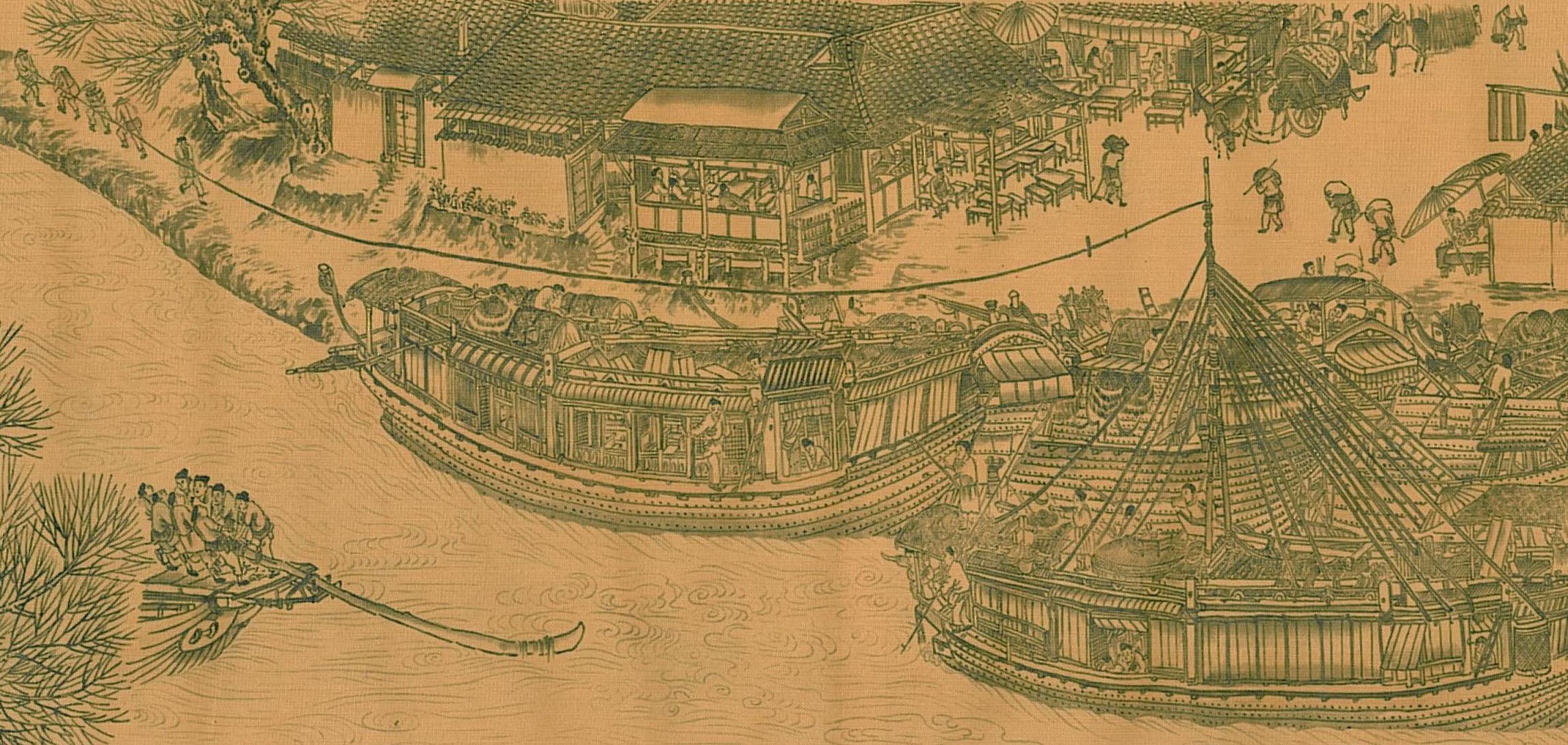
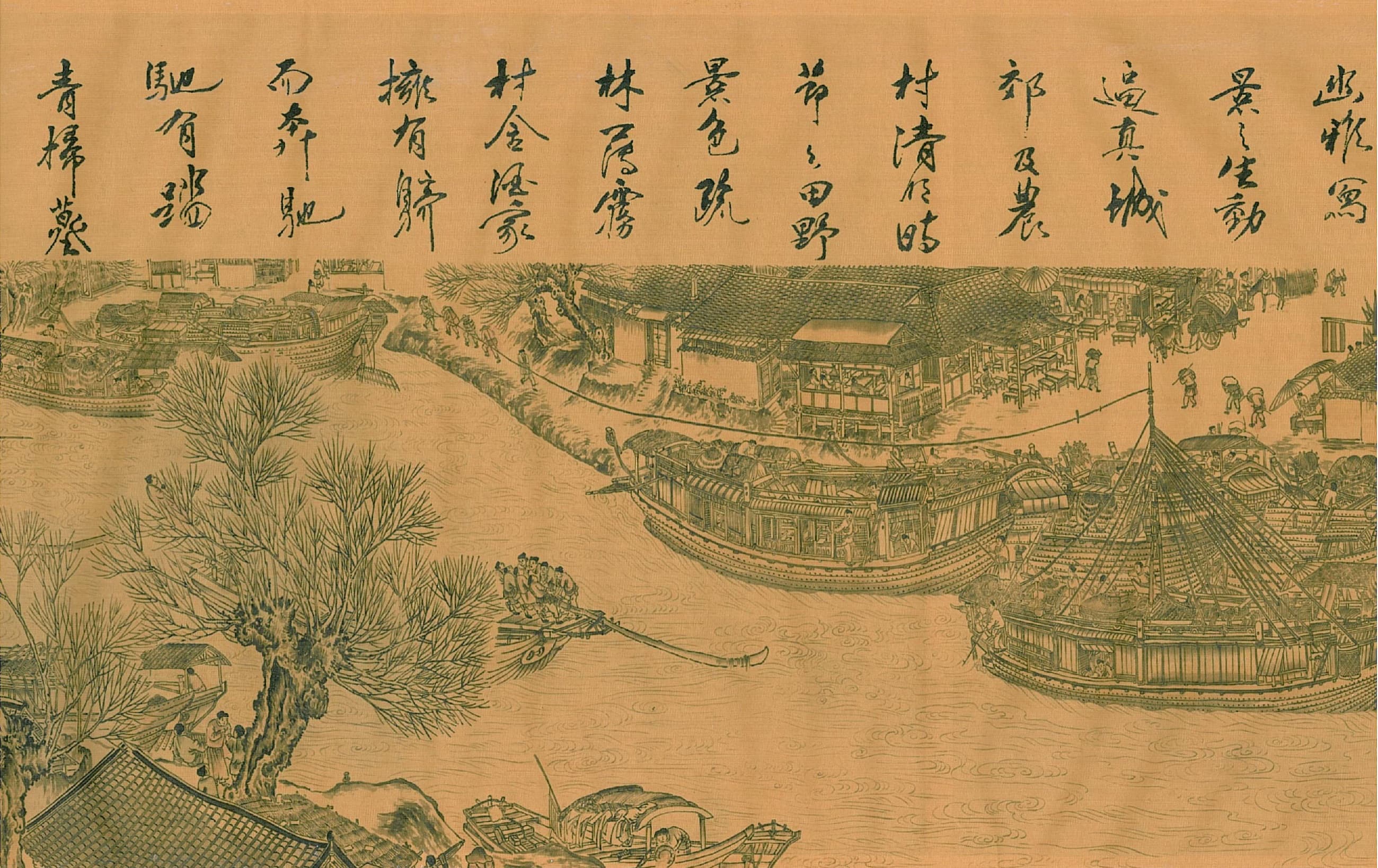
The river supplies a line through the painting and an engine for its economy. Boats carry goods. People haul vessels from shore. Buildings cluster where water traffic meets land. Each activity is small, but repetition creates a city dependent on movement.
Look closely at the bodies of the boatmen. Their effort prevents the elegant panorama from becoming weightless. Cargo has mass; current resists; transport requires labour. The scroll’s charm is inseparable from a working landscape.
The painting is often mined for facts about Song technology or commerce. Those details are valuable, but they remain details selected and arranged by an artist. A painted boat can show rigging and handling; it cannot by itself establish how every vessel operated.
Image: towboat detail from the original Northern Song handscroll. Zhang Zeduan / Wikimedia Commons, Public Domain; resized for web.
The Dangerous Moment at Rainbow Bridge
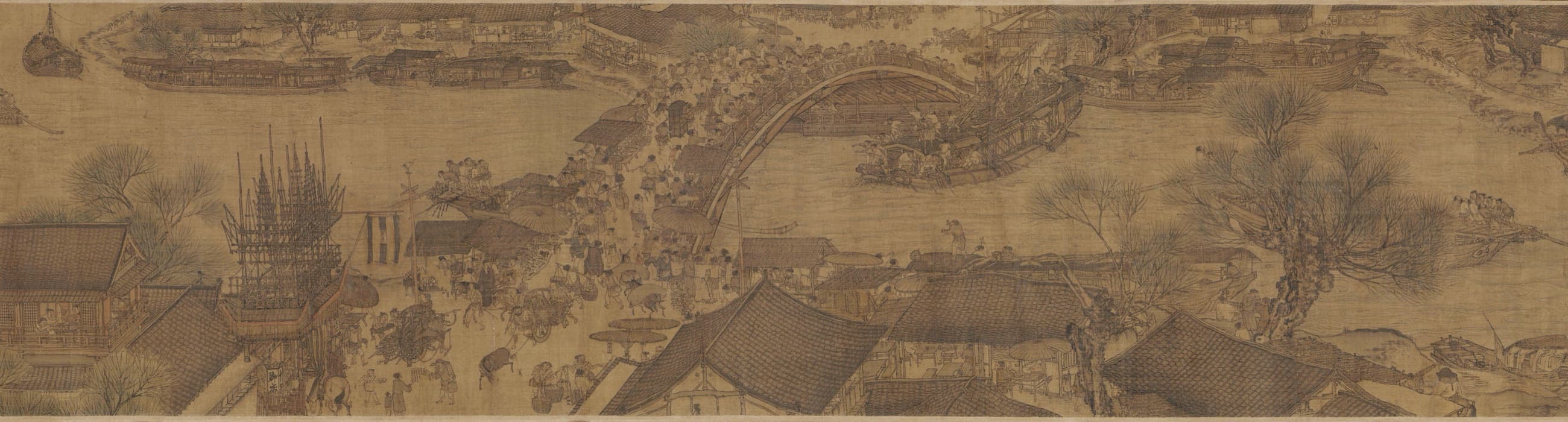
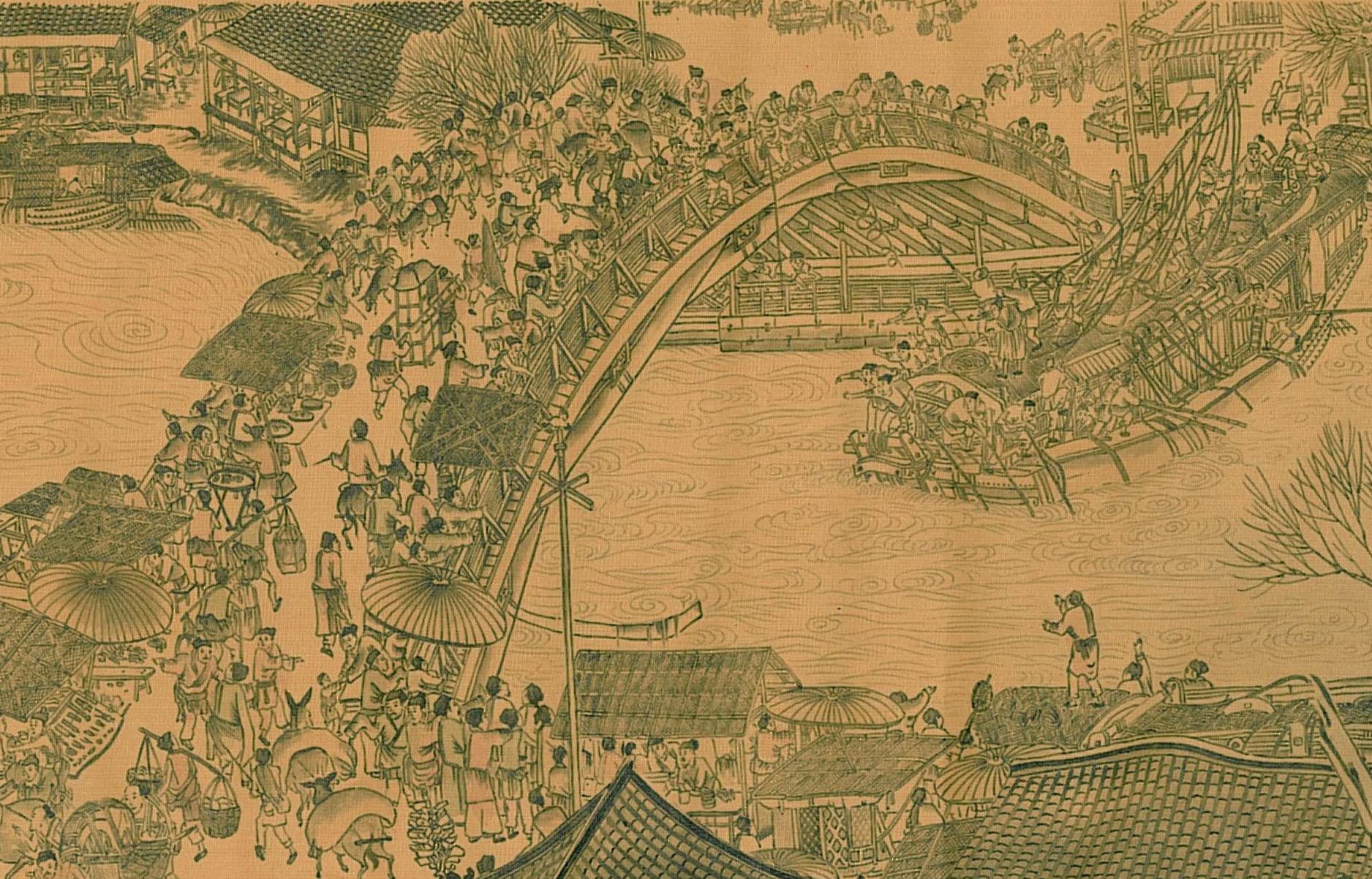
Near the scroll’s most famous bridge, a large vessel approaches with its mast lowered. Crew members strain to control it. People on the bridge lean, point and cluster at the rail. The eye reads the scene as an impending collision even though the painted moment never resolves.
That suspended danger concentrates the composition. River traffic, market activity, engineering and spectatorship occupy one place. The bridge is infrastructure and theatre at once. Its curve gathers pedestrians above the current while shops and traffic press against its approaches.
The scene also exposes the painter’s control of time. Different figures respond at slightly different moments. The viewer assembles those reactions into an event.
Through the Gate
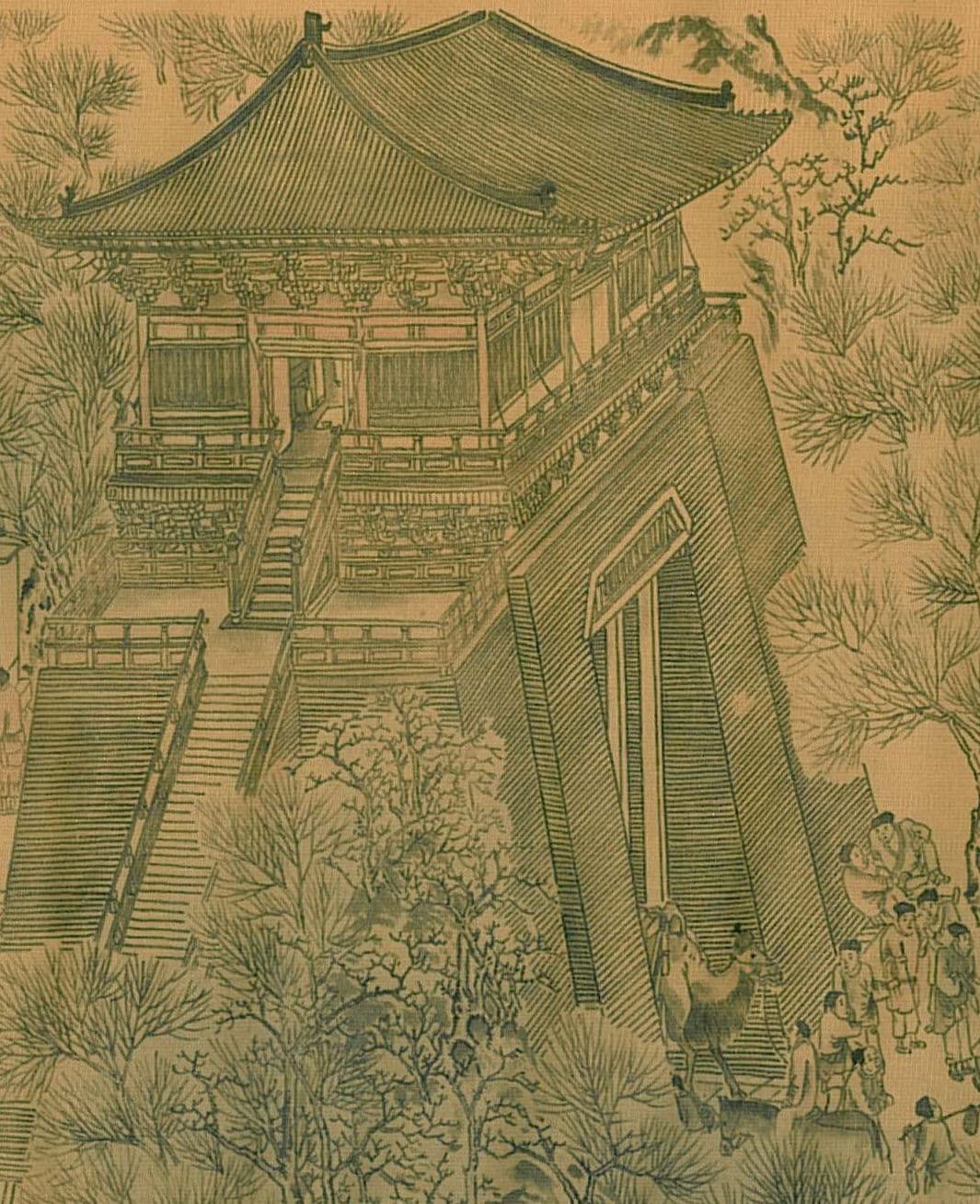
After the bridge, the river no longer carries the entire narrative. Roads, pack animals, carts and buildings direct the eye toward a major gate. Passing through it changes the scale of the journey. Walls that might look like a boundary in a map become a threshold experienced among traffic.
The gate does not deliver a symmetrical imperial avenue. Streets continue at angles. Shop signs, awnings, courtyards and upper rooms create partial views. The city is understood through obstruction as much as openness: one building hides another, and one group interrupts the next.
This is why the handscroll format matters. Urban space emerges through sequence rather than total command.
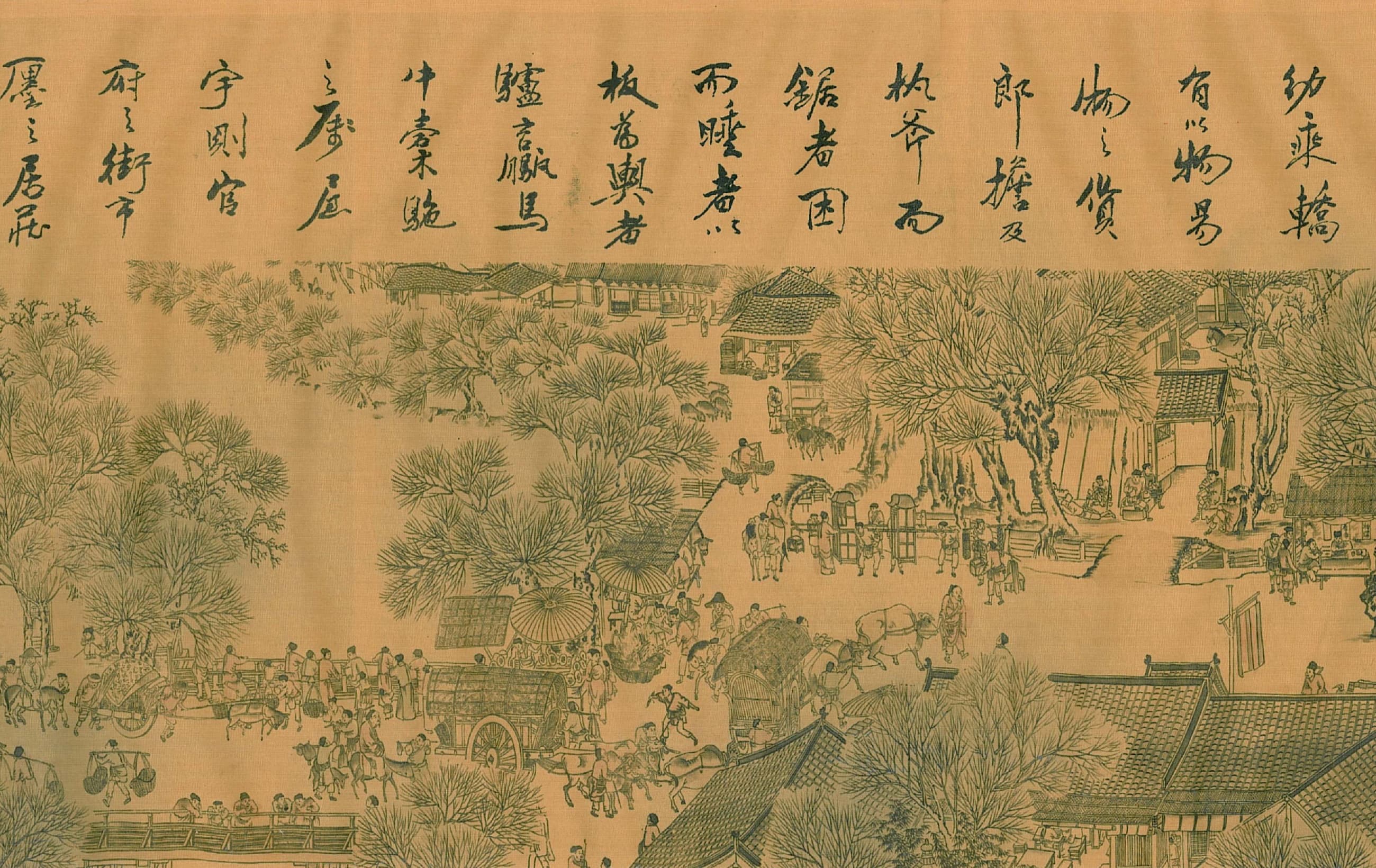
A City Made of Small Transactions
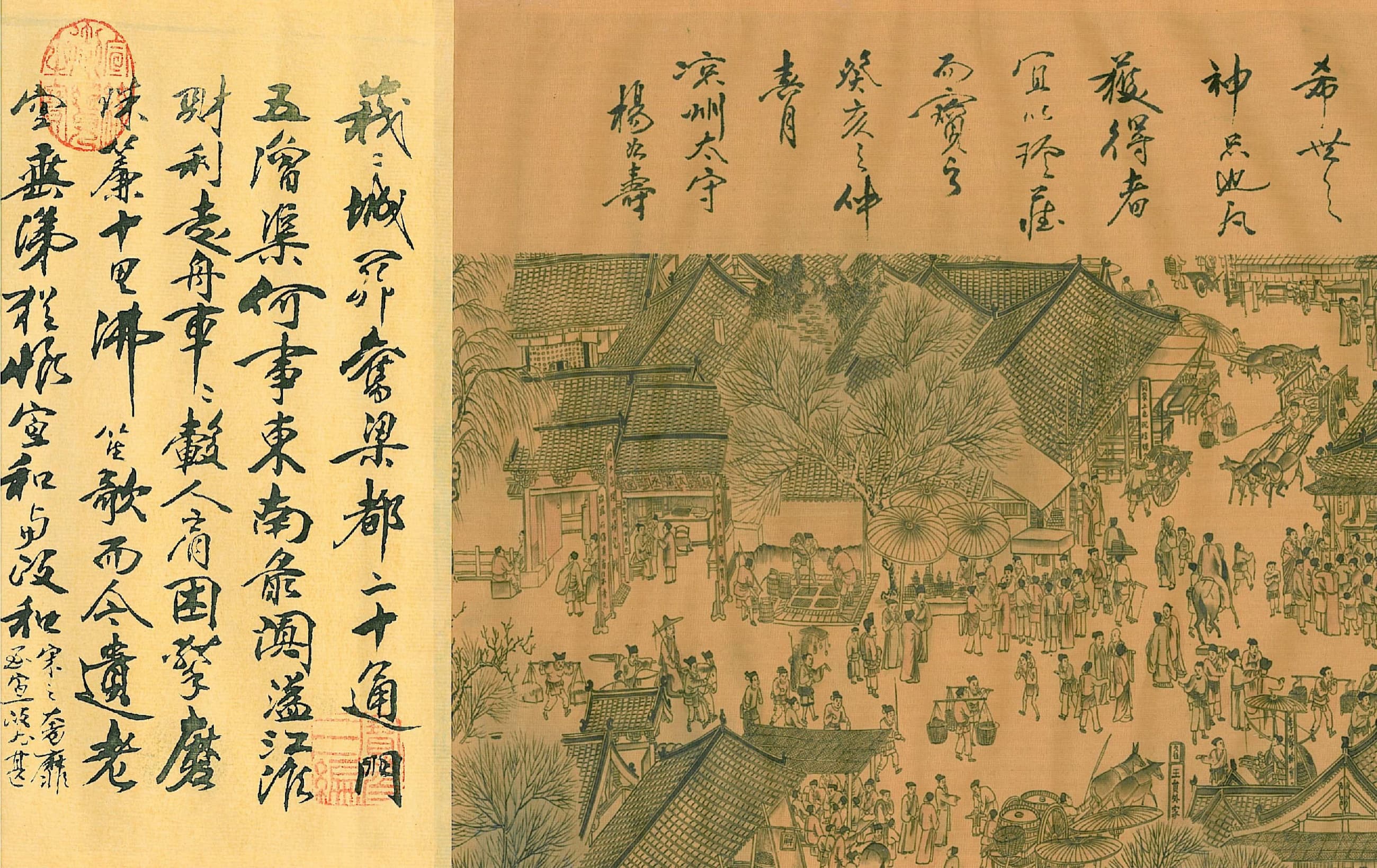
The urban section rewards slow looking. A customer meets a vendor. An animal blocks part of a road. Someone waits at a doorway while another person carries a load. No single figure explains the city. Density is produced by the accumulation of small transactions.
Writers sometimes publish exact counts of people, animals or buildings in the scroll. Such totals vary with the reproduction used and with decisions about what counts as a separate figure. The painting does not become more truthful when reduced to one impressive number.
Its stronger claim is relational. Transport connects to shops; shops connect to streets; streets concentrate strangers. The city exists because activities overlap.
Image: urban detail from the original handscroll. Zhang Zeduan / Wikimedia Commons, Public Domain; resized for web.
Not a Camera, Not a Census
The scroll is often described as a window into Northern Song life. A window still has a frame. Zhang Zeduan controls what enters, where tension rises and how one scene leads to another. Moving perspective allows buildings and roads to remain legible even when no single observer could occupy all the implied viewpoints.
That design does not make the image useless as historical evidence. It tells us what forms, activities and relationships an artist and audience could recognise. It also tells us how urban abundance was represented. The mistake is to treat aesthetic organisation as noise that can be removed to expose a neutral photograph underneath.
The painting is evidence because it is made, not despite being made.
One Title, Many Later Cities
The fame of the painting produced later copies and reinterpretations, especially during the Ming and Qing dynasties. Some retain the basic journey while changing costumes, architecture, shops and scale to reflect different periods. The Qing court version is visually rich but is not Zhang Zeduan’s Northern Song original.
Digital circulation makes those versions easy to confuse, especially when a later copy is available in higher resolution. Comparison can be revealing, but only when date, collection and purpose remain visible.
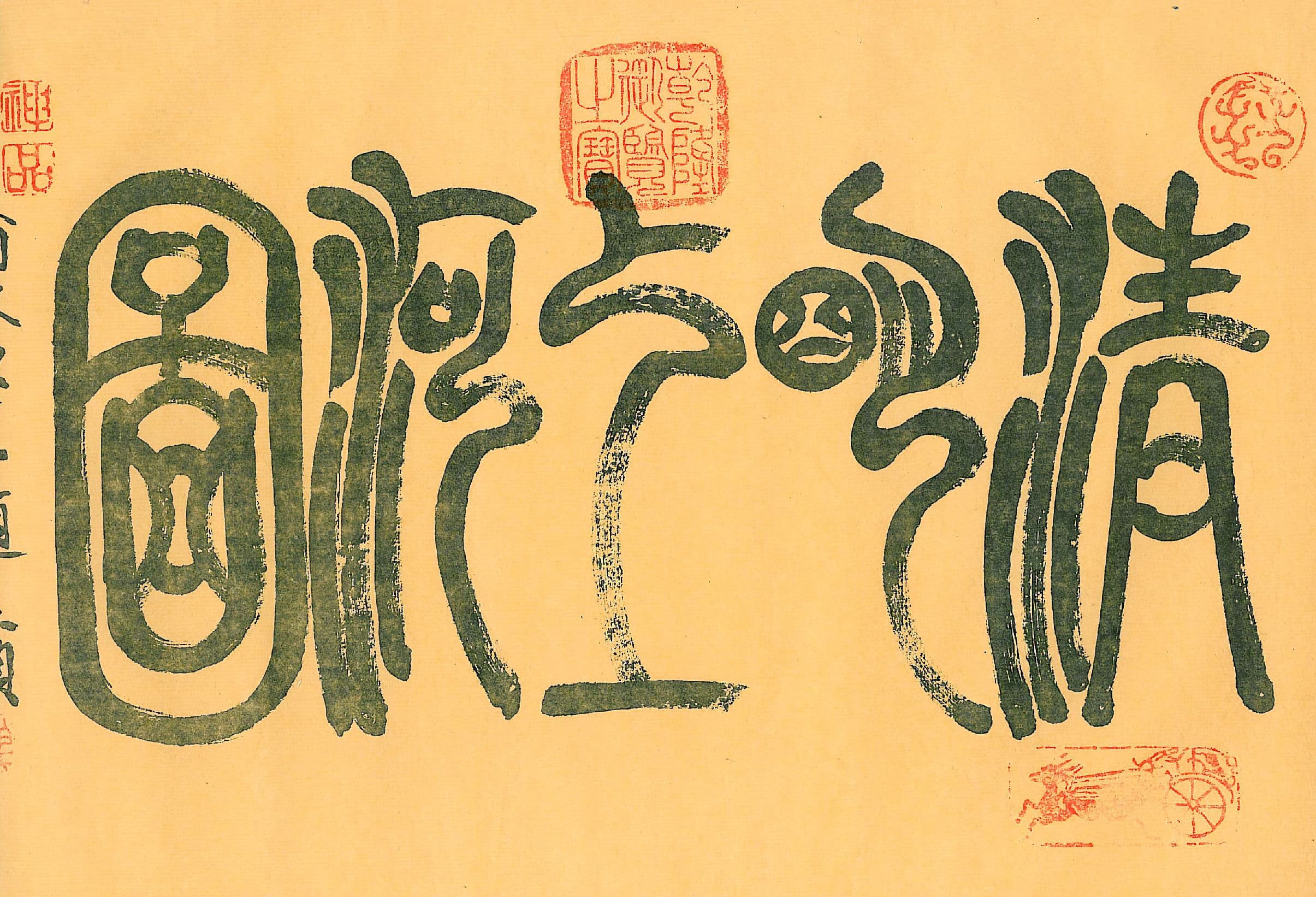
The images in this story are segments or details of the work held by the Palace Museum and attributed to Zhang Zeduan. The final segment does not claim to restore an original viewing sequence lost to time; it provides a practical digital path through the surviving scroll.
The City Rolls Out of Sight
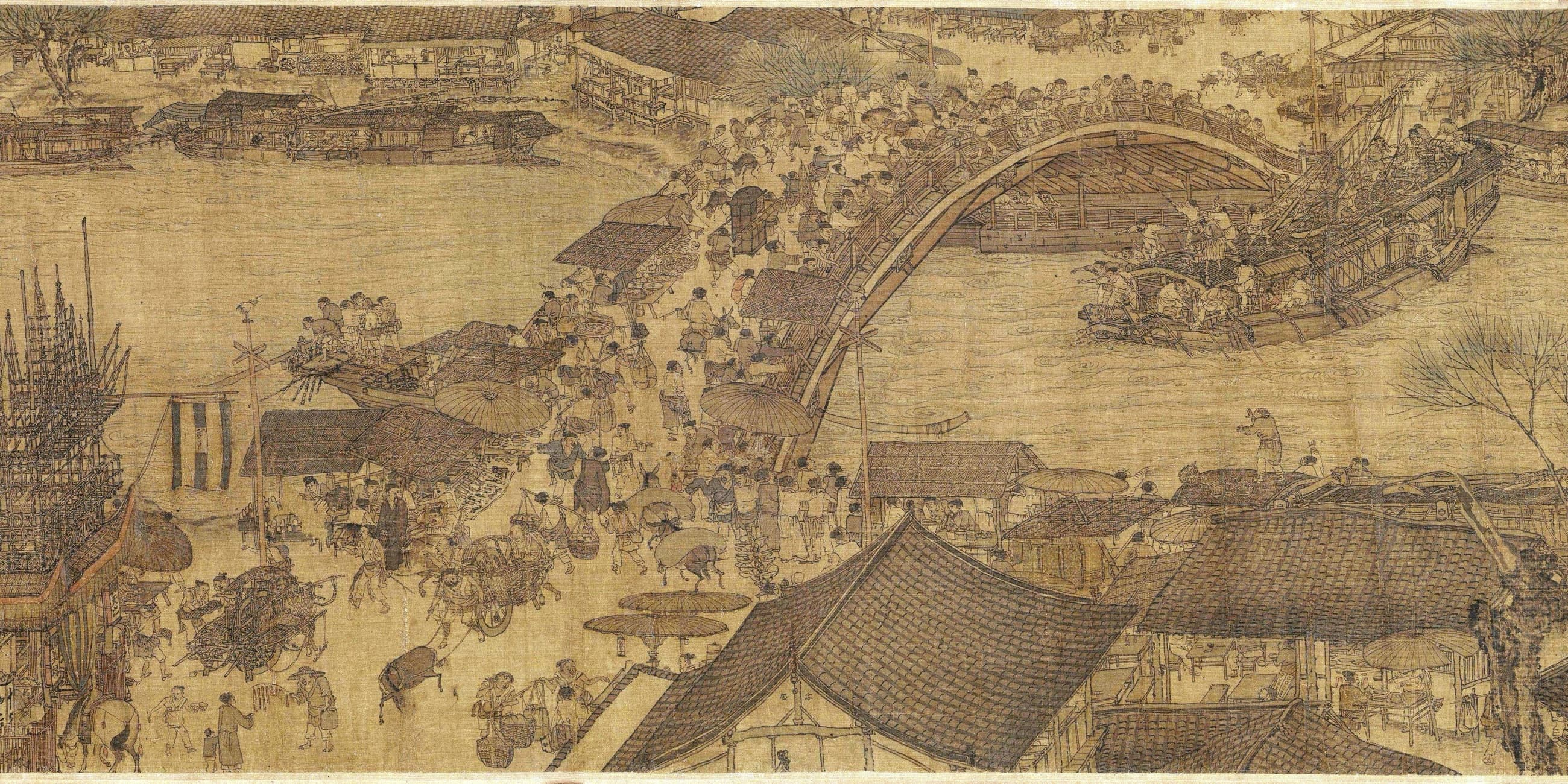
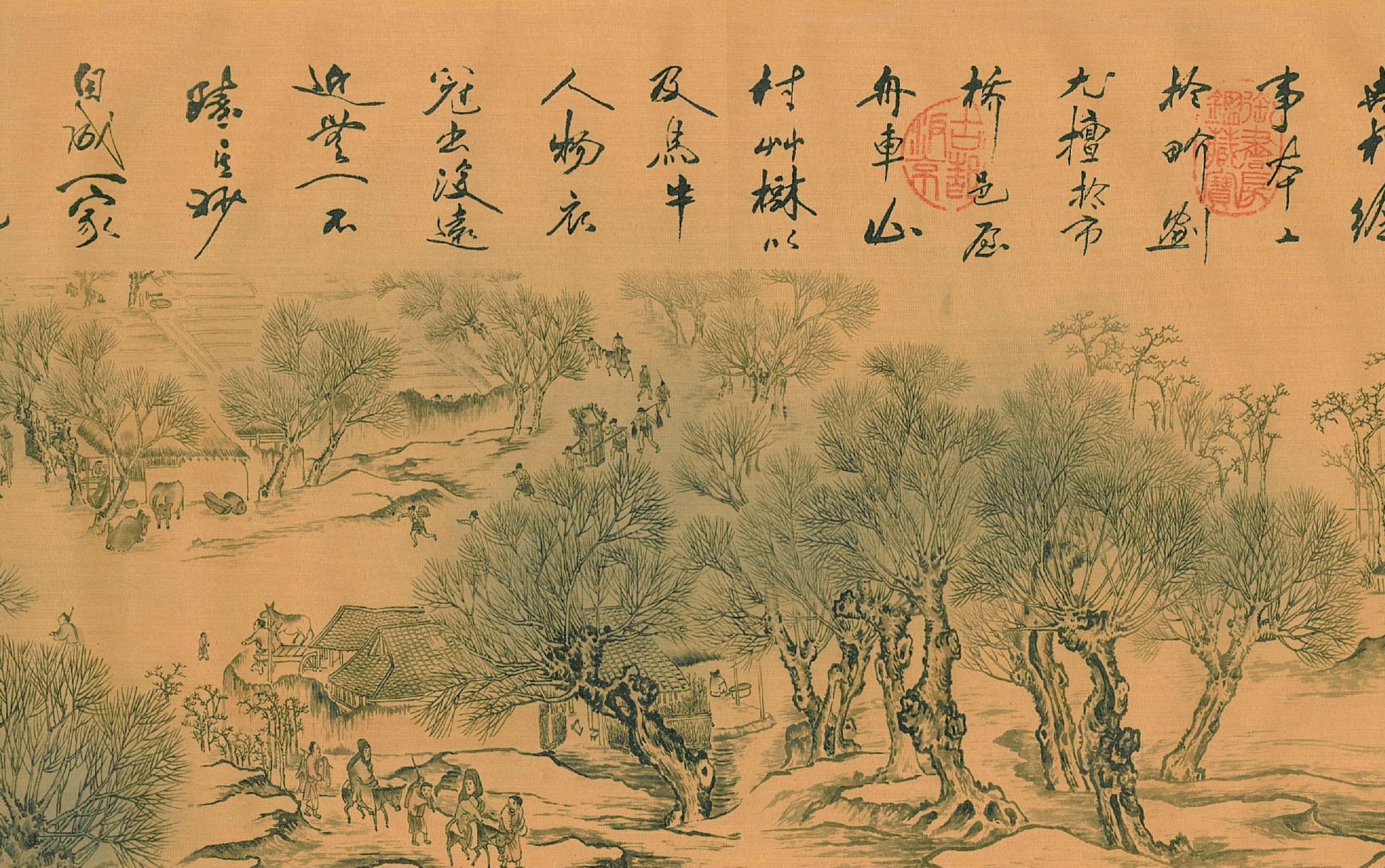
A handscroll ends by disappearing. As the viewer advances, earlier fields, boats and bridges are rolled behind the hands. Memory must connect spaces that are no longer simultaneously visible.
That process resembles travel more closely than a wall-sized panorama does. A city is not held in one view. It accumulates through approaches, thresholds, encounters and the route back through memory.
The complete digital image is useful, but the original format offers the deeper lesson: to understand this city, accept that you cannot possess it all at once.
Image: late section of the original Northern Song handscroll. Zhang Zeduan / Wikimedia Commons, Public Domain; resized for web.