A Blank Sheet Is Not Empty
An ink brush pauses above a pale sheet. The artist can still choose a line, but not entirely what the line will do next. A wet stroke may feather into softness; a drier one catches the grain. Water, fibre and pigment make a decision together. The surface is not a passive background. It is a partner in the picture.
In Jing County, Anhui, craftspeople have long made the paper that artists call Xuan paper. The UNESCO-inscribed tradition begins not in a studio of finished paintings but with plants and a landscape: blue sandalwood bark, rice straw, clean water, seasons and human judgement. The name can sound like a single recipe. In reality, the resulting papers vary, as do the ways painters and calligraphers use them. The point of looking closely at the making is to understand why a simple-looking white sheet can hold so much possibility.
The Ingredients Have a Geography
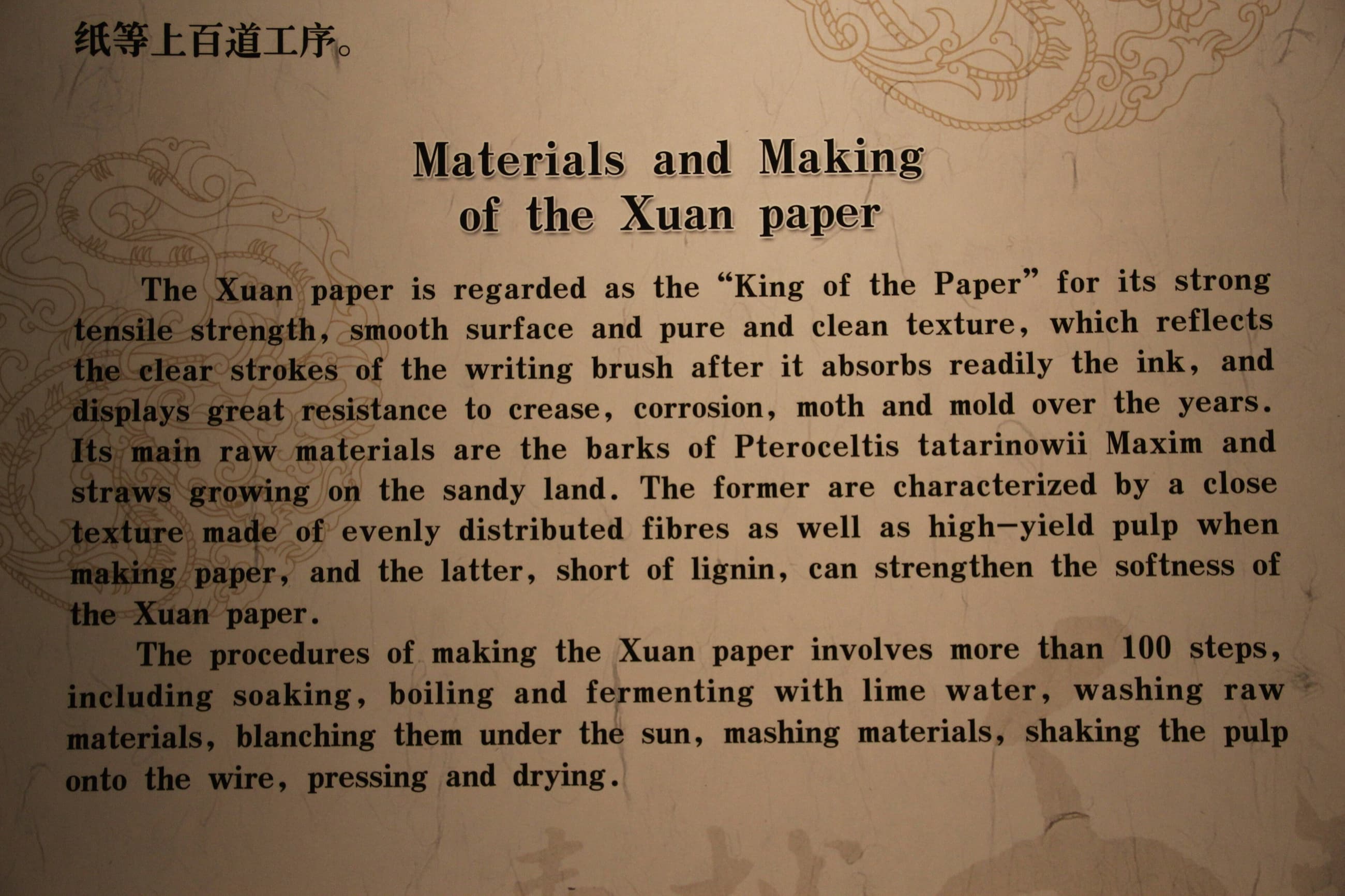
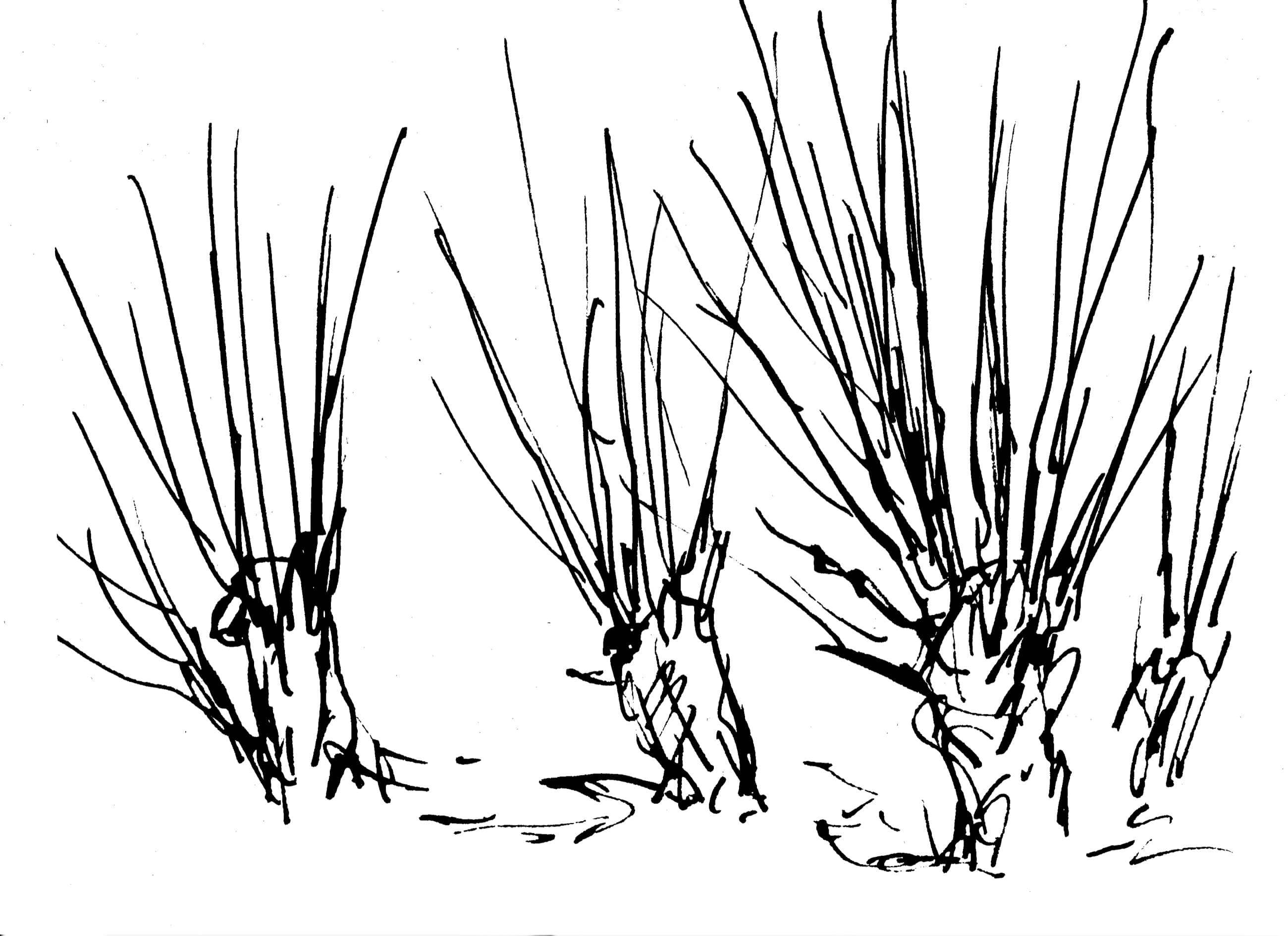
The bark is taken from blue sandalwood, a tree associated with the Jing County tradition; rice straw supplies another kind of fibre. Calling the result “rice paper” conceals that partnership. The two raw materials require different preparation before they can share a sheet. Bark must be stripped and worked. Straw must be processed until it, too, can be beaten into pulp. The local water and conditions are part of the inherited knowledge, although no single romantic description can substitute for the actual labour.
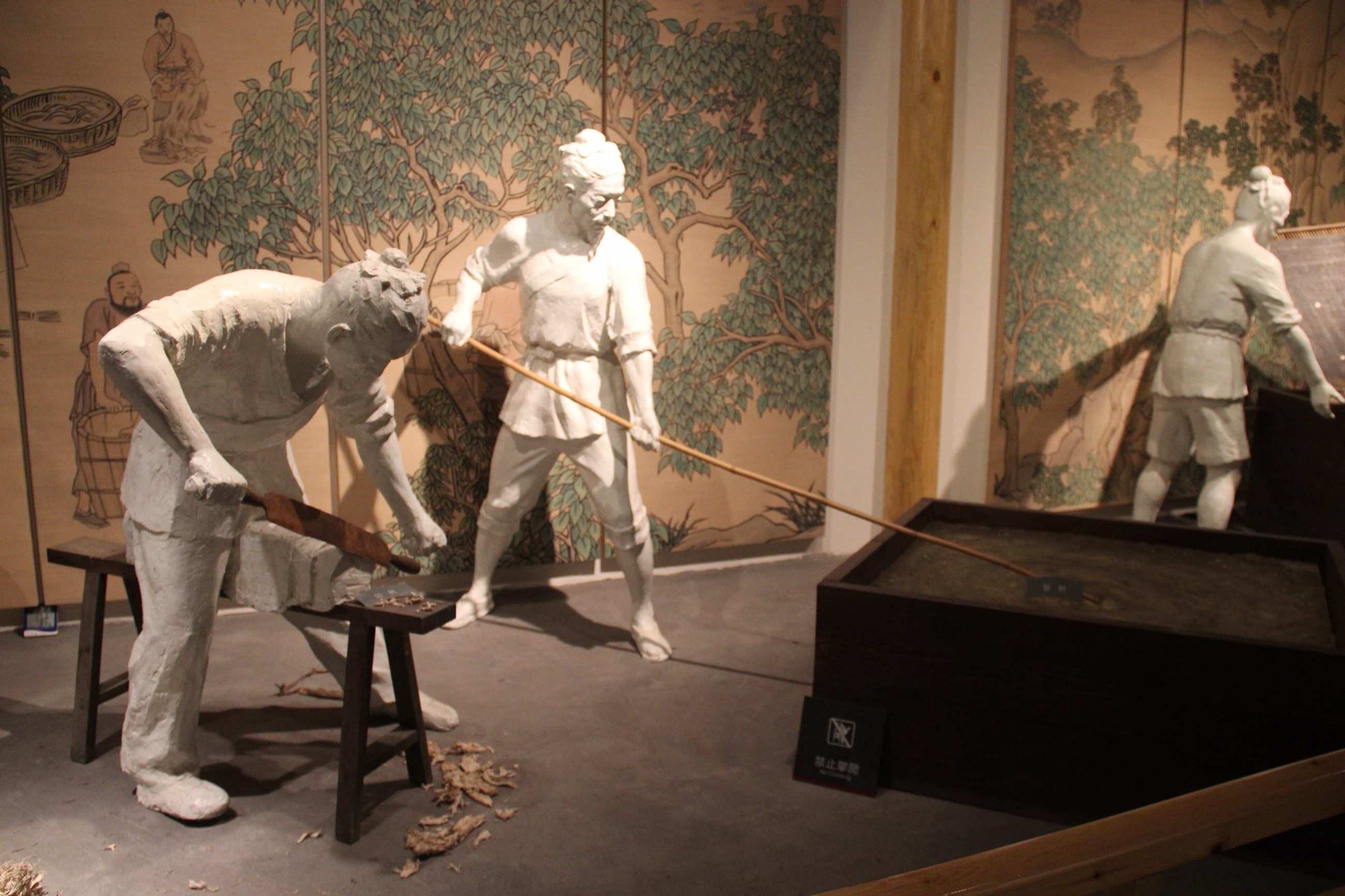
Traditional accounts describe more than a hundred manual steps and production lasting over two years. Those figures are a way of conveying a particular established process, not a promise that every modern sheet has spent exactly that long in a workshop. The important fact is the scale of repeated decisions. A craftsperson judges material, moisture and timing again and again before a buyer ever sees the paper.
Before Pulp, a Sequence of Transformations
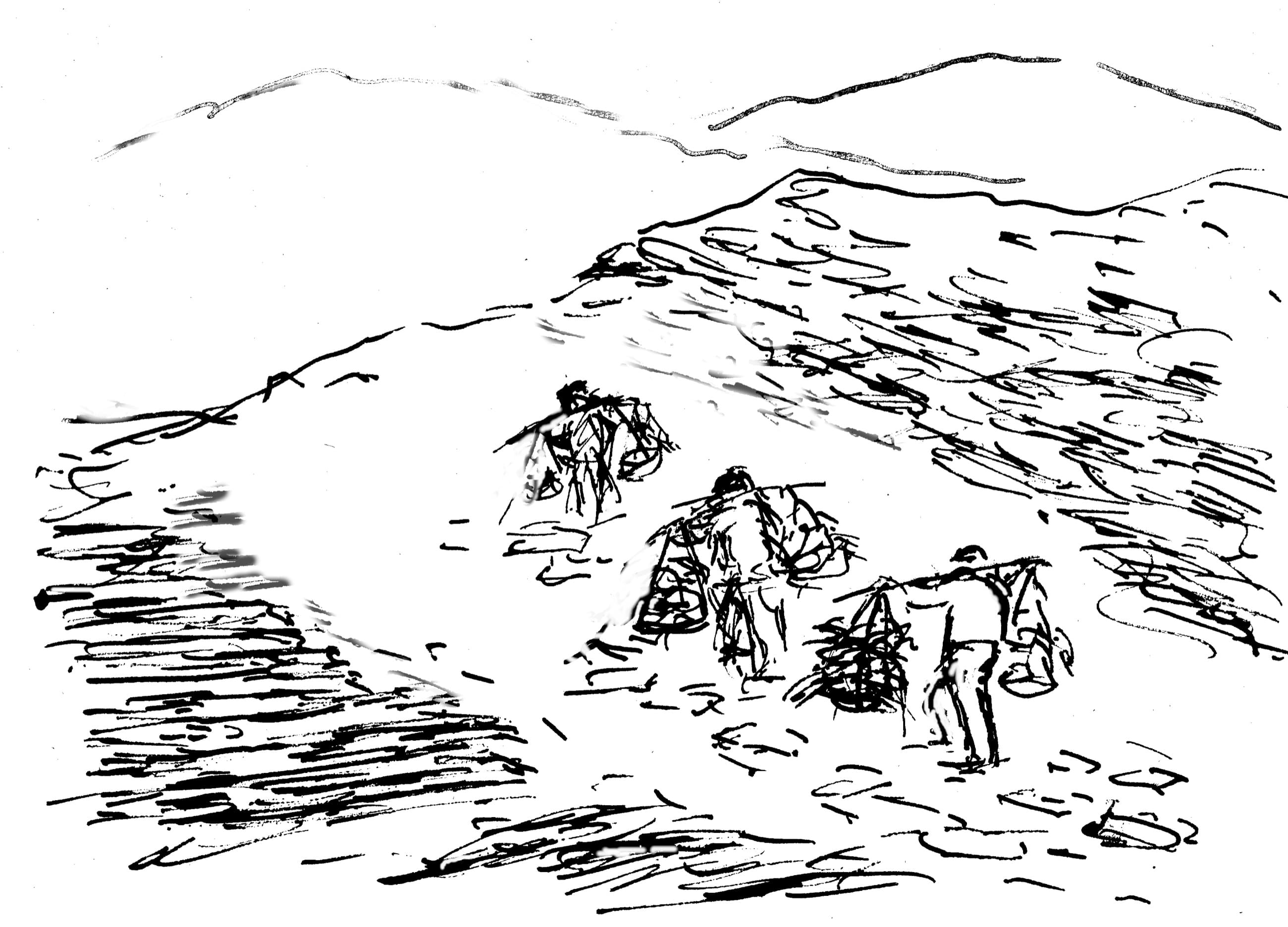
It is tempting to imagine one graceful dip of a screen and a complete sheet appearing. The dip is only a late movement in a much longer choreography. Bark and straw are soaked, treated, washed and beaten until their fibres can disperse in water. Historic process illustrations depict stages of soaking and carrying fibres. They help show the number of hands and places involved, but they are illustrations rather than photographs of a continuously documented production line.
Once the fibres are suspended, a mould is moved through the vat. What remains on its screen is thin enough to appear fragile, yet its strength depends on how fibres interlock as water drains away. The maker's control is physical and immediate: speed, angle, thickness and evenness matter. The finished sheet is therefore neither wholly natural nor wholly imposed. It records a negotiation between the prepared fibre and the person lifting it.
A Process Drawn, Not Photographed
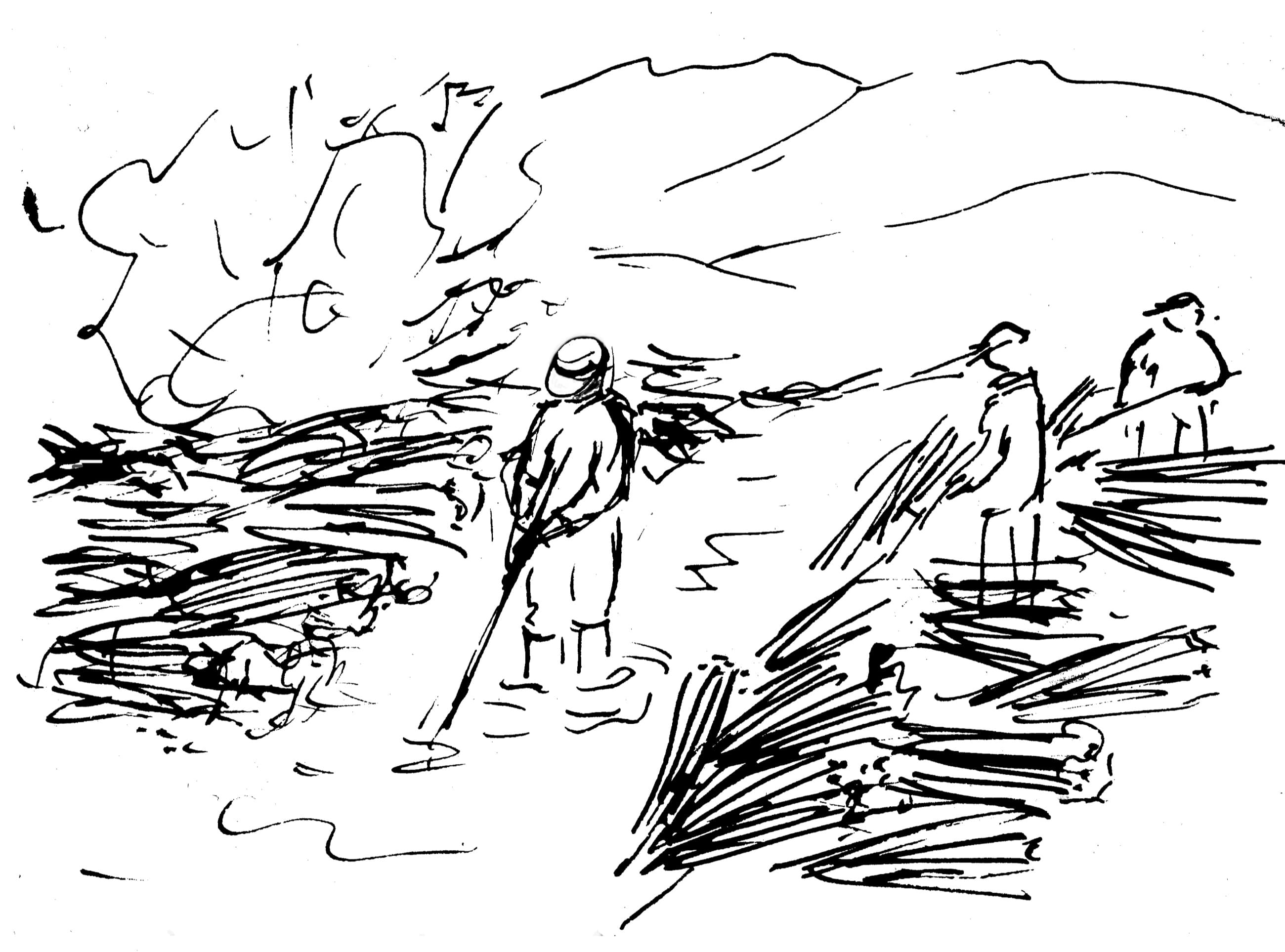
The illustrated river scene suggests how preparation extends beyond a single table. It does not show a named present-day papermaker at a verified site. That distinction matters: a useful visual analogy is not the same as evidence that a specific workshop used this exact method on a specific date.
What the sources do establish is a sequence of manual transformation. Bark and straw do not become paper by being simply mixed. Their fibres must first be made capable of floating, dispersing and bonding. The slow preparatory work is why the moment of sheet formation feels so sudden only to a visitor arriving late.
Image: process illustration by Pancrat / Wikimedia Commons, CC BY-SA 4.0; resized for web.
The Moment of the Sheet
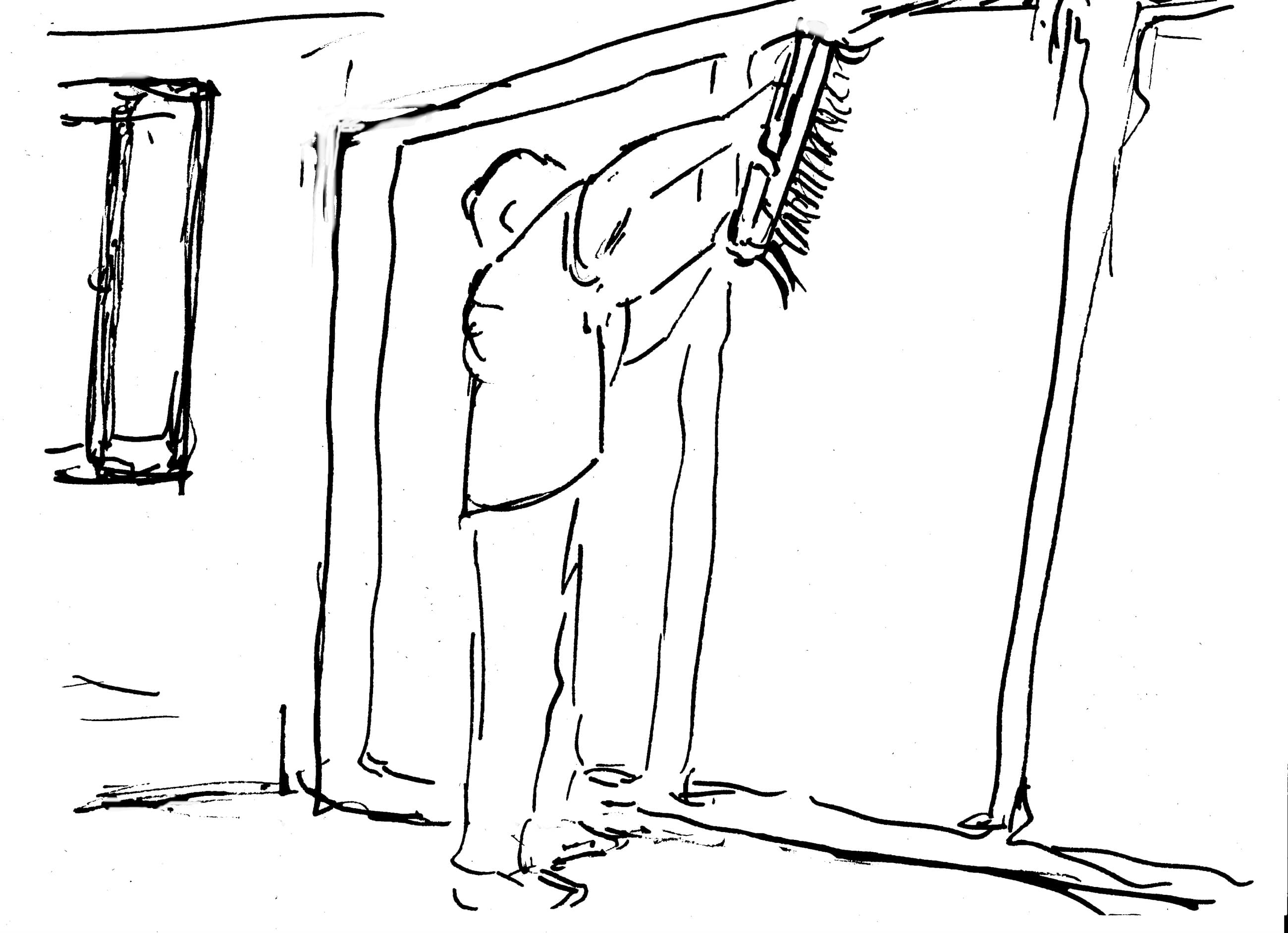
At the vat, a worker can lift what looks like nearly nothing. Water returns to the tub; fibres remain spread across the screen. Many such sheets are pressed and dried, sometimes against a heated surface. The paper that eventually comes away is light, but not casual. Its surface carries the history of separation, alignment and drying.
The material study of Xuan paper helps explain its reputation among artists, while also warning against treating all grades alike. Fibre structure and finishing influence how ink spreads and how a stroke retains its edge. A painter may choose one paper for a controlled line and another for a wash that opens. The quality admired in Chinese painting is therefore not simply “absorbency”; it is the ability to choose how absorbency will participate in an image.
A Line That Keeps Moving
Imagine testing a loaded brush on a fresh sheet. The first touch deposits ink where the bristles land. Then water moves among the fibres. The line can remain dark at its heart while a lighter halo travels beyond it. That halo is not a printing error; for some artists it is the subject. A mountain can emerge from a single damp passage rather than from a tightly enclosed outline.
This interaction also places responsibility on the artist. A stroke cannot always be lifted cleanly away. Revision is harder when the surface records the movement of water as well as pigment. The papermaker's decisions, made long before the brush arrives, determine part of the artist's room to improvise. A finished painting is therefore also a quiet collaboration with an unseen craft.
A Material with More Than One Life
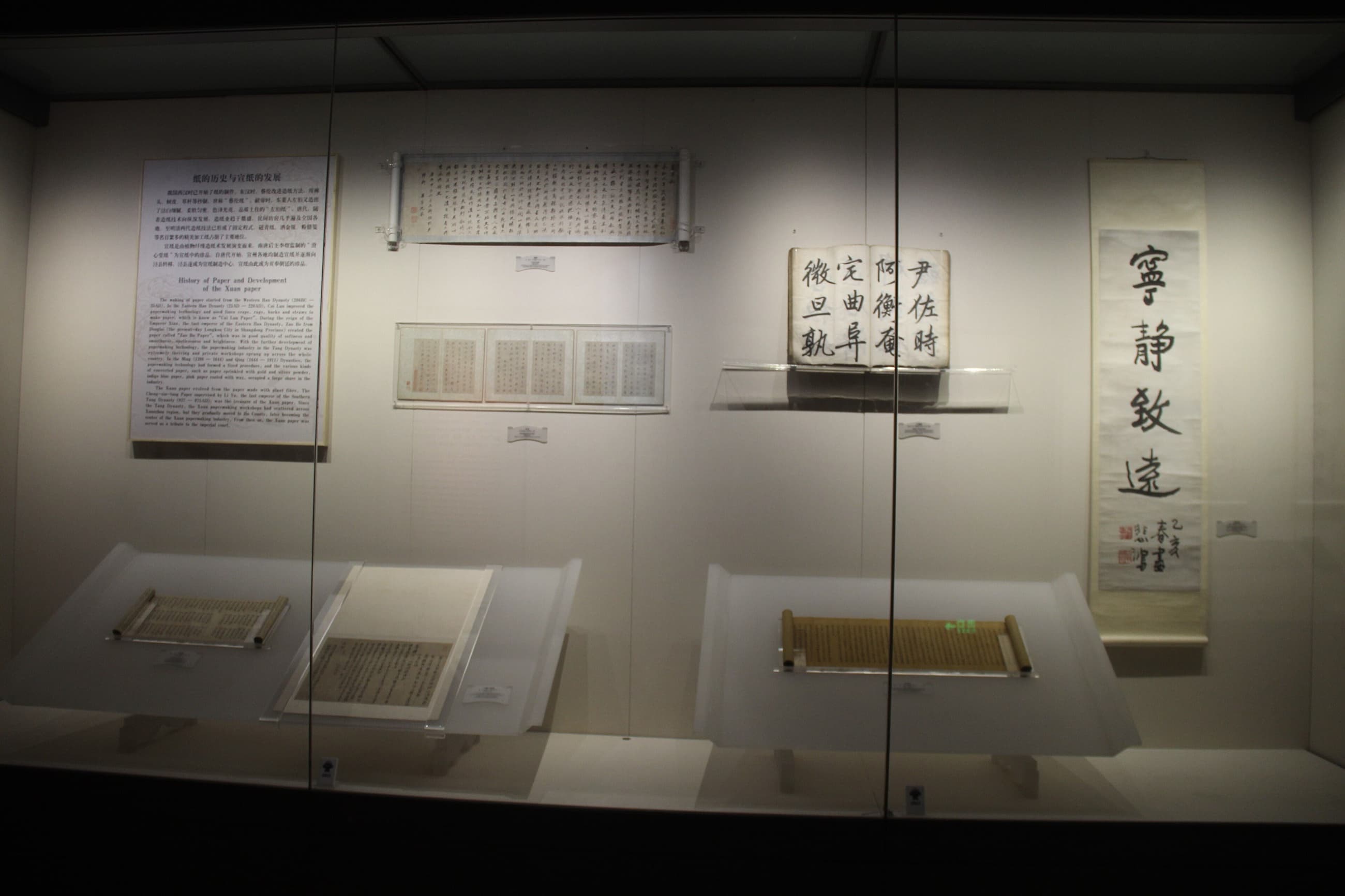
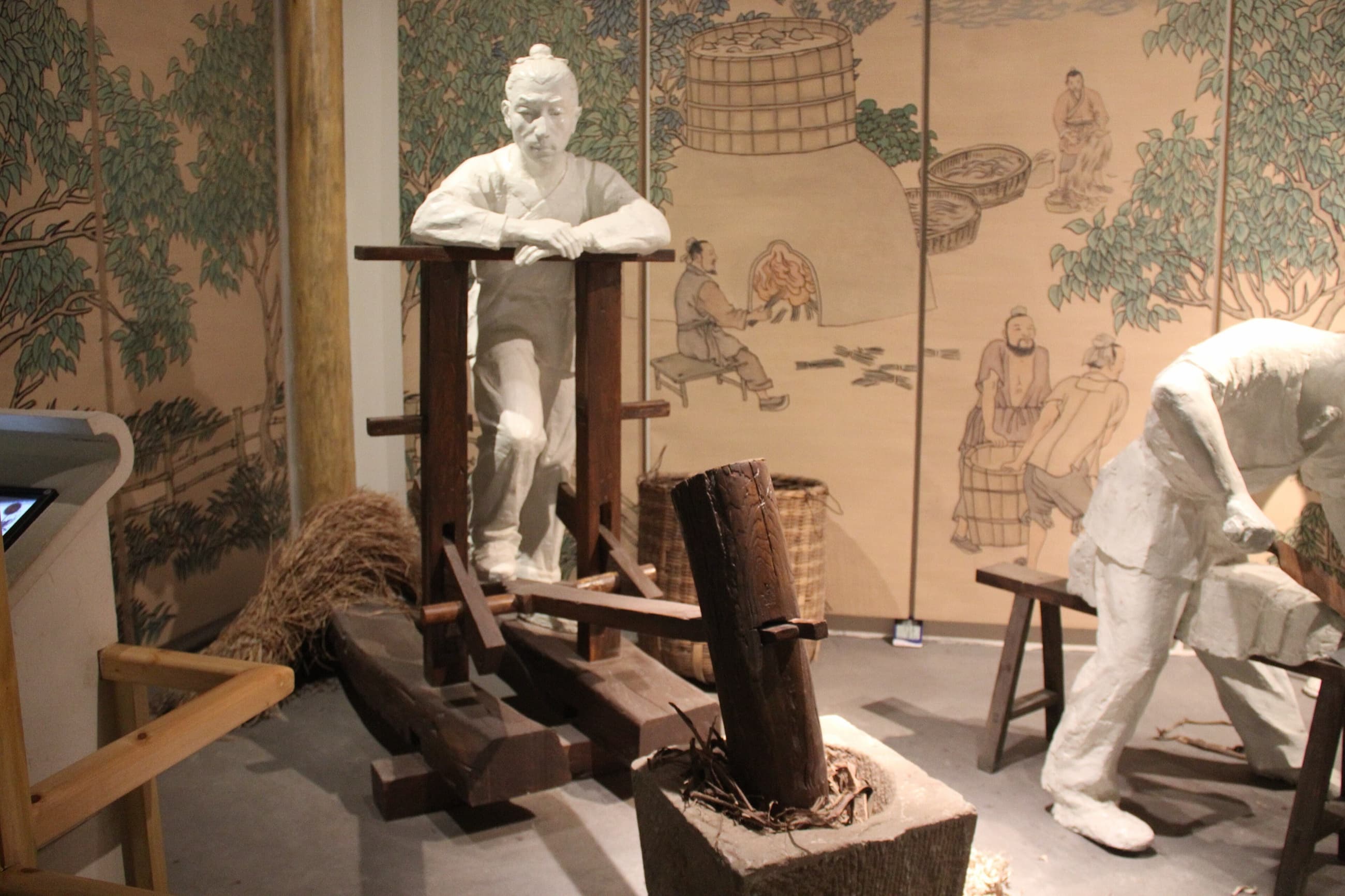
Xuan paper serves calligraphy, painting and printing. Its strength and working qualities have made it valuable in preservation and artistic practice, but “durable” does not mean indestructible. Light, humidity, handling and storage still matter. Nor can one photograph of a finished sheet tell us how every grade will respond to ink.
The better question is what a particular sheet lets a maker do. When the answer is a fine line, a spreading wash or a print that can be handled for generations, the paper has already shaped the work before an audience notices it.
Image: Gary Todd / Wikimedia Commons, CC0; resized for web.
Look Past the Artwork
A visitor may see Xuan paper first through the marks on top of it. In a museum, the eye goes to the brushstroke, the poem, the mountain. But a papermaking display shifts attention to the sheet itself: the prepared fibre, the lift from the vat, the drying surface and the finished object. It asks us to see material rather than assume it.
That change in attention is the story's lasting gift. The spectacular thing about this paper is not that it looks unusual from across a room. It is that, when ink meets it, the choices of a tree, a field, a craftsperson and an artist become visible in one small spreading line.
What the Hand Cannot Rush
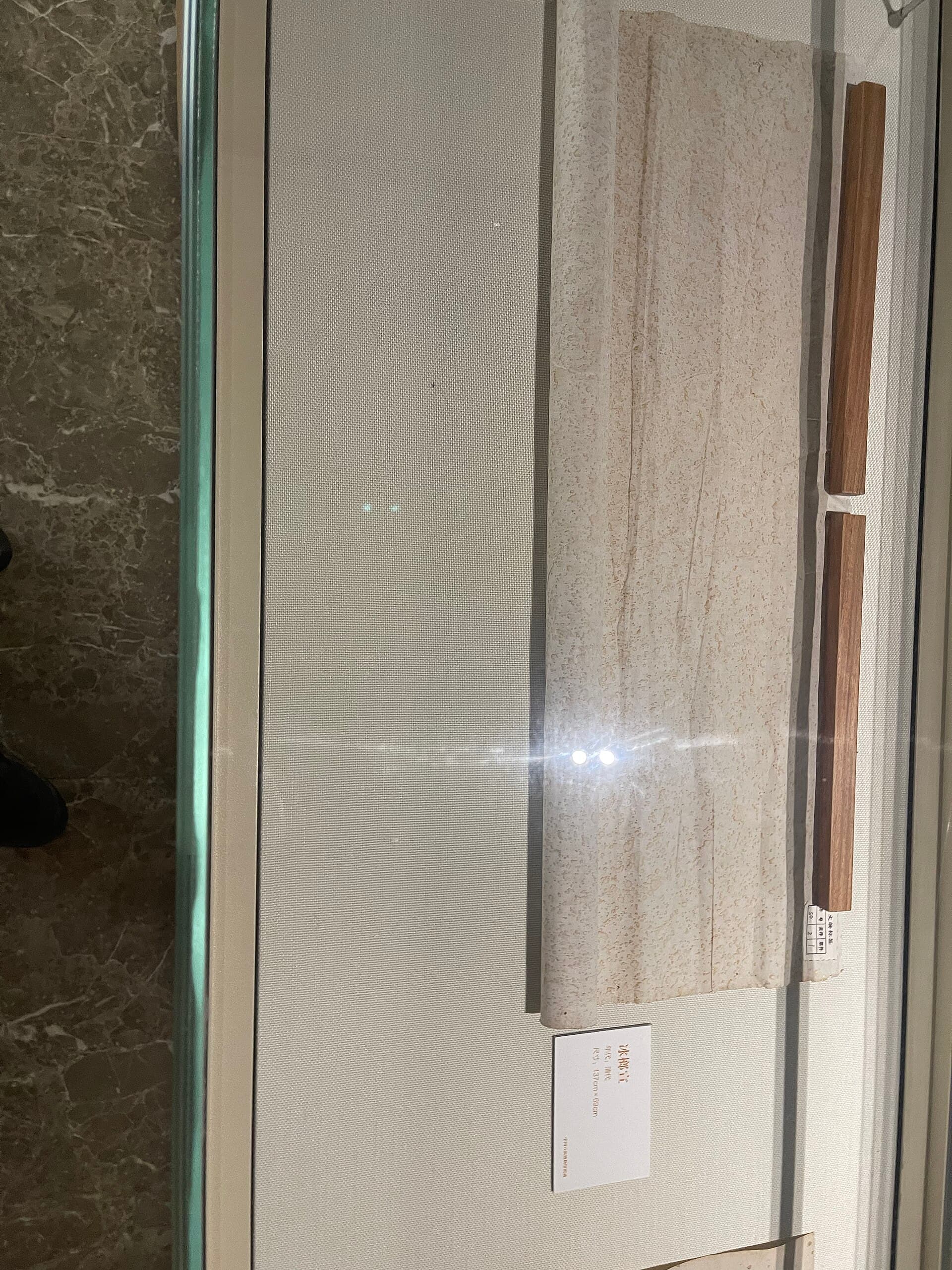
The phrase “handmade” can become a label emptied by repetition. Here it should direct us to real work. Someone judges whether fibres are ready. Someone lifts a screen evenly. Someone dries a sheet without destroying its surface. Someone makes the next sheet and notices the difference. None of those actions guarantees that an artwork will be beautiful; all make beauty possible.
The next time a painted wash seems to breathe beyond its line, look at the margin where ink becomes water and then paper. There is a landscape in that edge — one that began well before the brush was held.