
Strike the centre of one of Marquis Yi of Zeng’s bronze bells and it gives one note. Strike the side and it gives another. The change does not come from a musician tightening a skin or shortening a string. It is already present in the shape of the metal.
That double voice is the smallest unit of a much larger system. In 1978, archaeologists excavating a tomb near present-day Suizhou in Hubei uncovered an ensemble of bells arranged on a monumental frame. The tomb had been sealed in the fifth century BCE. Its instruments, inscriptions and supports survived together closely enough to reveal not only what elite music looked like, but how its makers organised pitch, performance and authority.
The most compelling way into that world is not through the size of the set. It is through the problem hidden inside one bell: how can one body be made to speak accurately in two voices?
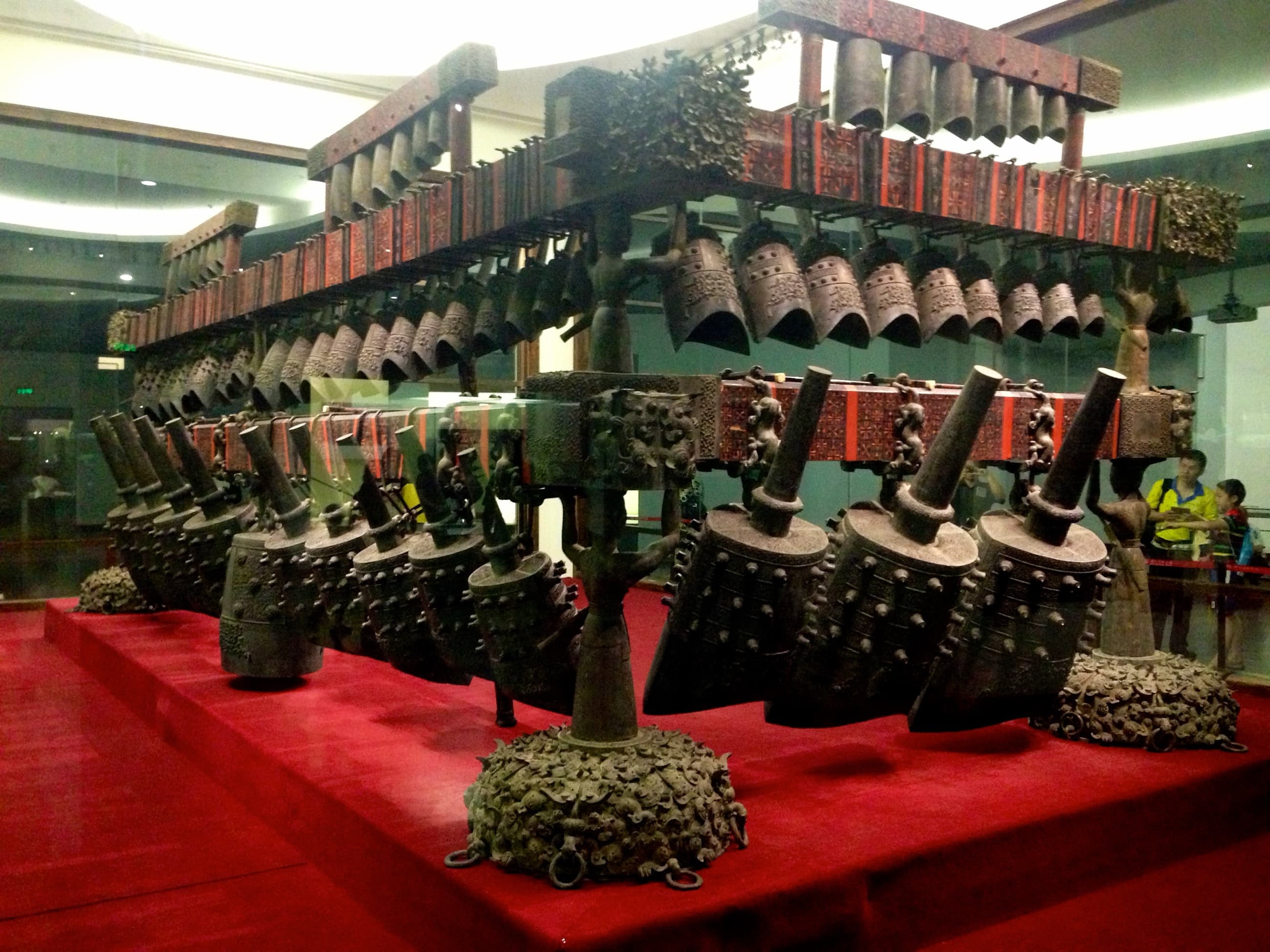
An Orchestra Beneath the Ground
Marquis Yi ruled the small state of Zeng during a politically divided period of the Zhou dynasty. His tomb, generally dated to around 433 BCE, contained more than fifteen thousand objects according to the Hubei Provincial Museum. They included ritual bronzes, lacquerware, weapons, bamboo and wooden objects, and an extraordinary concentration of musical instruments.
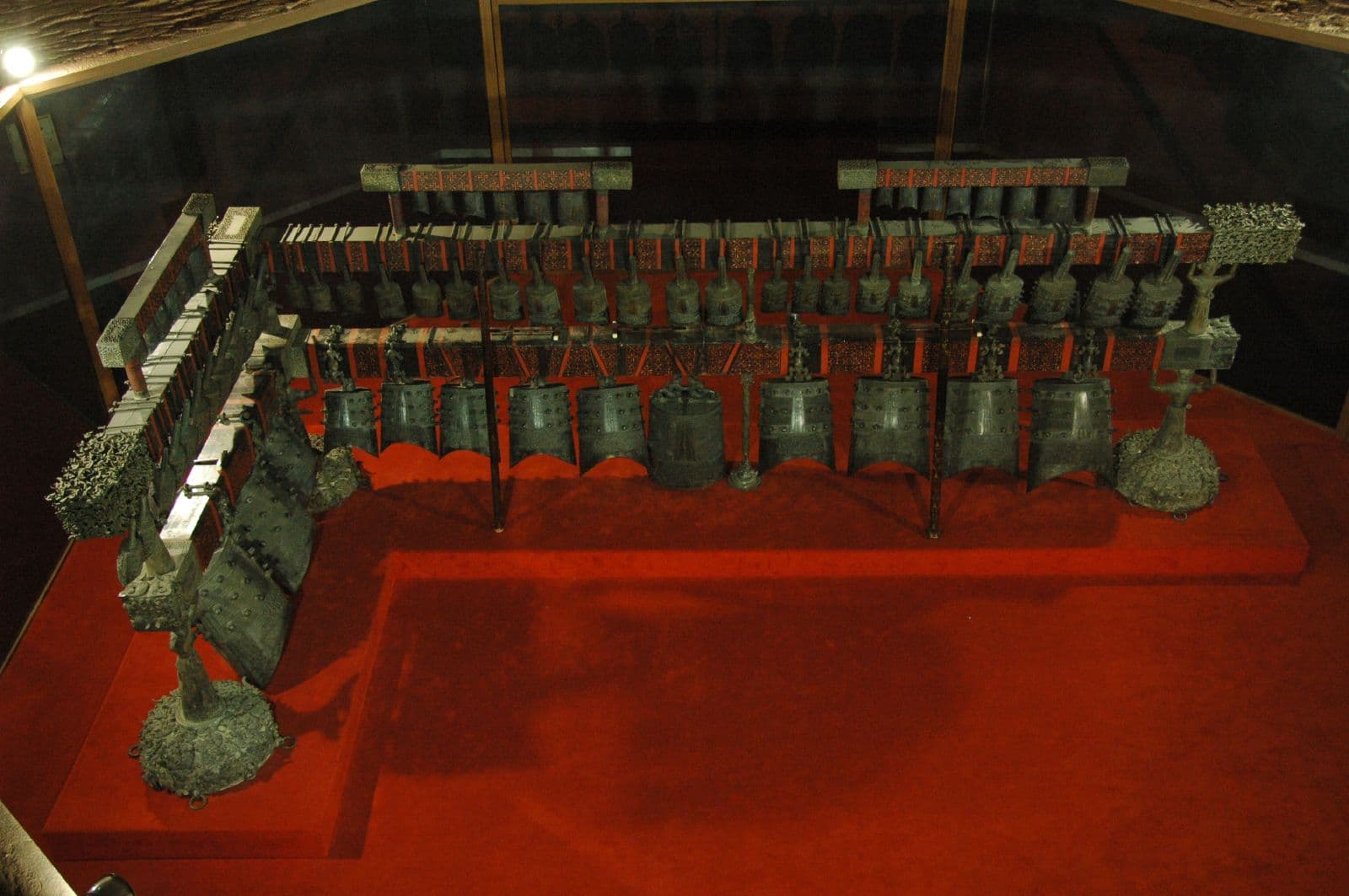
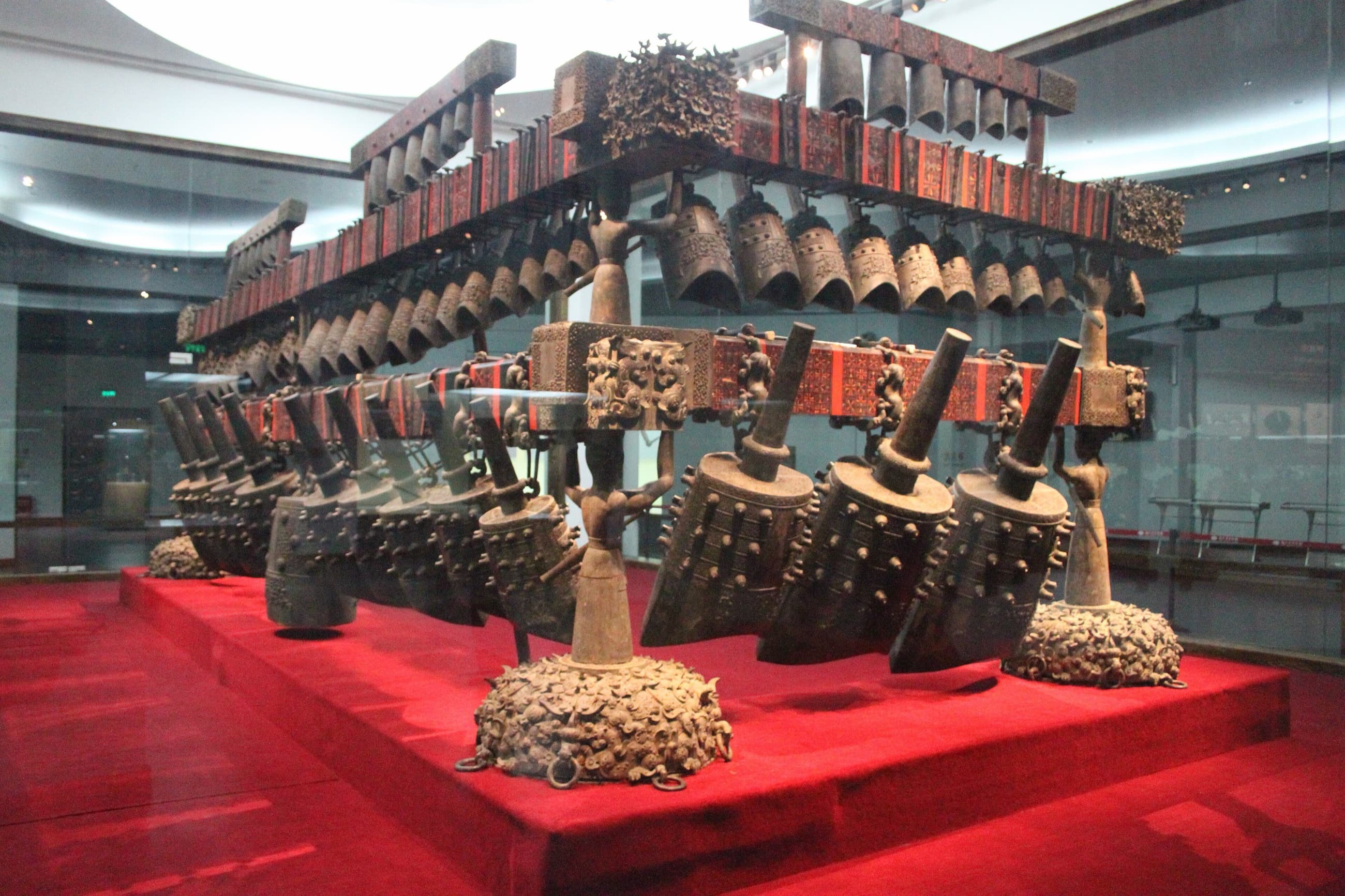
The bell set did not lie in isolation like treasure placed in a box. Instruments occupied a chamber whose arrangement evoked a performance space. Bells and stone chimes stood with drums and other instruments. The positions matter because music was an organised activity carried out by people moving around a frame, selecting beaters and coordinating sound.
Modern display necessarily reconstructs parts of that experience. The original bells are archaeological objects under protection; demonstrations heard today normally depend on replicas. A museum performance can reveal the musical logic, but it is not an untouched recording transmitted from the fifth century BCE.
One Bell, Two Voices
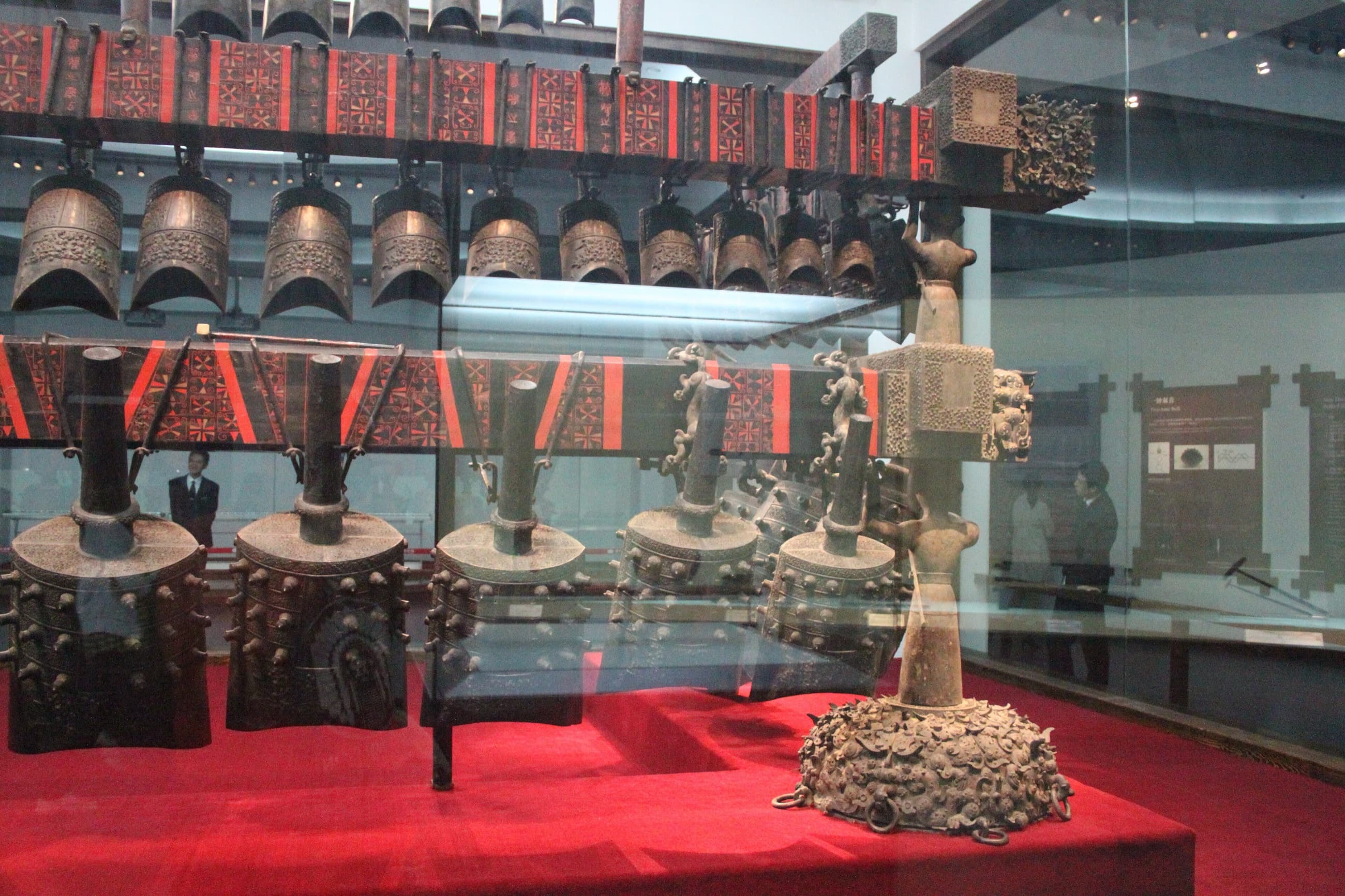
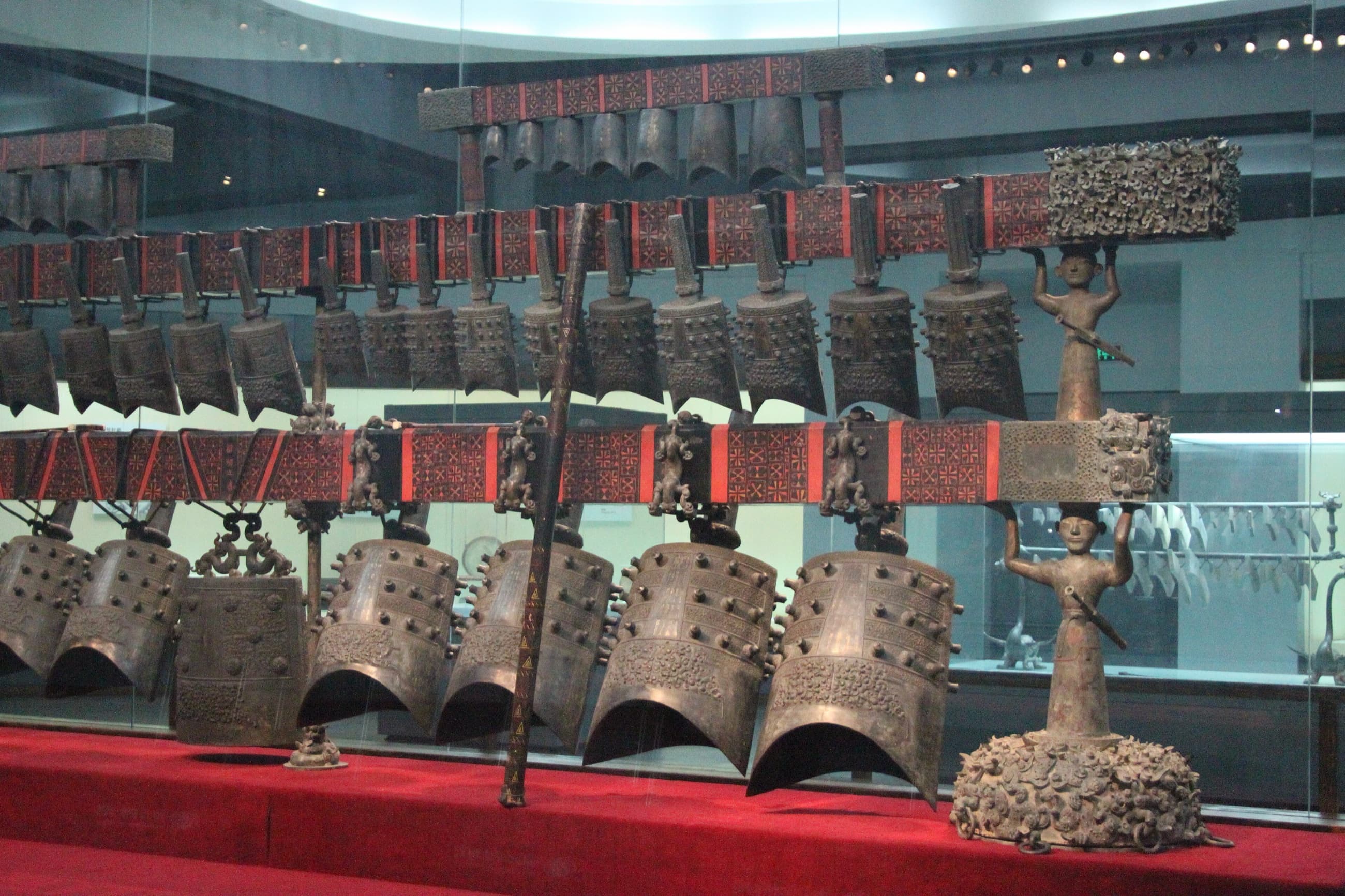
A circular bell tends to sustain several competing vibrations. These bells use a flattened, lens-like cross-section. The form helps separate vibration patterns so that a strike on the front and a strike on the side produce distinct pitches. Raised bosses and carefully organised decorative fields also help a player identify where to strike.
The result is not a trick note added by accident. UNESCO’s Memory of the World documentation describes a systematic ‘one bell with two tones’ technology joined to a twelve-tone tuning system. Across the ensemble, makers had to control alloy, wall thickness, profile and finishing closely enough for the bells to work together.
A photograph can show the unusual mouth; it cannot fully communicate the interval between the two notes. That gap is where metallurgy becomes music. The instrument was designed not simply to ring, but to ring predictably.
Image: detail of one bell’s opening and profile. Gary Todd / Wikimedia Commons, CC0; resized for web.
How Many Bells?
The ensemble is commonly described as a set of sixty-five. The count requires explanation rather than repetition. Sixty-four bells form the ordered performance group; a large bo bell, bearing an inscription that identifies it as a gift from King Hui of Chu, stands apart in origin and construction while belonging to the tomb’s musical world. Some museum descriptions therefore foreground the sixty-four two-tone bells, while general accounts use sixty-five for the complete displayed set.
The distinction is useful. Numbers in archaeology often depend on what is being counted: one original ensemble, one chamber, one functional series or every related instrument. Writing ‘sixty-five’ without defining the group turns a curatorial decision into an apparently timeless fact.
More important than the total is the hierarchy. Bells of different sizes and registers were suspended in rows. Their order converted heavy cast objects into a navigable field of pitch.
Words Cast Into Bronze
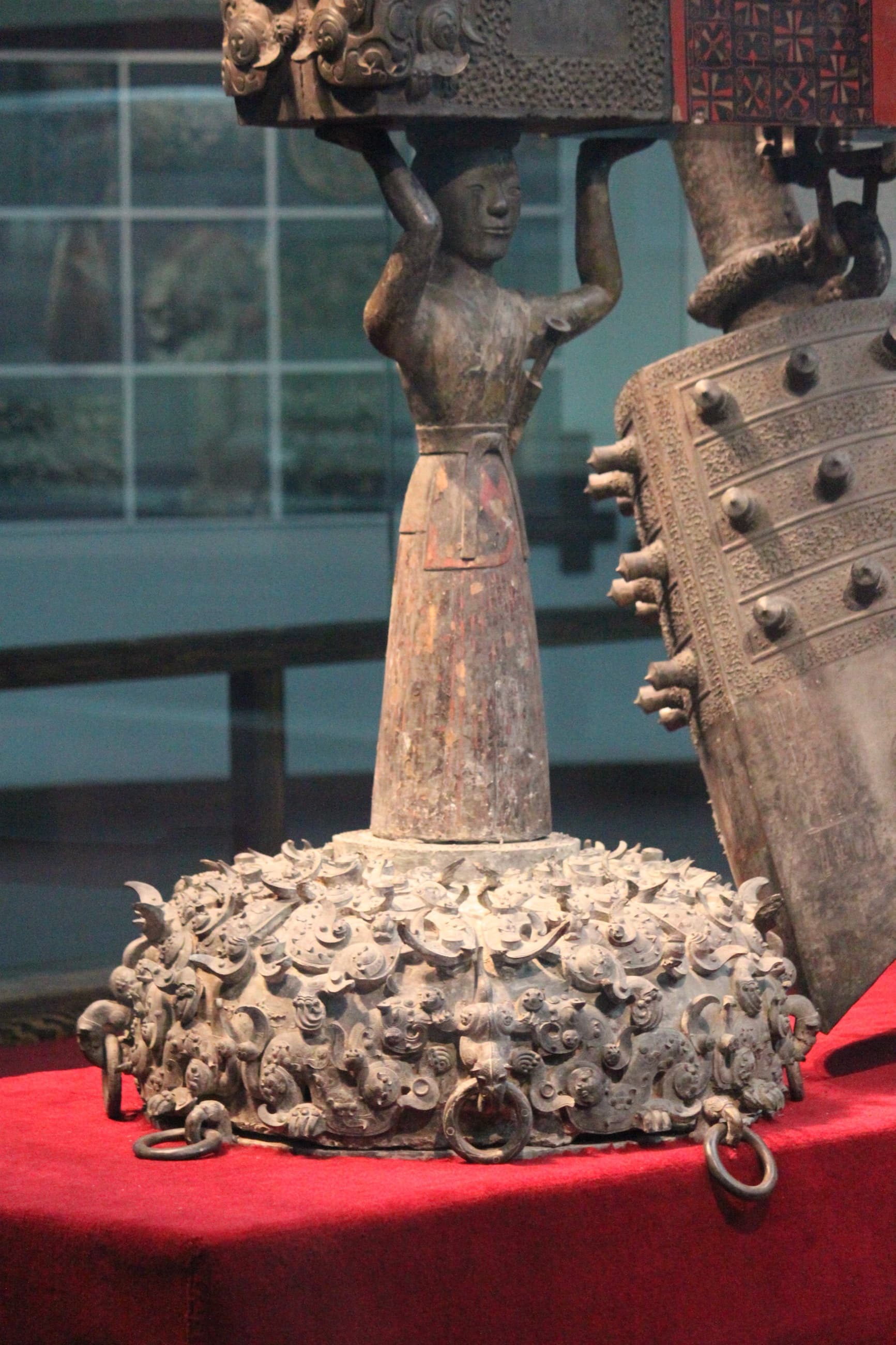
The bells carry thousands of inscribed characters. Some identify tones and explain relationships among musical systems used by different states. UNESCO describes the corpus as an exceptional surviving document of fifth-century BCE musical theory.
These inscriptions do not resemble a modern score telling performers which melody to play from beginning to end. They are closer to a technical language built into the instruments: names, correspondences and pitch information that made the set legible to trained users.
The writing also changes what survives. A bell can preserve a sound-producing shape, but an inscription preserves how specialists classified that sound. Material and terminology arrive together. The ensemble therefore records an intellectual system as well as a workshop achievement.
Image: inscriptions and ornament on a bell from the ensemble. Gary Todd / Wikimedia Commons, CC0; resized for web.
The Craftspeople We Cannot Name
The tomb names a marquis and a king, but not the entire workforce that mined, smelted, modelled, cast, finished, tuned and assembled the bells. Their labour survives indirectly in seams, surfaces, repeated motifs and the consistency of pitch.
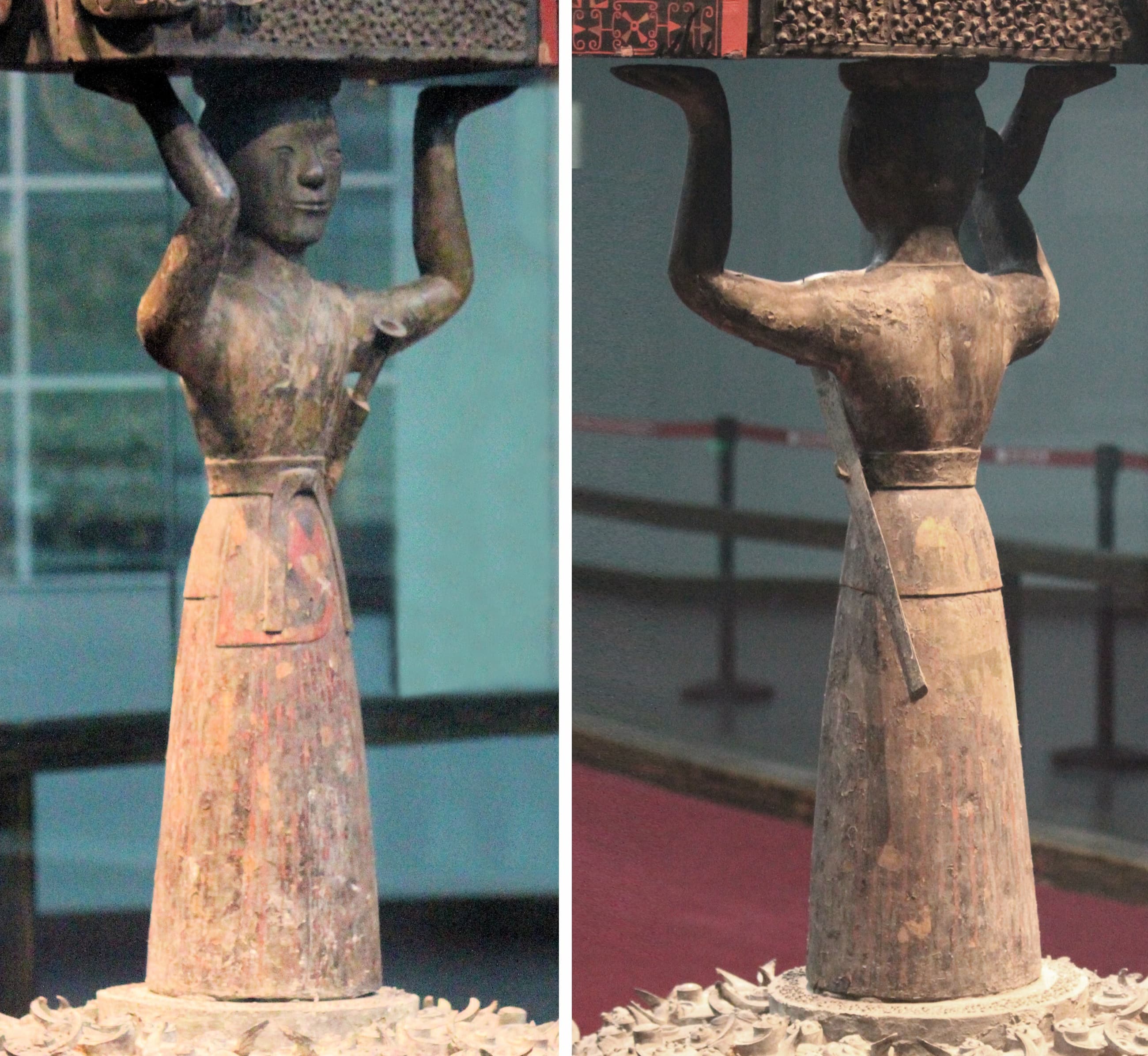
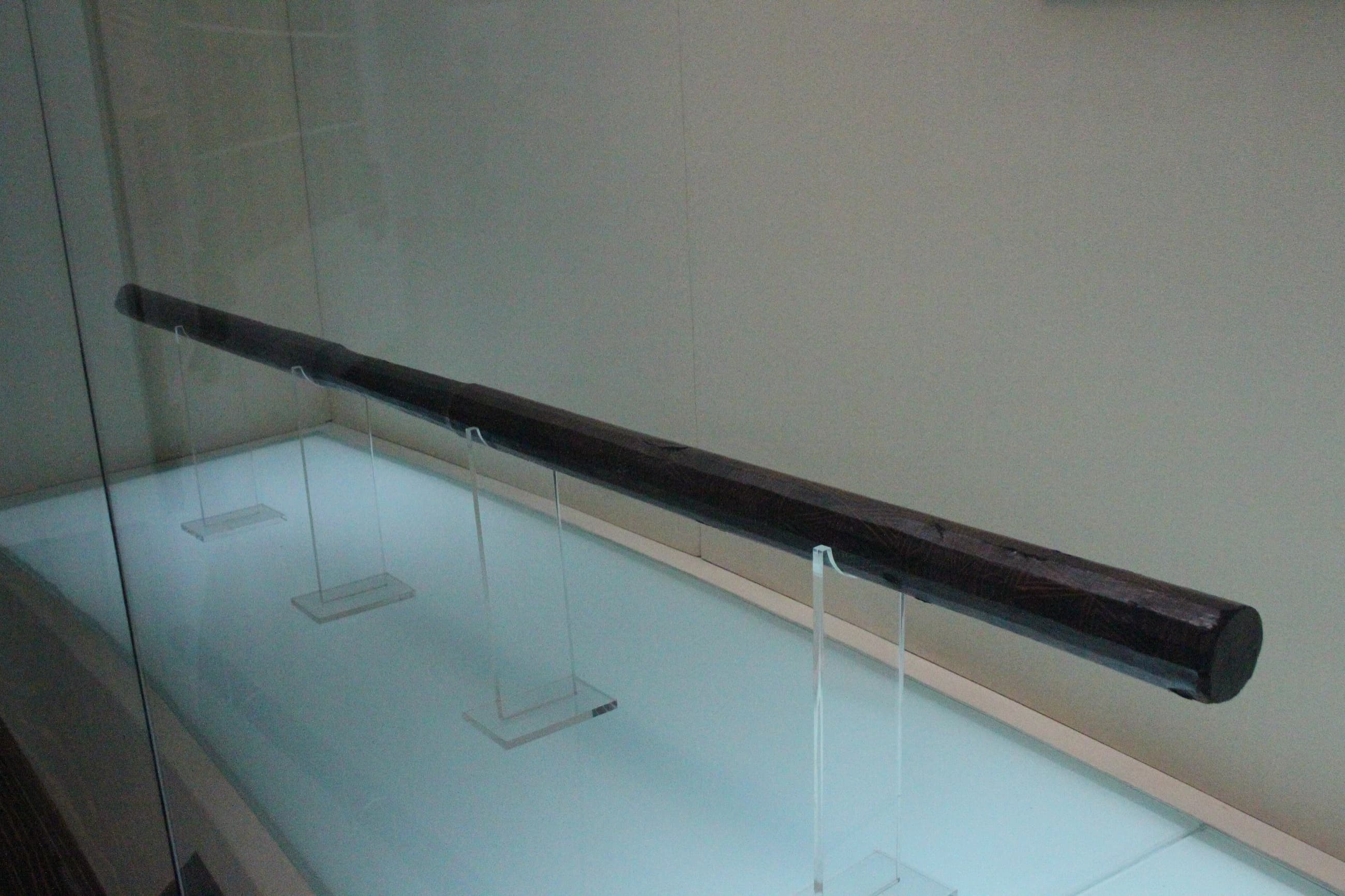
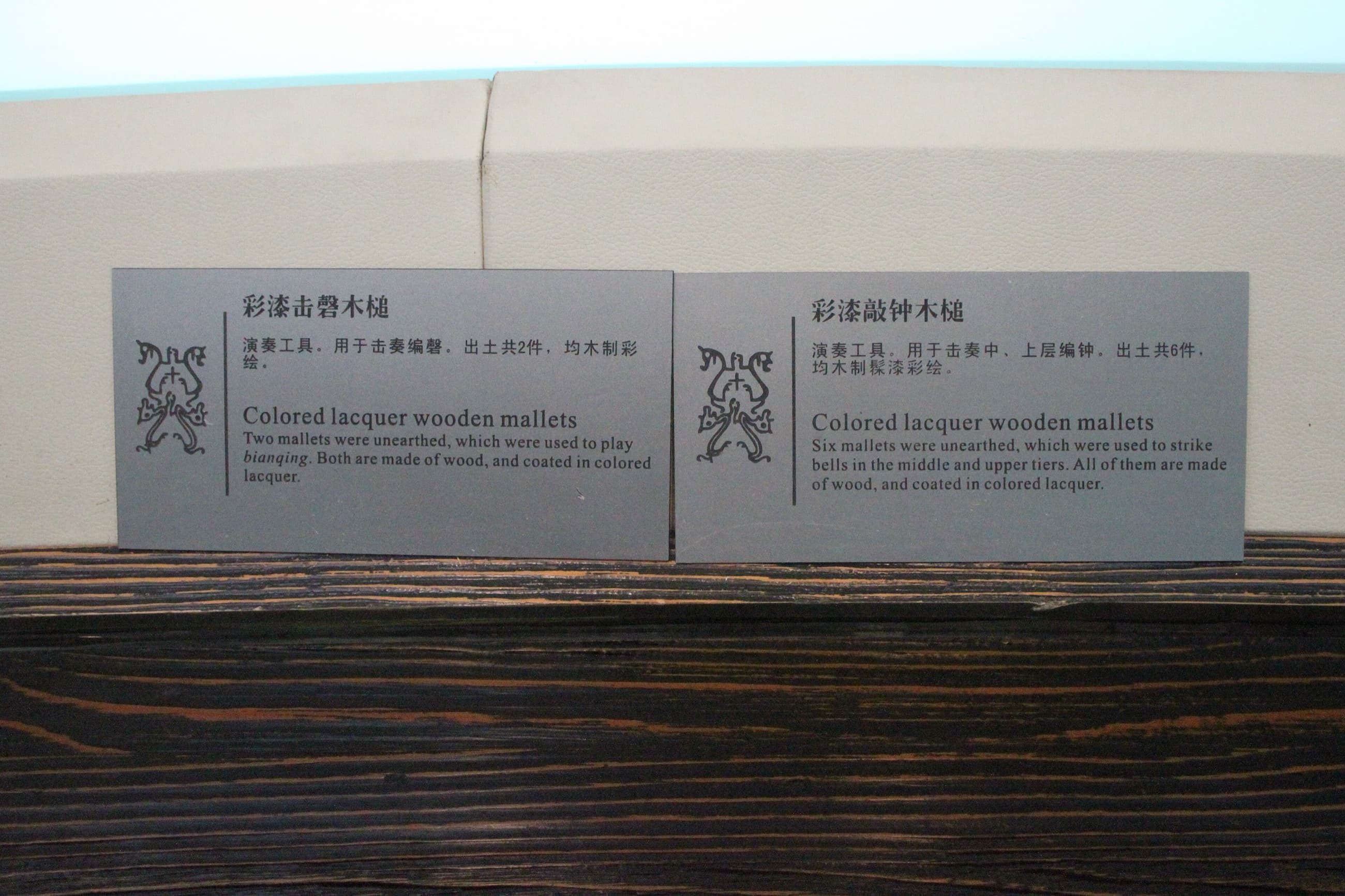
Large bells demanded control over moulds and molten bronze. The timber frame demanded a different knowledge of load, joinery and movement. Bronze figures support major crossbeams as both engineering components and images of service. Lacquered mallets and a long striking rod show that performance required tools matched to different sizes of bell.
It is tempting to imagine one genius inventor. The evidence points instead to coordinated expertise distributed across many hands. The orchestra was a system because its production was also a system.
Music as an Order of Power
In the Zhou world, musical display was inseparable from ritual rank. The ability to commission bronze, gather musicians and stage an ensemble communicated resources and legitimacy. Sound filled a room, but the frame also worked in silence: anyone entering the chamber could see hierarchy made physical.
The Chu gift bell adds another relationship. It links Marquis Yi to a more powerful neighbouring ruler and places diplomacy inside the tomb. The ensemble therefore should not be treated as a neutral ancestor of a modern concert orchestra. Its music belonged to ceremonies, obligations and distinctions that organised political life.
At the same time, the inscriptions show communication across regional systems. Difference was not absence of theory. Musicians and makers developed ways to name correspondences among traditions.
Can We Hear the Past?
Replicas can reproduce dimensions and test the two-tone principle. Performers can use reconstructed instruments to explore tuning and ensemble practice. Those experiments are valuable because sound must be made to be understood. Yet every performance includes modern decisions: which replicas, which tempo, which arrangement and which assumptions about missing practices.
The originals offer a different encounter. Stand before them and look for the flattened mouths, the ranked sizes, the supporting figures and the beaters. Imagine the movement required to cross the frame. Then remember that the first question is still present in every bell.
One body was engineered to hold two notes. Sixty-four related bodies turned that principle into a field of sound. The tomb preserved not a frozen concert, but the equipment and written thought from which music can be investigated again.