
You can see the pavilion. You may even hear people standing beside it. Yet the path beneath your feet bends into a stone chamber, rises between two perforated rocks and returns you to a ledge that looks familiar but is not the same. In Suzhou’s Lion Grove, being close to the destination does not mean knowing how to reach it.
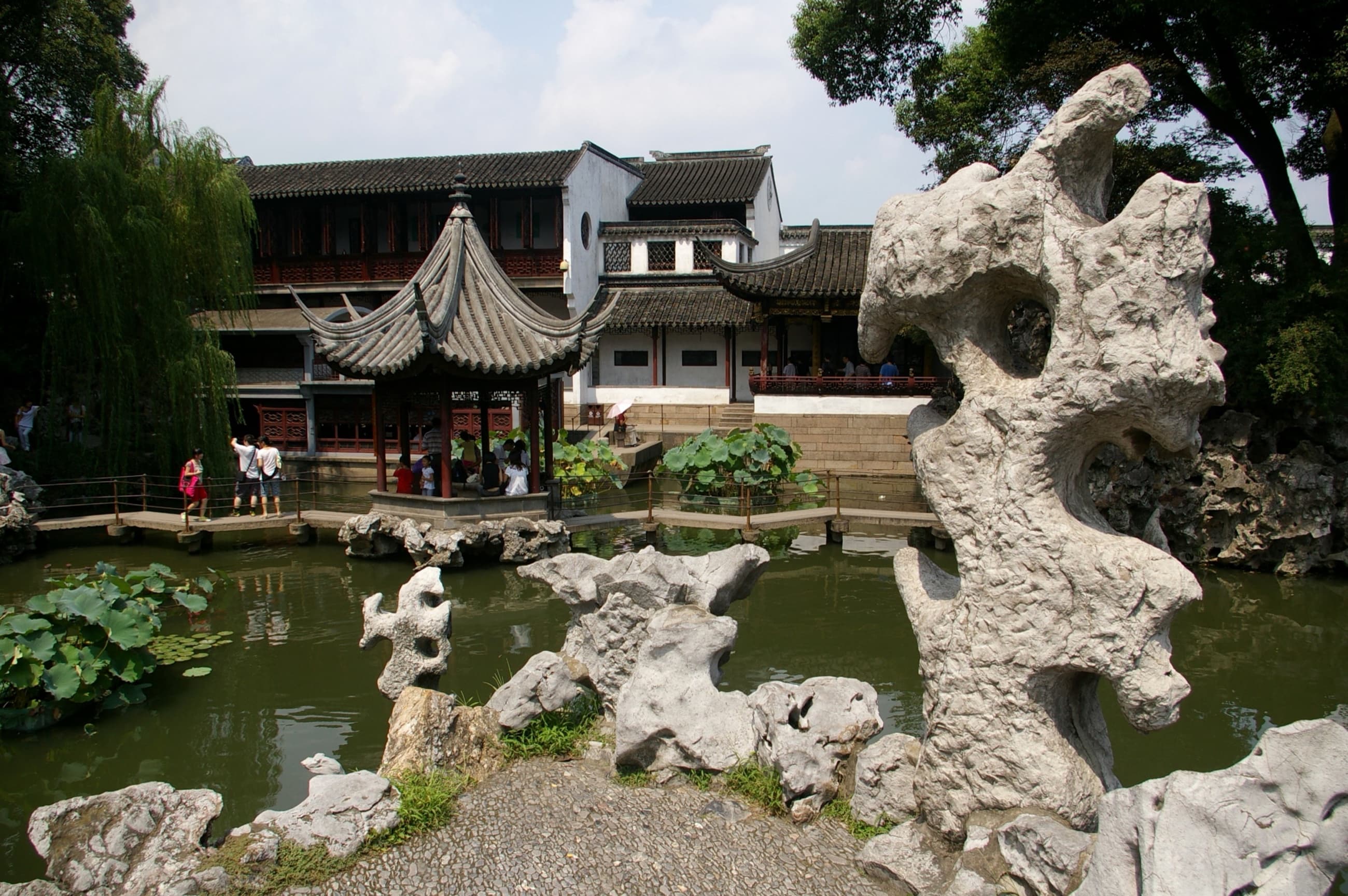
The garden’s famous rockery is often photographed as a collection of sculptural stones. That is only half its design. It is a mountain made for bodies: a network of paths, caves, bridges, openings and false choices compressed into an urban site. The visitor supplies movement; the rocks edit it.
Getting lost is therefore not a failure to understand the garden. It is one of the ways the garden makes space felt.
A Mountain Small Enough to Enter
Chinese garden rockeries do not simply imitate a distant mountain’s outline. They compress mountain experiences: steepness, enclosure, sudden outlook, shadow, uncertain footing and the alternation between narrow and open space. Lion Grove intensifies that compression until a short horizontal distance becomes a much longer route.
Suzhou’s municipal description calls the garden a ‘Kingdom of Rockeries’ and records twenty-one caves and nine winding stone paths. The figures describe named or recognised components, not every possible turn a visitor can make. Overlapping upper, middle and lower levels make the route difficult to hold mentally.
A plan can untangle the maze. Walking restores the uncertainty that the plan removes.
Why the Stones Look Like Lions
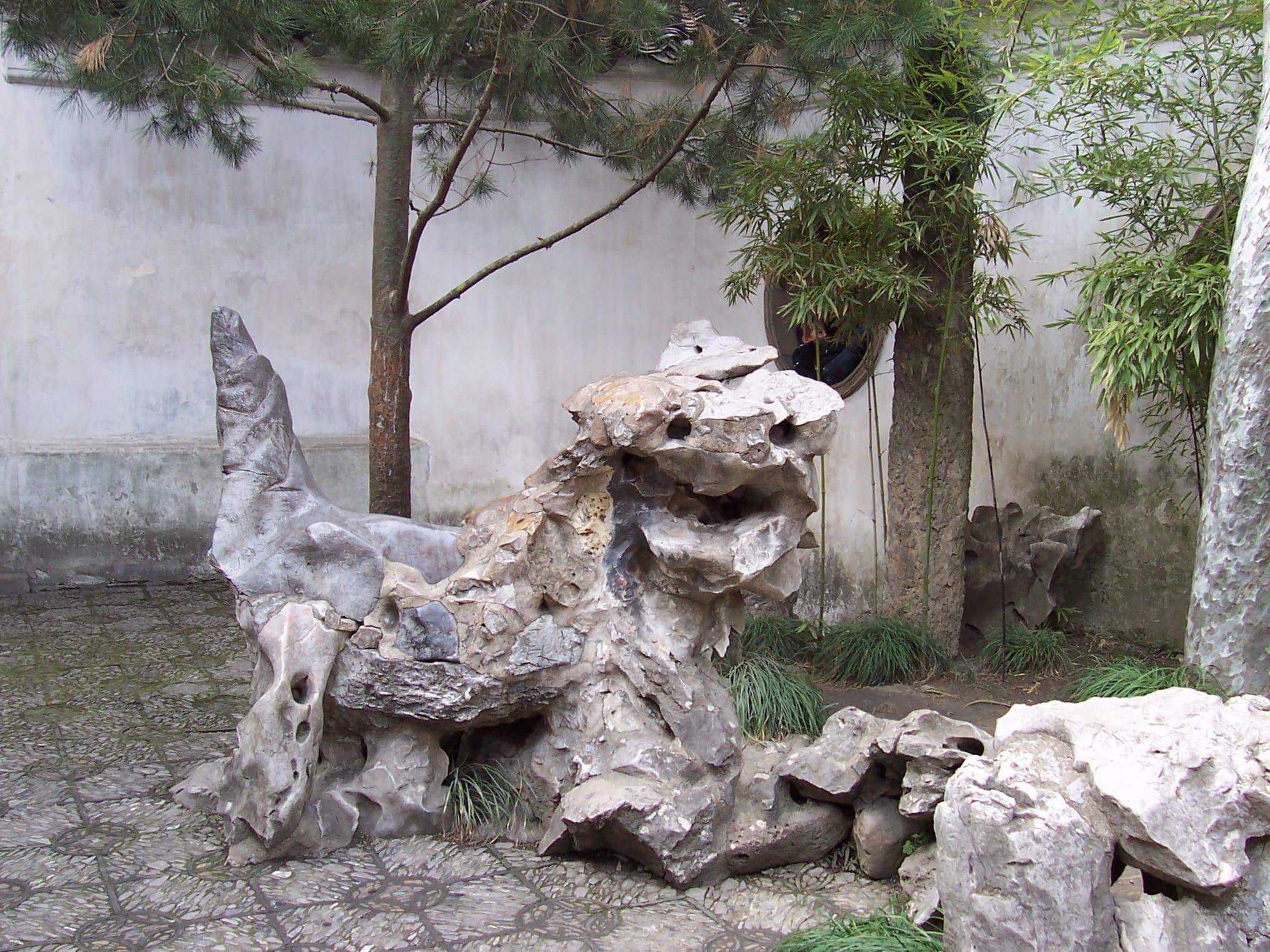
The garden’s name is connected with lion-like rocks and with Lion Peak at Mount Tianmu, associated with the Buddhist teacher Zhongfeng Mingben. The forms reward a particular kind of looking. A hole can become an eye; a protrusion becomes a muzzle; a leaning profile appears to crouch. Move a few steps and the animal dissolves back into stone.
There is no need to assign one correct lion to every rock. Ambiguity is productive. Perforation, asymmetry, texture and changing silhouette allow natural material to behave like an image without becoming a literal sculpture.
The ‘stone lion’ shown here is an invitation to compare, not a zoological label fixed by geology.
Image: a lion-like garden stone. 螺钉 / Wikimedia Commons, CC BY-SA 3.0; resized for web.
A Buddhist Garden in 1342
The garden was established in 1342 by disciples of the Buddhist abbot Weize. Its name joined the appearance of the rockery to Buddhist associations with Lion Peak and the lion as a symbol of teaching and authority. It began not as a timeless municipal park but within a specific religious and cultural setting.
Like other long-lived gardens, Lion Grove changed through ownership, rebuilding and restoration. Its present fabric should not be imagined as every stone and pavilion frozen in one Yuan-dynasty arrangement. Continuity lies partly in maintained relationships among rock, water, architecture, planting and movement.
That layered history makes the maze more than an antique puzzle. Each generation inherited a designed mountain and made decisions about how it should continue.
The Garden Is Not Natural
Garden stones were selected, transported and composed. Rockeries were built through skilled labour that balanced appearance with weight, drainage and safe passage. Openings may be natural features of limestone, but the mountain-like sequence is an artefact.
This does not make it false. A garden does not claim that geological forces raised a peak inside central Suzhou. It asks whether design can concentrate the sensations and associations of mountains within walls. The opposition between ‘natural’ and ‘artificial’ is too simple for the result.
The more useful question is how craftsmanship directs attention while hiding some of its own control. A visitor feels discovery even when the route has been carefully arranged.
Windows That Edit the View
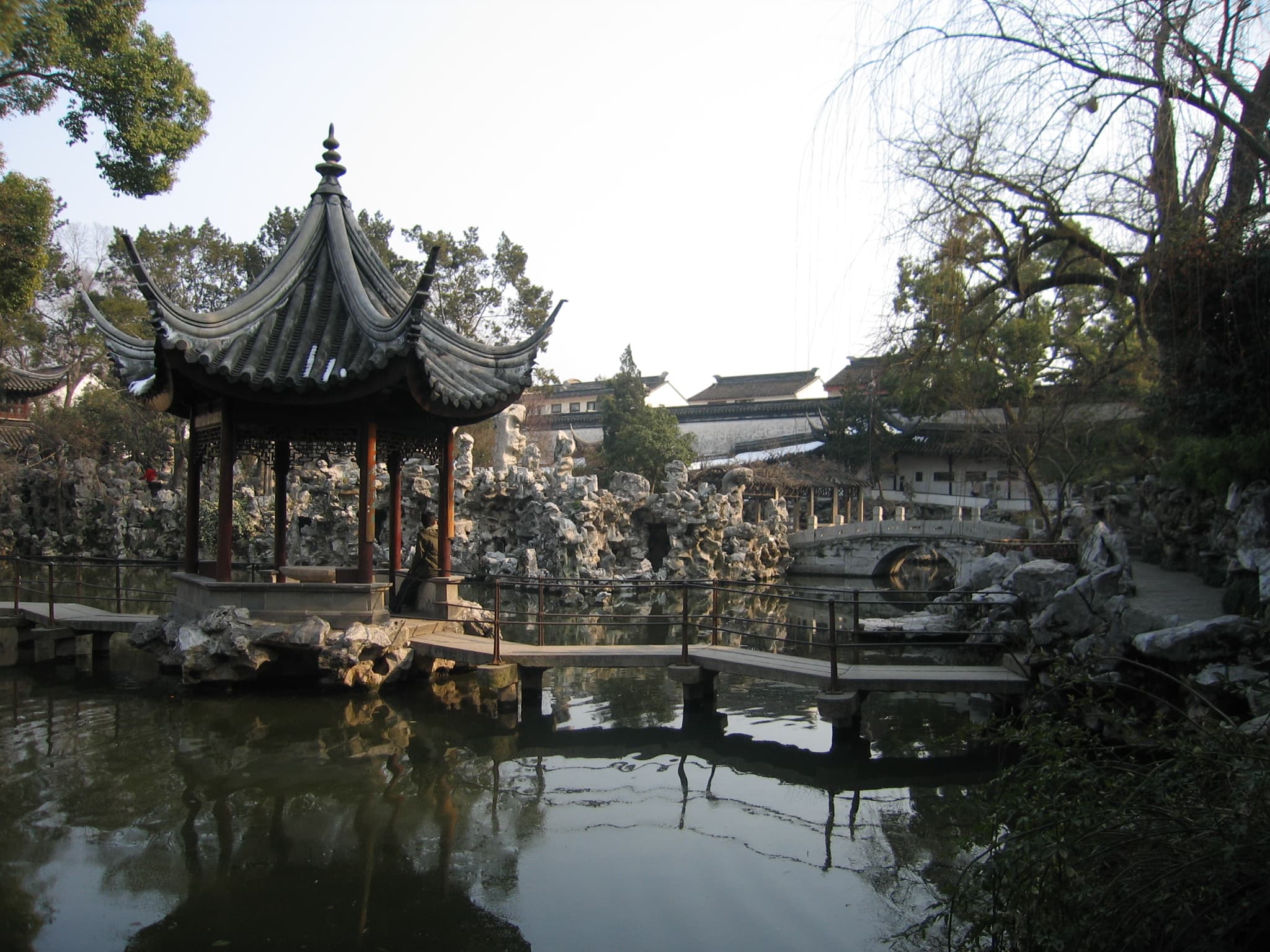
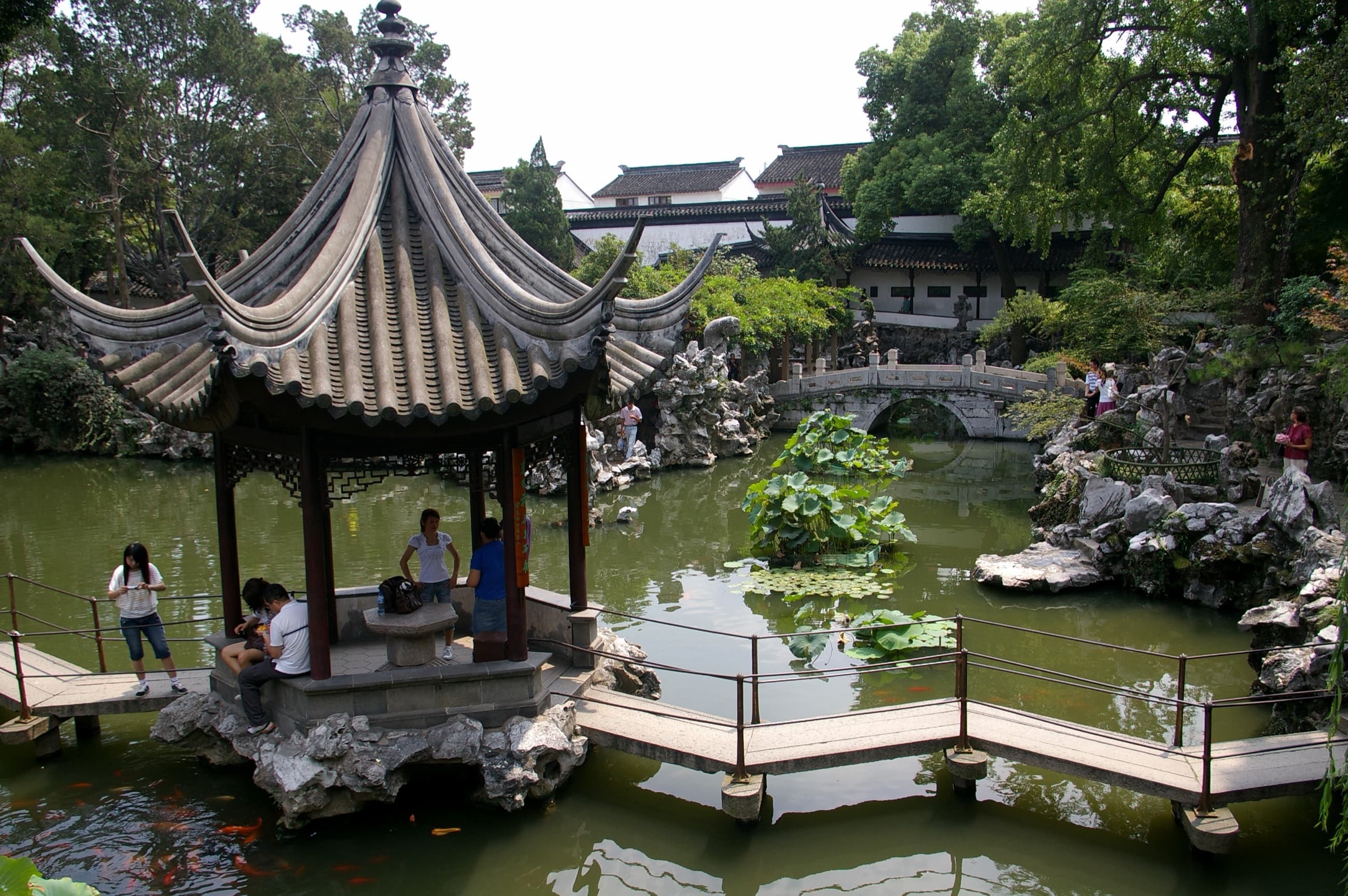
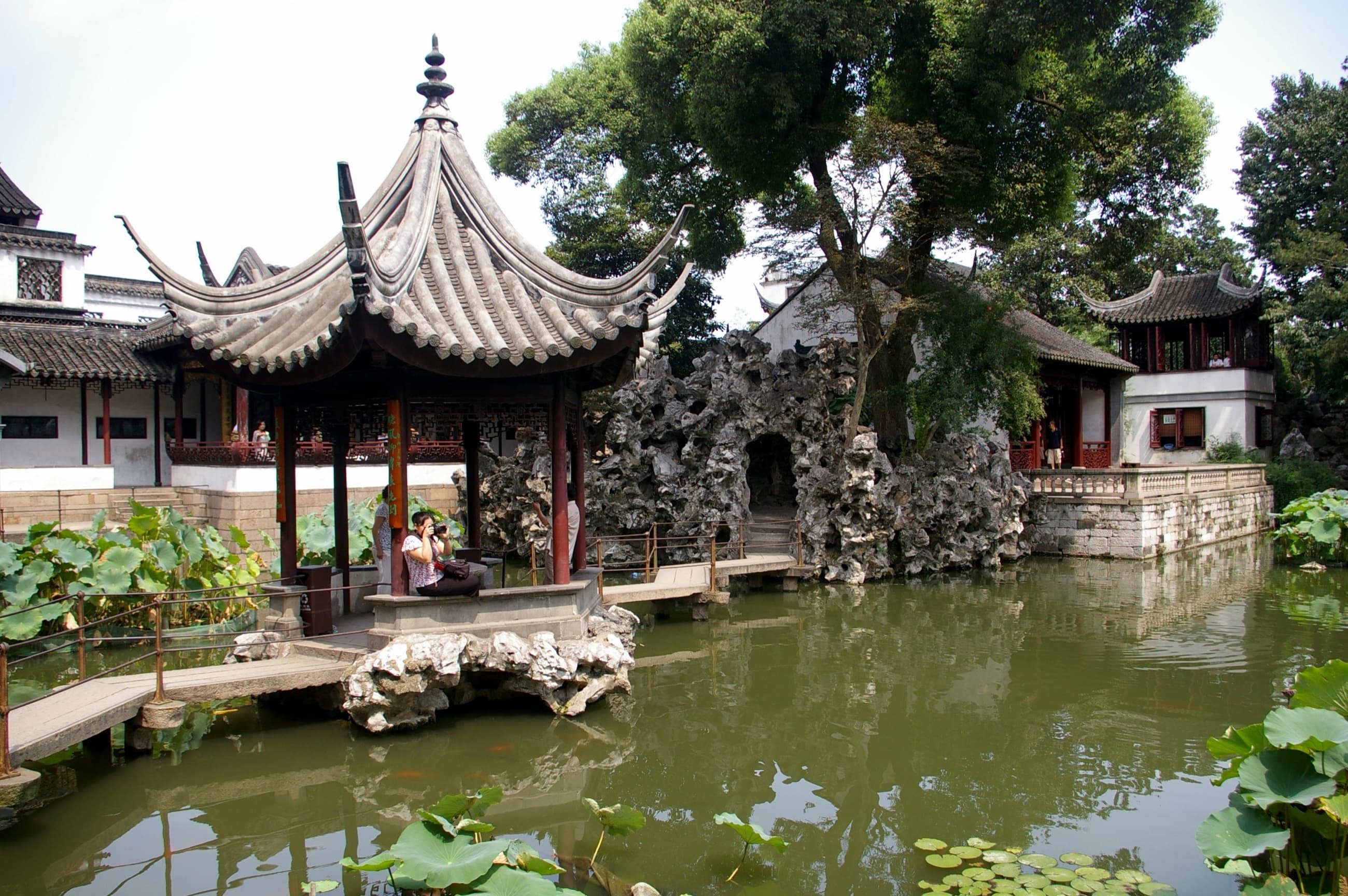
Garden architecture repeatedly turns landscape into a temporary picture. A doorway isolates one rock. A window places branches against white wall. A corridor controls the speed at which the pond appears. The rockery performs the same operation with holes and gaps.
Unlike a framed painting, the image changes when the viewer moves. A few steps replace a pavilion with sky or align two rocks that previously seemed unrelated. The garden does not provide one authorised photograph. It provides a machine for making views.
This is why a compact site can sustain repeated looking. Space has not grown, but the number of relationships has.
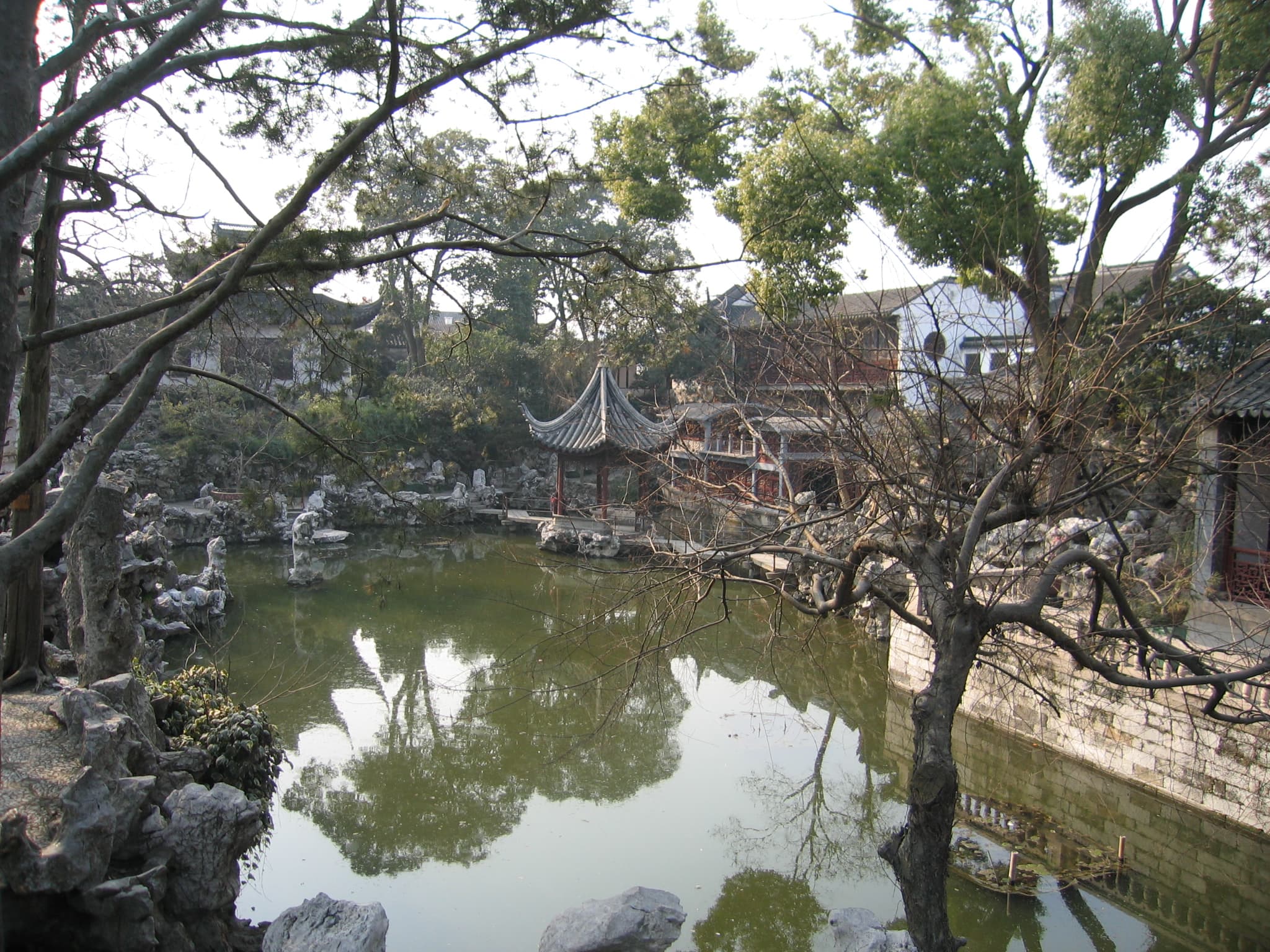
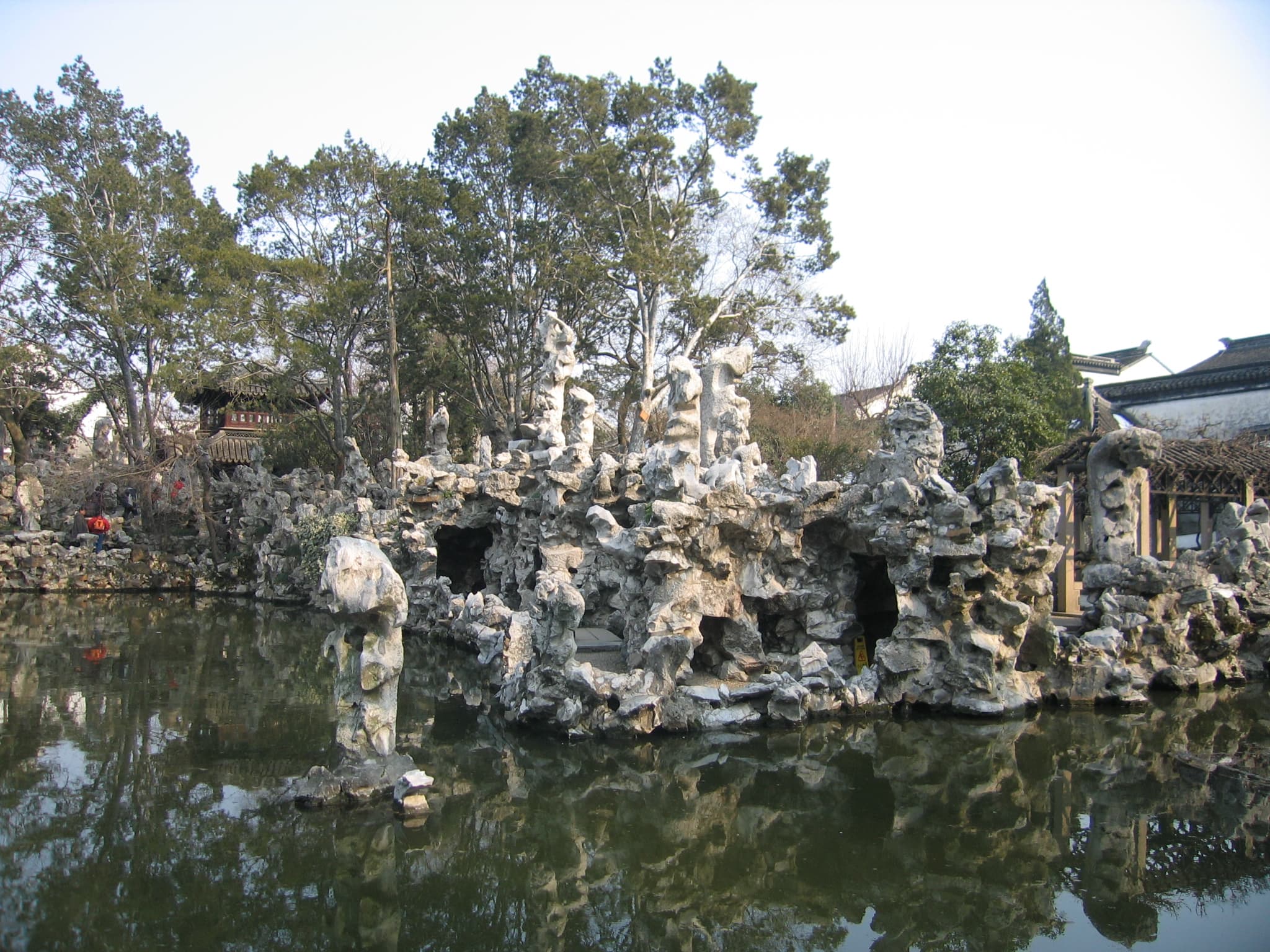
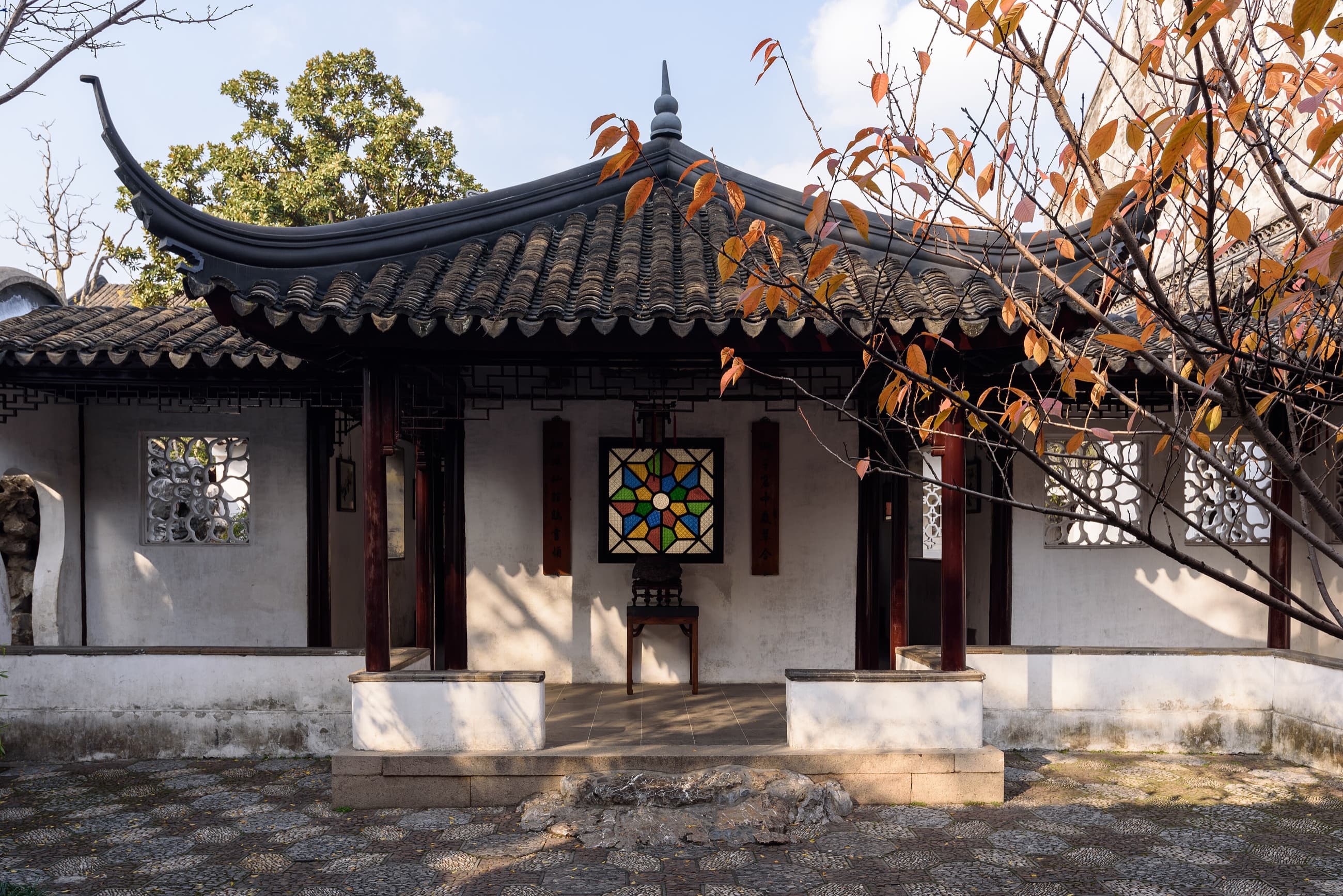
Image: architecture, path and rockery in Lion Grove Garden. Chinatravelsavvy / Wikimedia Commons, CC BY-SA 3.0; resized for web.
The Emperor Who Wanted His Own Lion Grove
The Suzhou government’s official history records visits by the Kangxi and Qianlong emperors. Qianlong’s engagement went further: versions inspired by Lion Grove were created in imperial settings, including the Yuanmingyuan and the Chengde Mountain Resort.
A replica garden is not a photocopy. New site, materials, patrons and routes change the experience. What travelled was a name, an idea of the rockery and imperial memory of Suzhou. The act of reproduction demonstrates how strongly the garden had become an object of cultural possession.
It also creates a useful comparison with the maze itself. Lion Grove produces repetition without identity: similar openings, similar ledges, another turn that seems to return to the same place. The imperial versions extended that logic across geography.
A Maze Under Pressure
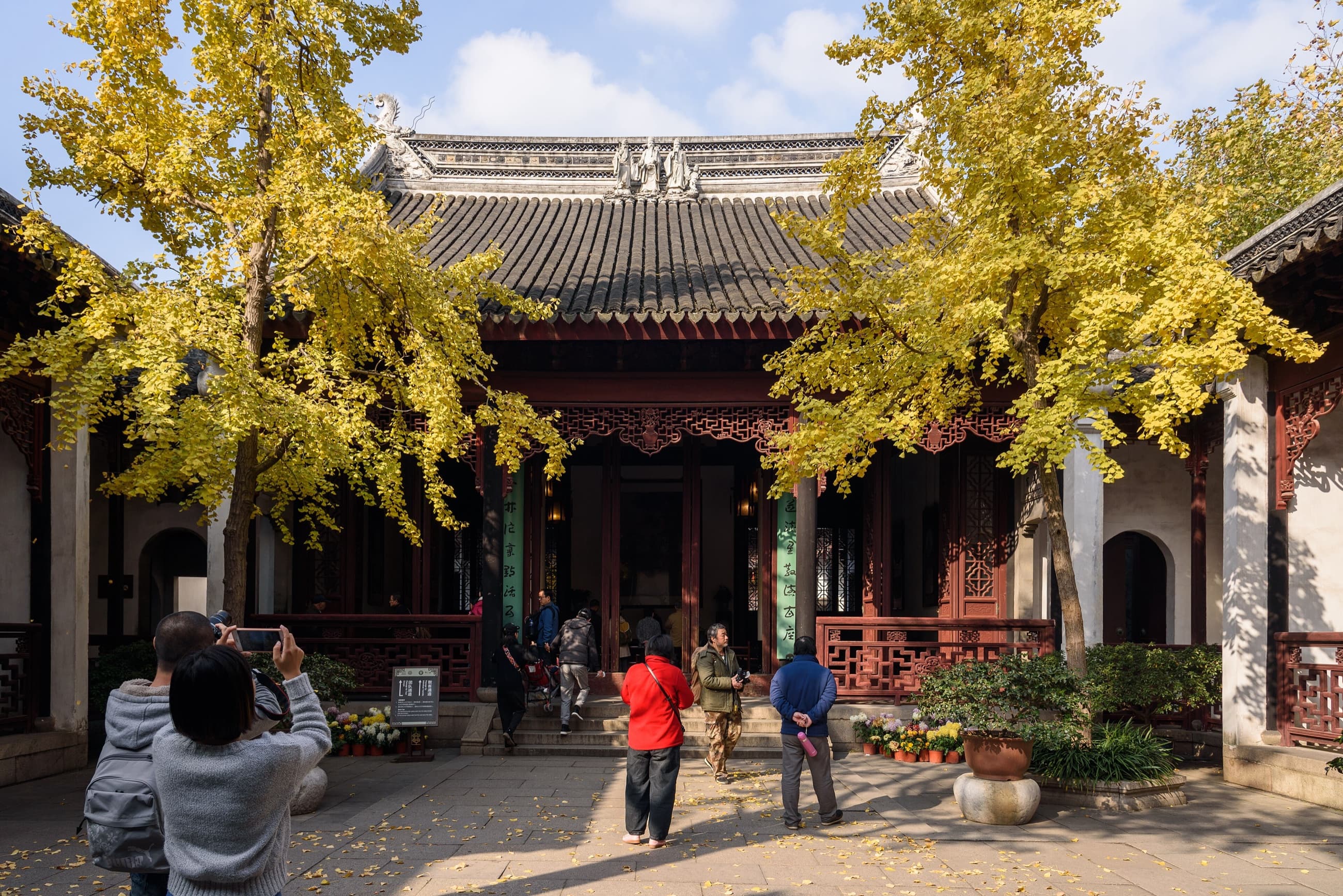
A living heritage garden must absorb weather, plant growth, water, repairs and large numbers of visitors. The very feature that makes Lion Grove compelling — narrow, irregular circulation through stone — also creates conservation and safety pressures. Official visitor rules now restrict climbing outside permitted routes and other activities that could damage the site.
Maintenance can easily become visually invisible to visitors. Paths appear ancient and spontaneous even when drainage, joints or railings have required recent work. Good interpretation should make care visible without turning the garden into a construction report.
The aim is not to preserve one perfect photograph. It is to preserve the relationships that allow movement, surprise and framed views to continue.
Leave Without Solving It
At the exit, the rockery may fit inside one glance. That view can make the earlier confusion seem impossible. The distance was short; the time inside was long. Lion Grove has changed measurement by replacing metres with decisions.
The garden does not need to be conquered like a puzzle. Its value lies in the repeated failure of overview: stone becomes lion and then stone again; a pavilion appears and vanishes; an opening becomes route, frame or dead end depending on where the body stands.
A mountain normally makes a person feel small through scale. Lion Grove achieves something similar through complexity. It reduces the mountain’s size and preserves its power to withhold the way forward.