
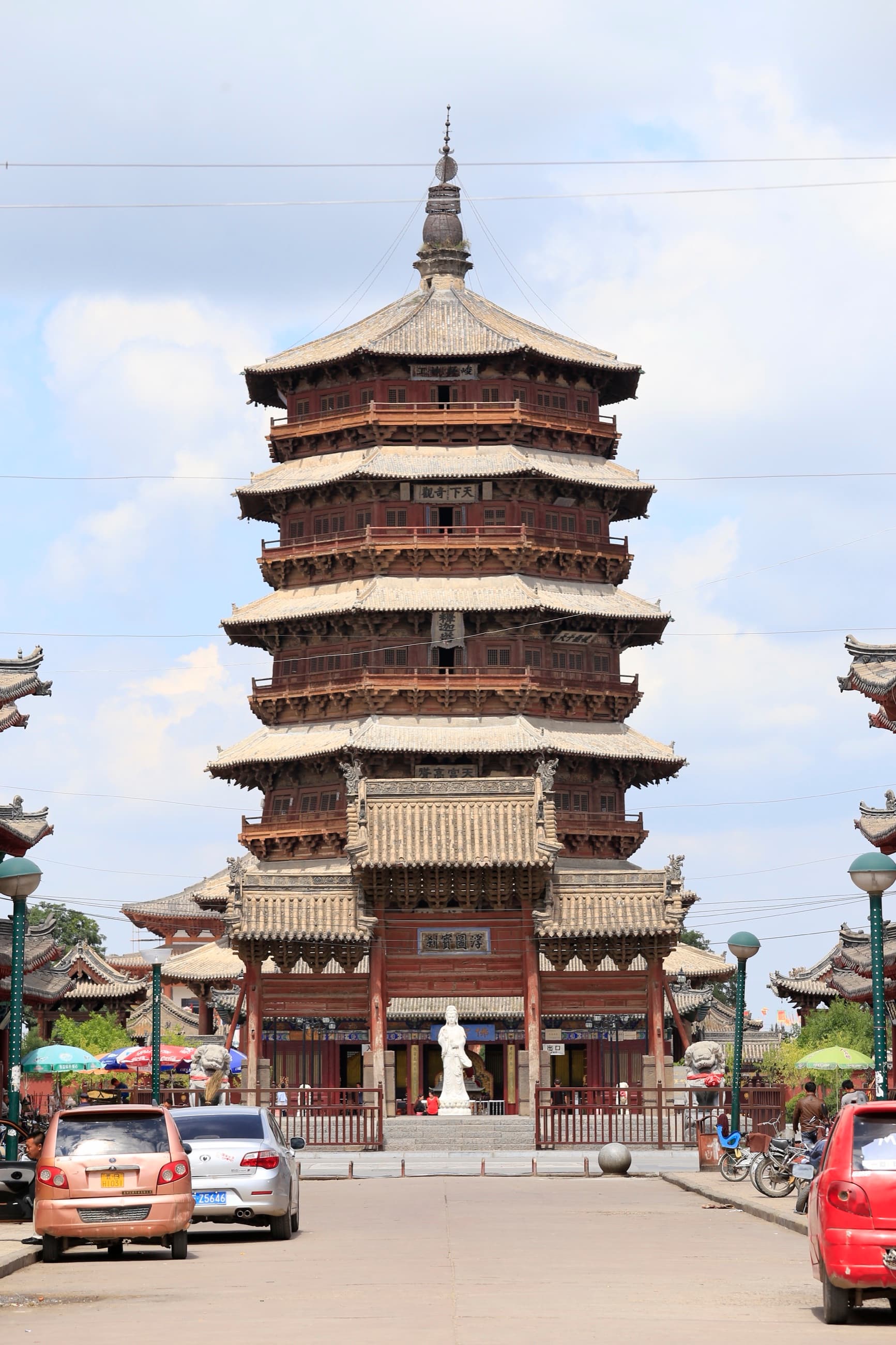
From a distance, the Pagoda of Fogong Temple seems to make an impossible promise. Built in 1056 during the Liao dynasty, it rises almost 67 metres without a masonry core. For generations it has remained standing through wind, earthquakes, war damage and repeated repair.
The promise becomes less comfortable when you look carefully. The tower is not perfectly upright. Parts of it lean. Timbers carry scars, replacements and deformation. Survival has not preserved a motionless object; it has preserved a structure that has been moving for centuries.
The real story is therefore not that wood defeated time. It is how a highly organised timber system redistributed force — and how later human decisions sometimes helped and sometimes weakened that system.
Five Storeys Outside, Nine Levels Within
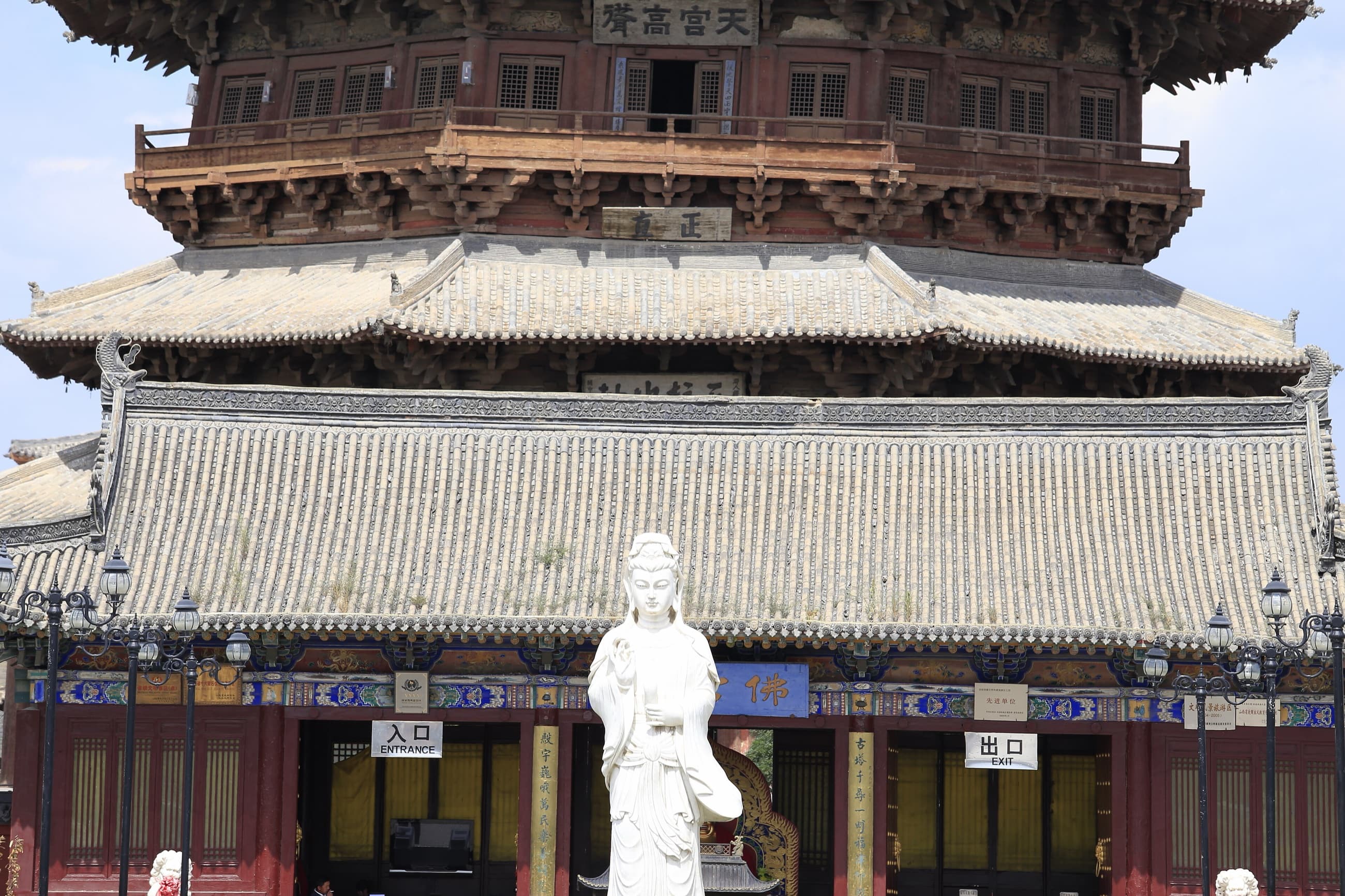
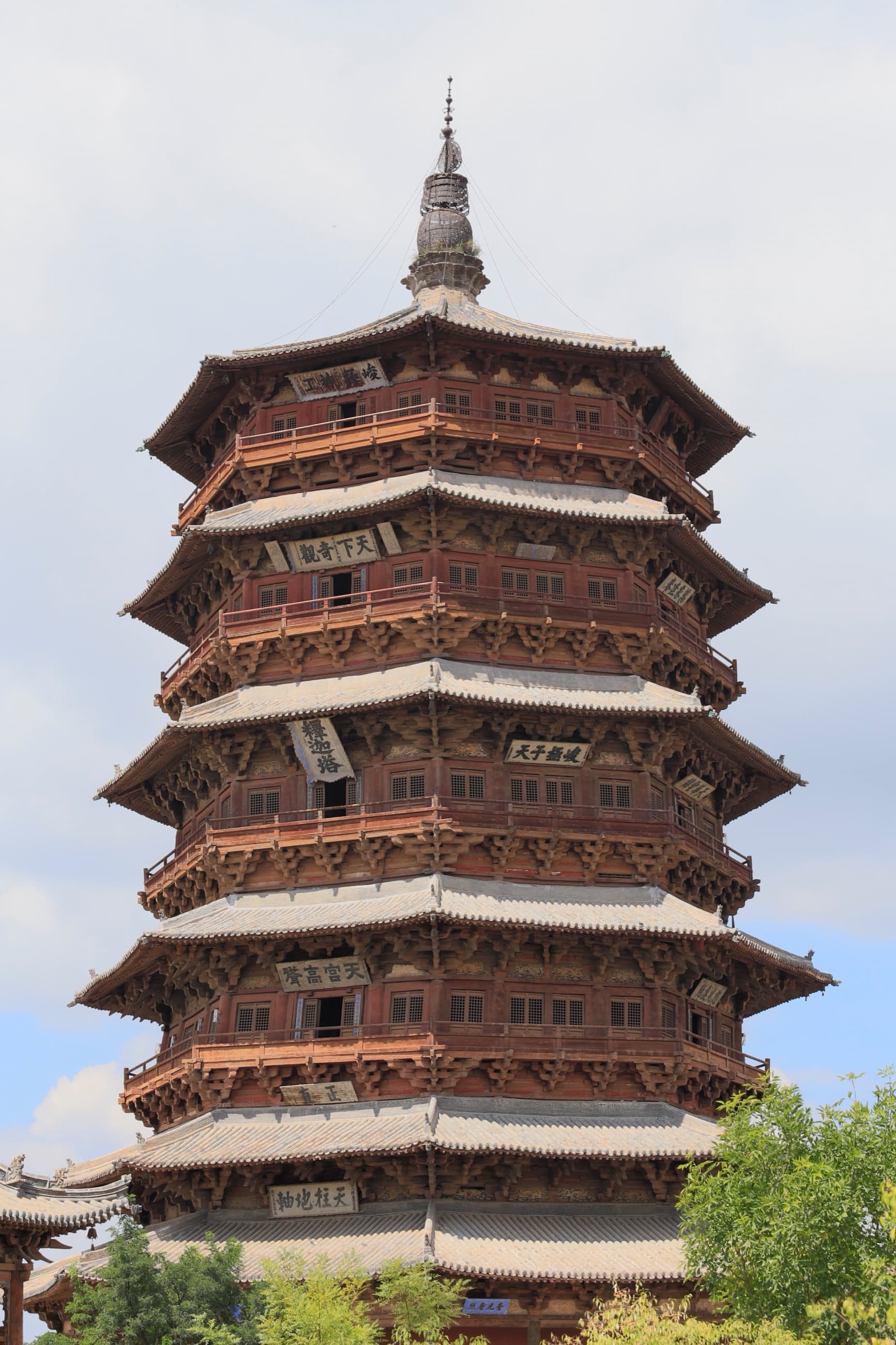
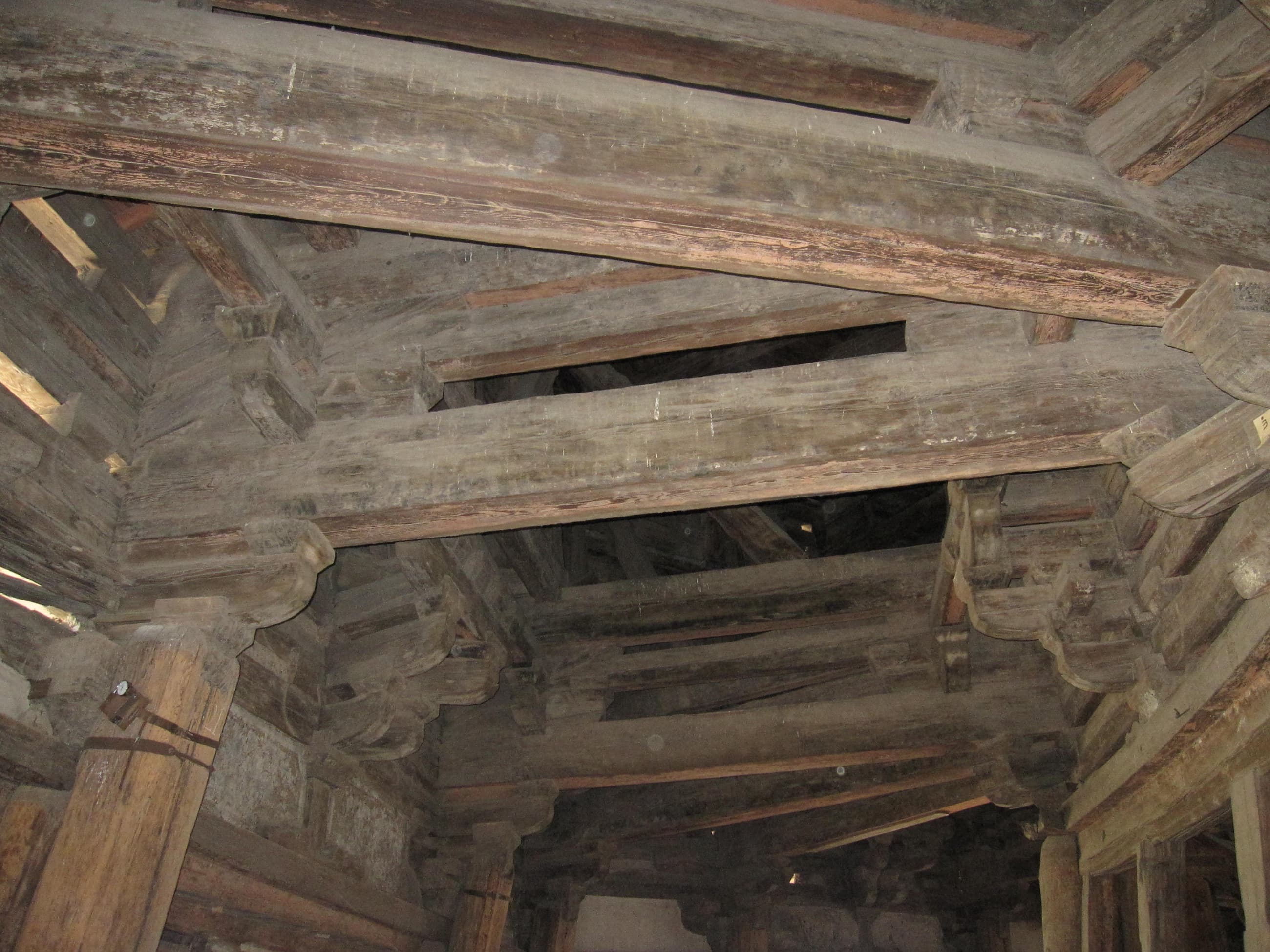
The exterior presents five main storeys beneath stacked roofs. Inside are four concealed mezzanine levels, creating a much denser vertical structure than the silhouette suggests. Columns form inner and outer rings, while beams, braces and floors connect them.
This arrangement is sometimes described as a tube-within-a-tube system. It is not a single giant tree and not a pile of interchangeable blocks. Loads pass through many members. When wind or ground motion pushes one part, connections and bracket sets can permit small movements while distributing stress.
Fifty-Four Ways to Transfer Weight
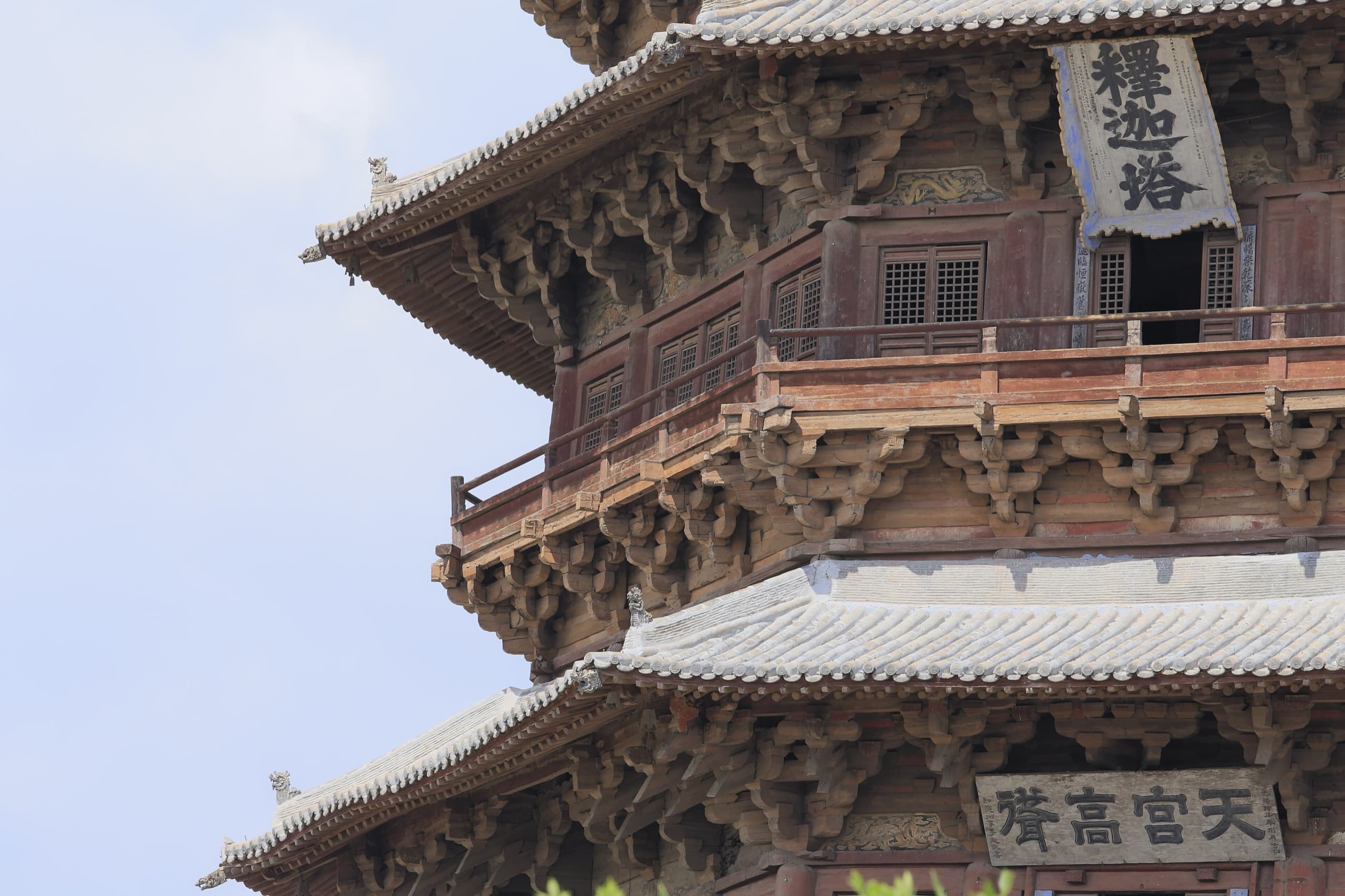
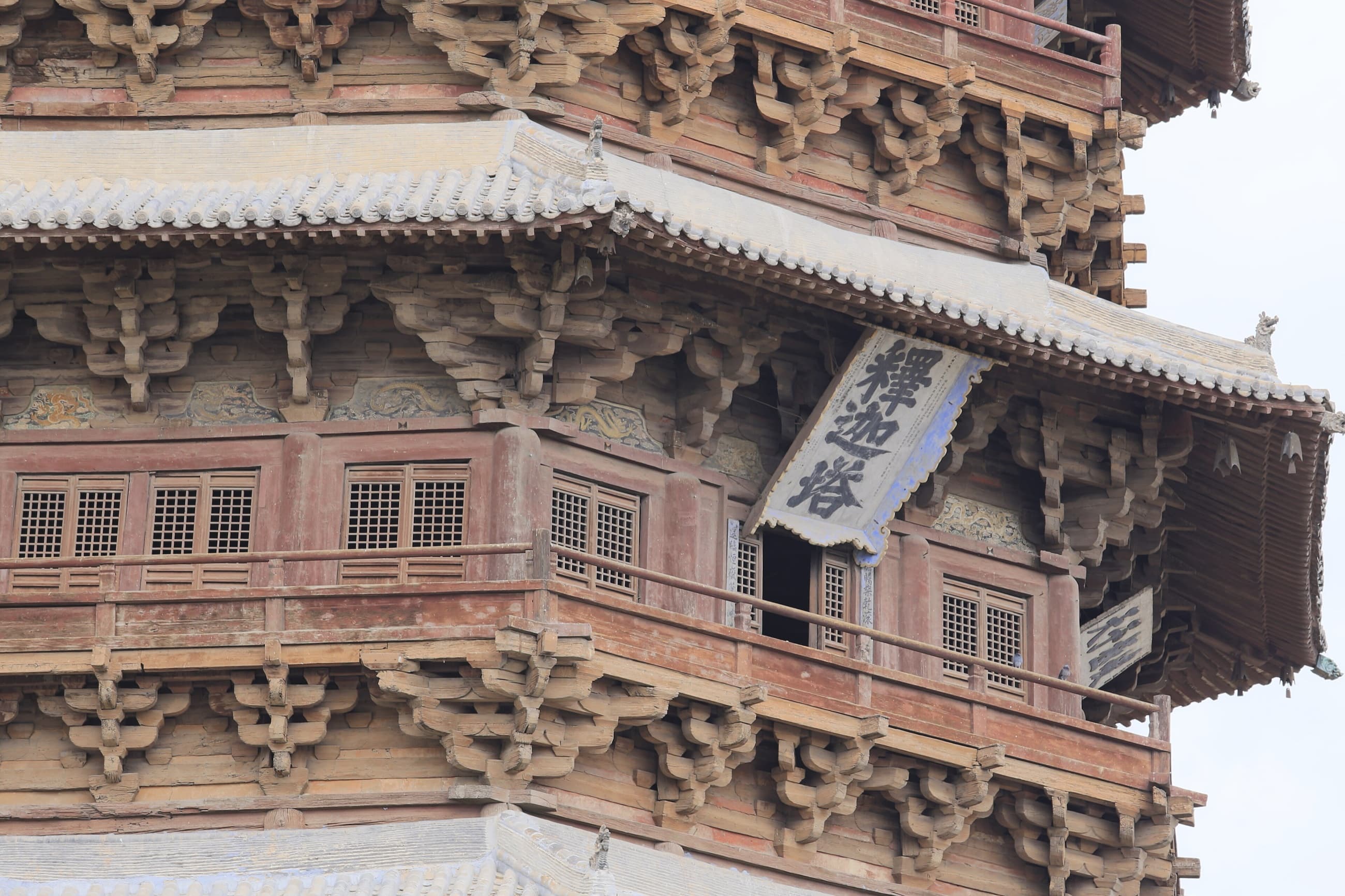
Studies commonly identify 54 types of dougong, the interlocking bracket assemblies that project outward from columns and support the roof and floor system. The number is impressive, but variety matters more than the headline. Different positions carry different geometries and loads.
Dougong does not make the building indestructible, and the familiar claim that the pagoda contains ‘no nails’ reduces a complex carpentry system to a slogan. Its resilience comes from the behaviour of the whole: joints, columns, braces, floors, walls and the distribution of mass.
A Tower Full of Repairs
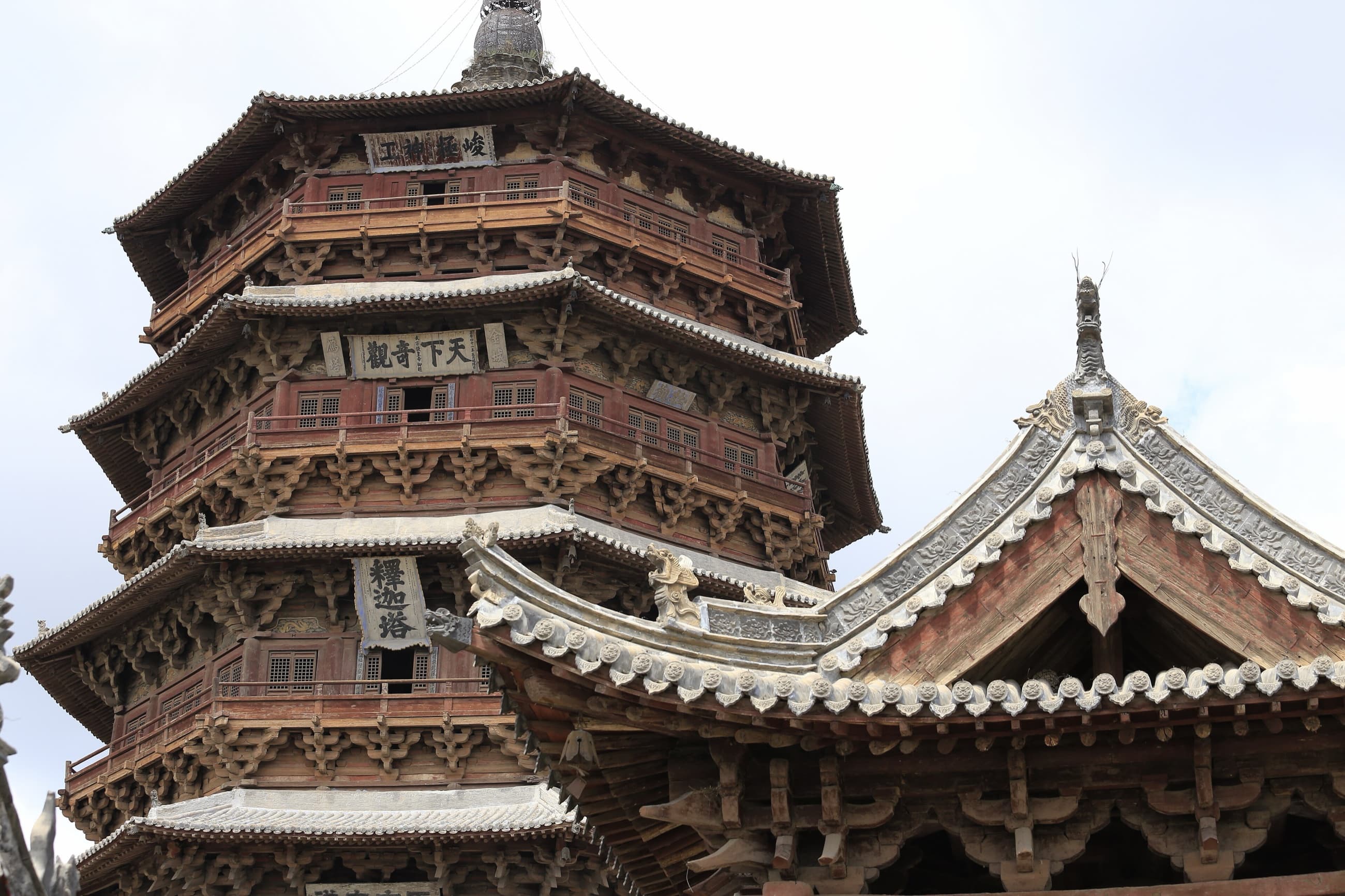
Historic timber buildings survive because people replace roof tiles, splice damaged members, brace weak zones and make choices about what to retain. Those interventions become part of the structure’s biography.
Some changes have had unintended consequences. Twentieth-century alterations removed or changed elements that had contributed to lateral stability. Earlier military damage and long-term weathering also left the tower with uneven capacity. No single episode explains its present condition.
Image: interior structure at Yingxian Wooden Pagoda. Zhangzhugang / Wikimedia Commons, CC BY-SA 3.0; resized for web.
Why It Leans
Recent structural research treats the lean as a product of interacting causes rather than one dramatic event. Differential deformation, weakened connections, wind exposure, past damage and repair history can reinforce one another. The northeastward component of the tilt is visible in measurement even when a visitor cannot easily read it from the ground.
This is where heroic survival stories become risky. Saying the pagoda simply ‘withstood every earthquake’ hides damage, maintenance and uncertainty. A building may remain standing while its safety margin narrows.
Straightening Can Be More Dangerous Than Leaning
A leaning monument tempts a simple response: push it back. For a thousand-year-old timber structure, that may redistribute forces faster than aged joints can accept. Large-scale replacement can also erase the very evidence needed to understand how the building changed.
Conservation therefore becomes a negotiation among competing risks. Monitoring can reveal whether movement is continuing. Targeted reinforcement may protect vulnerable zones. Repairs must consider fire safety, visitor loads, moisture and the compatibility of new materials with old timber. The most visible solution is not necessarily the safest or most truthful one.
Survival Is an Active Verb
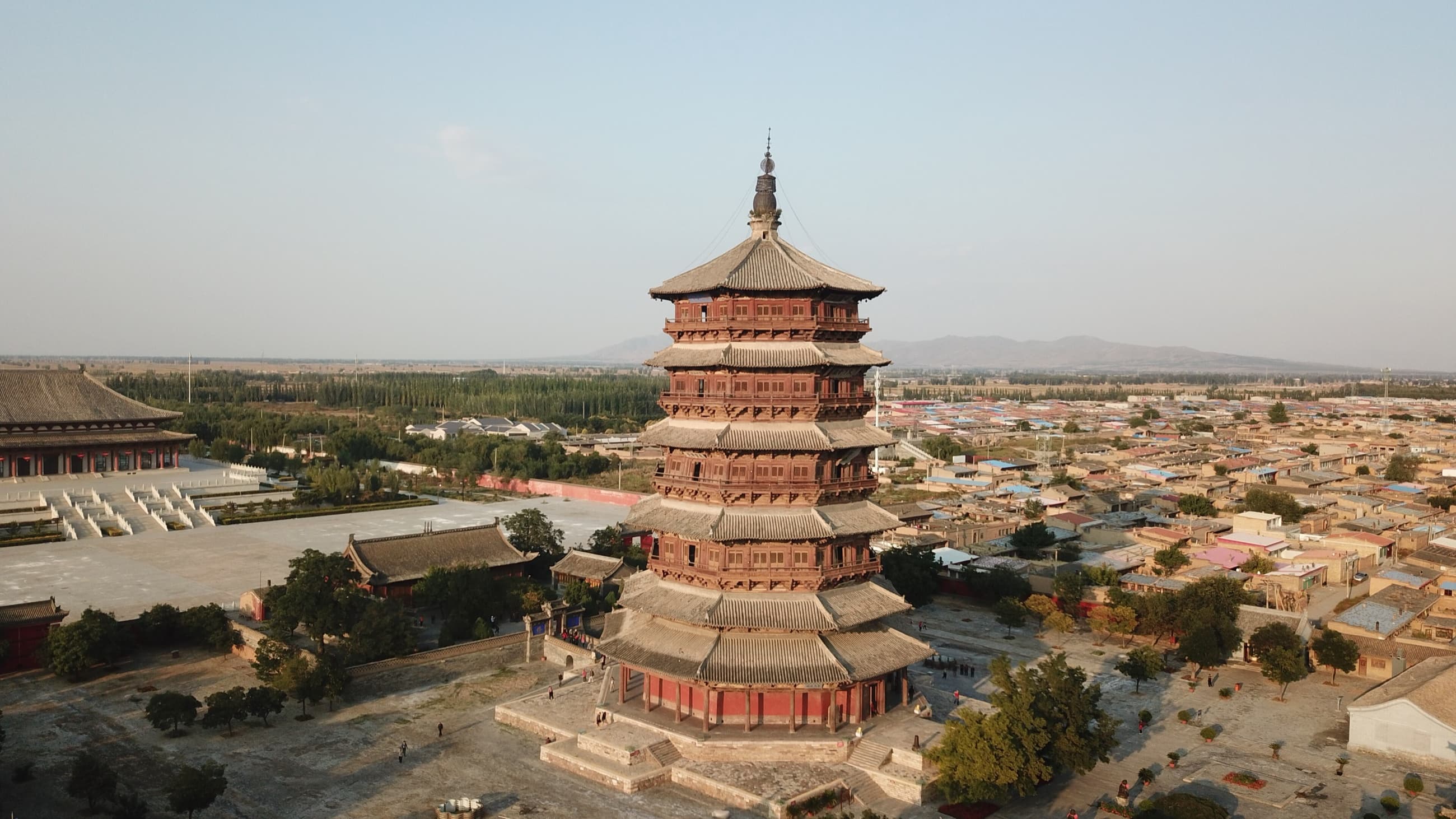
The pagoda has endured, but endurance is not a property sealed into the wood in 1056. It is an ongoing outcome produced by structure, maintenance, restraint and luck.
Seen through dust and winter light, the tower can look timeless. Up close, every joint contradicts that impression. Wood compresses. Floors settle. Repairs age. The building survives by carrying its past changes forward — including the lean that now makes intervention so difficult.
Image: Pagoda of Fogong Temple in dusty light. Charlie fong / Wikimedia Commons, CC BY-SA 4.0; resized for web.
What Should the Future Preserve?
If conservation aimed only to make the pagoda look newly straight, it could destroy historic fabric or conceal how the structure actually behaves. If it avoided all intervention, preventable deterioration could continue. The responsible middle is slower: document, model, monitor, test and intervene only as far as evidence supports.
Yingxian’s wooden tower is extraordinary not because it escaped history. It is extraordinary because history remains visible in its geometry. Its tilt is not a flaw outside the story. It is the story’s most honest line.