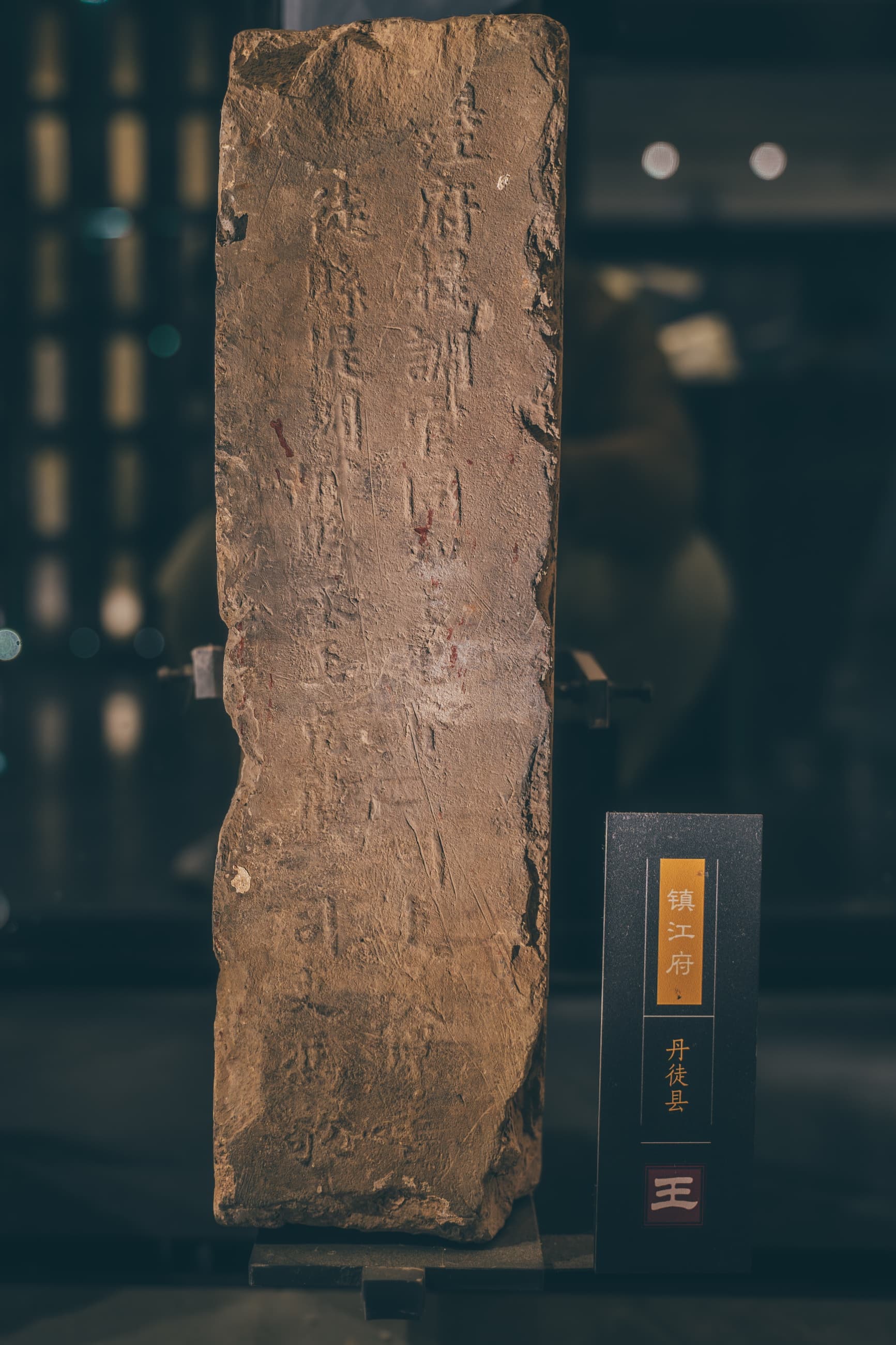
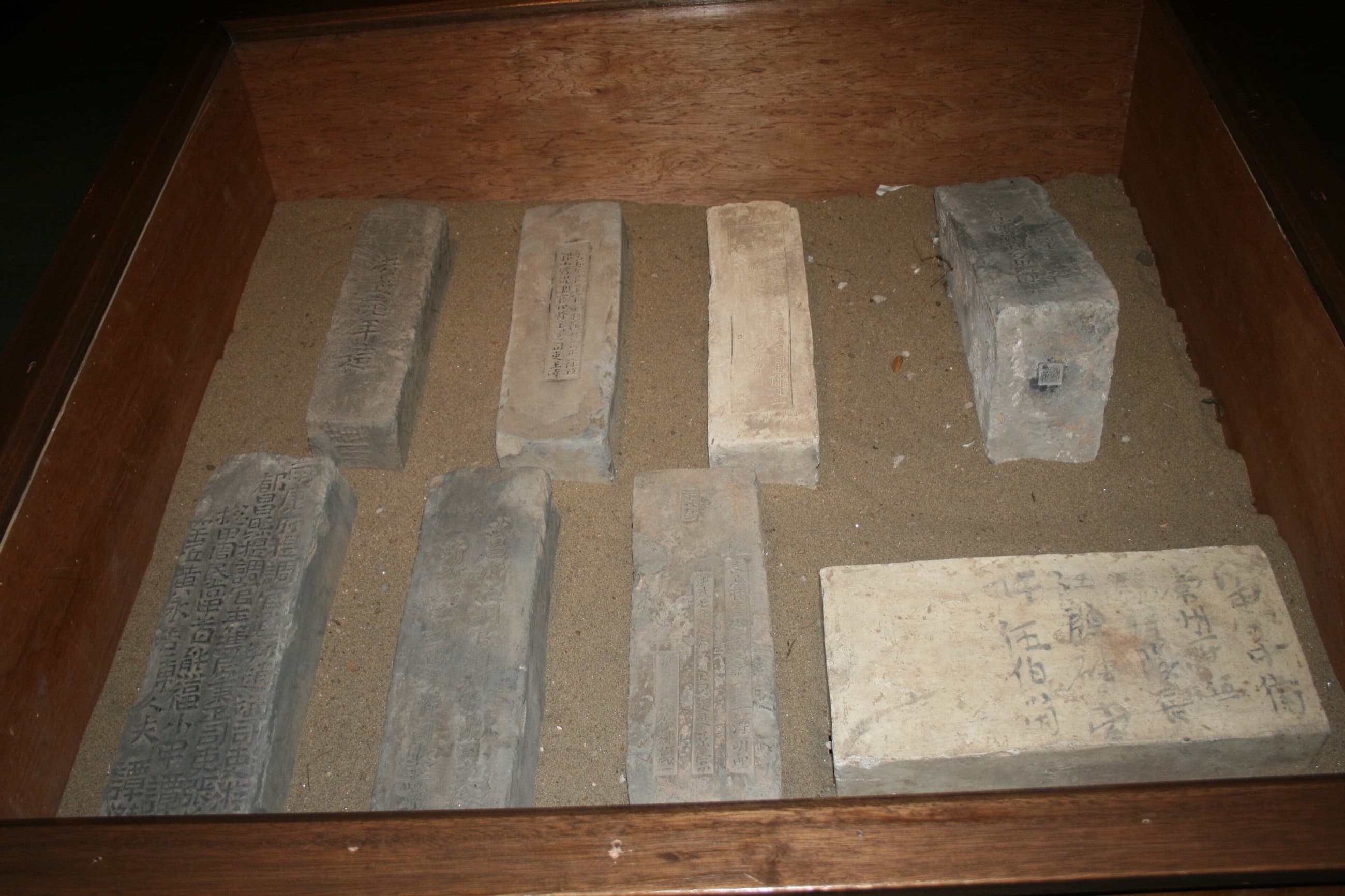
The cover image shows an inscribed city-wall brick made in Dantu County. It is not the remarkable 79-character brick that opens this story. That separate Ming-dynasty brick in the Nanjing City Wall Museum measures roughly 40 centimetres long, 20 wide and 10 thick. It weighs about 20 kilograms, but its most arresting feature is its text: 79 characters naming 17 people connected to its production.
The list moves down a chain of responsibility. It includes officials and clerks at prefectural and county level, leaders within local labour organisation, a kiln worker and the people who made the brick. This is not a poem, dedication or signature of a celebrated artist. It is a record designed to make failure traceable.
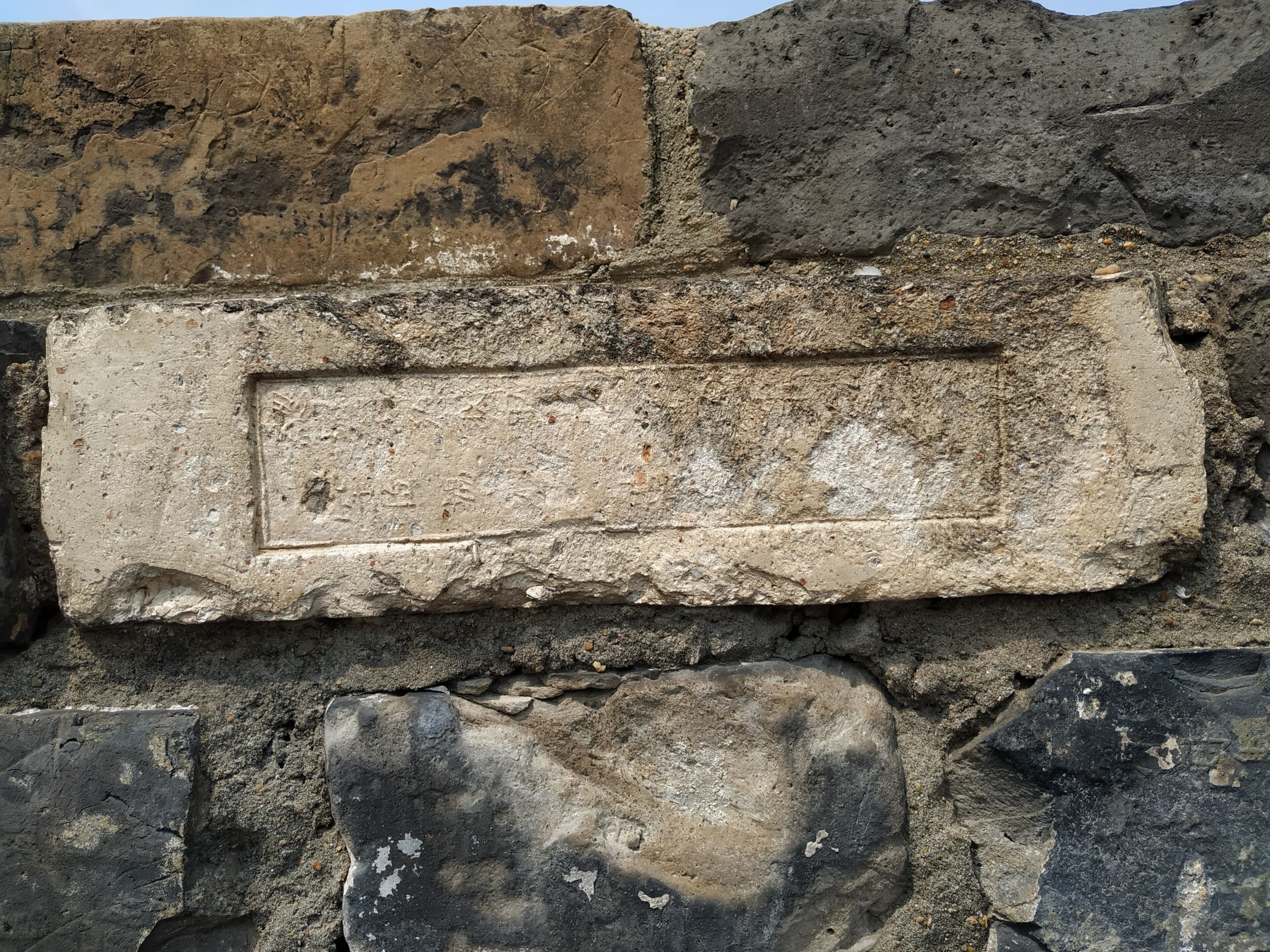
Walk along Nanjing’s surviving wall and similar marks appear again and again — sometimes clear, sometimes weathered, sometimes compressed into a few lines. From a distance, the wall looks like one body. At arm’s length, it breaks into millions of decisions, and many have names.
The Wall as a Paper Trail
The system is often summarised by the phrase wule gongming: mark the object with the maker’s name. In Nanjing, marks could record much more than one maker. They created a ladder of accountability linking wet clay in a local kiln to administrators responsible for acceptable material at the capital.
If a brick failed inspection, officials could identify where it had been made and who stood within its production chain. Mature examples name a prefecture, sub-prefecture or county, then descend through officials, clerks, local supervisors, kiln workers and labourers. Other bricks preserve shorter or less regular versions.
It would be easy to romanticise the inscriptions as proud craft signatures. That is only part of the story. Many names were impressed because the state demanded labour, material and responsibility. The wall records skill, but also hierarchy and compulsion.
Handwriting Survives the System
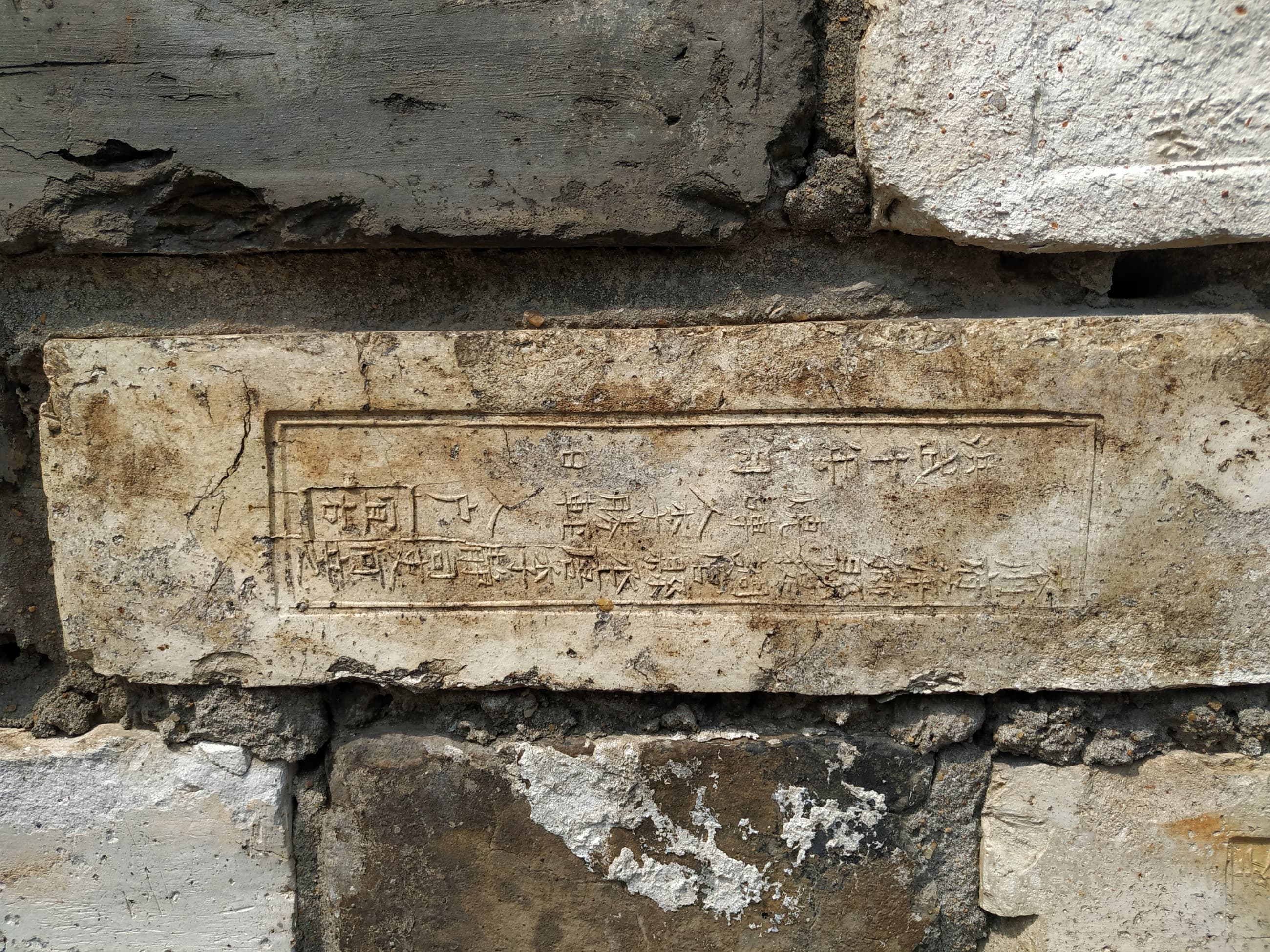
Accountability sought standardisation; the bricks preserved variation. Inscriptions were written, carved into moulds or otherwise transferred before firing. Formal regular writing sits beside rougher, compressed hands.
That variation matters because administration never becomes entirely abstract. A formula had to be shaped by a hand, pressed into material and interpreted by people in particular places. A county name can lead researchers back to a kiln landscape hundreds of kilometres from Nanjing. A personal name can reveal naming customs, local organisation or divisions of labour.
Image: a differently arranged city-wall inscription. 西安兵马俑 / Wikimedia Commons, CC BY-SA 4.0; resized for web.
A Wall That Arrived by Water
The bricks did not come only from Nanjing. Official local research traces supply to more than 30 prefectures and sub-prefectures and over 170 counties across the middle and lower Yangtze region. Kilns were often positioned near water: water was useful in brickmaking, and rivers made heavy cargo movable.
Once fired and accepted, bricks travelled through tributaries, lakes and the Yangtze toward the capital. Nanjing’s wall can therefore be imagined not only as a line around a city, but as the solid end point of a river network. Clay was dug in many landscapes, formed by dispersed communities and assembled into one state project.
The route explains why provenance mattered. A defective brick could arrive after a long chain of making, inspection and transport. The inscription carried part of that journey with it.
Twenty-Eight Years Around a Capital
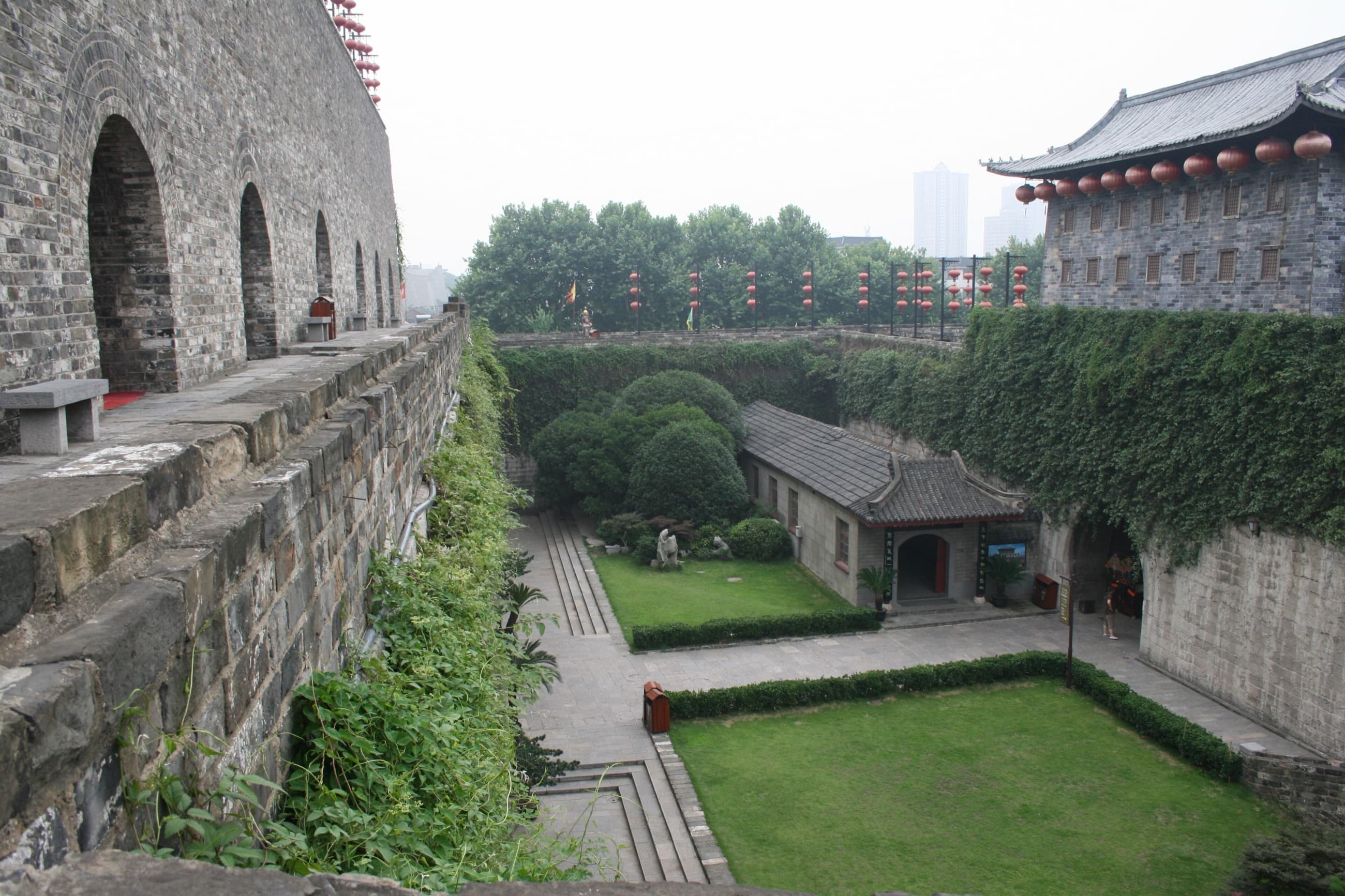
Construction began in 1366, before Zhu Yuanzhang formally proclaimed the Ming dynasty in Nanjing, and continued for 28 years. The capital’s defences formed several broad layers; the structure commonly called the Nanjing City Wall today is principally the capital wall.
Unlike an idealised rectangle, it made a long, irregular circuit fitted to terrain. Official Nanjing figures give an original length of 35.267 kilometres, with about 25.091 kilometres relatively well preserved today. Those precise modern measurements should not make construction feel neat. The project mobilised material and labour across a wide region, then fitted them to a living capital.
Its durability depended on repetition: soil selected, clay worked, blanks dried, kilns loaded, firing judged, bricks transported, courses laid — again and again for nearly three decades.
When Evidence Moves Indoors
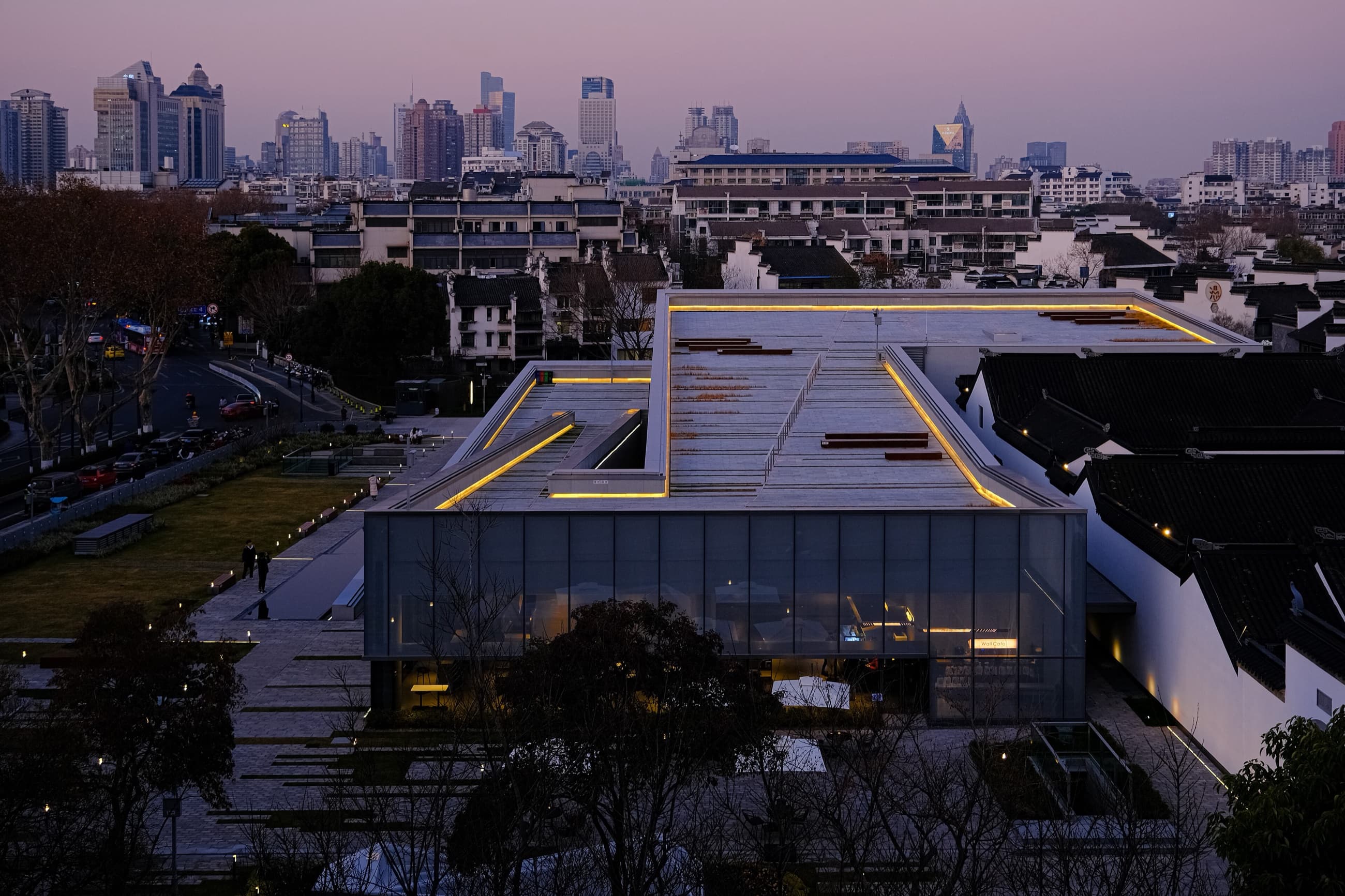
A brick inside a wall is architecture. The same brick inside a museum becomes a document. Removed from the overwhelming scale of the structure, an inscription can be read line by line; visitors can compare places, titles and hands. Kiln evidence reconnects the finished wall to landscapes of making.
The change of setting raises a conservation problem. An inscription outdoors continues to weather. Moving every brick would destroy the wall; leaving every mark untouched risks losing text. Preservation has to work at both scales — the city monument and the paper-thin information on its surfaces.
The City the Wall Once Held
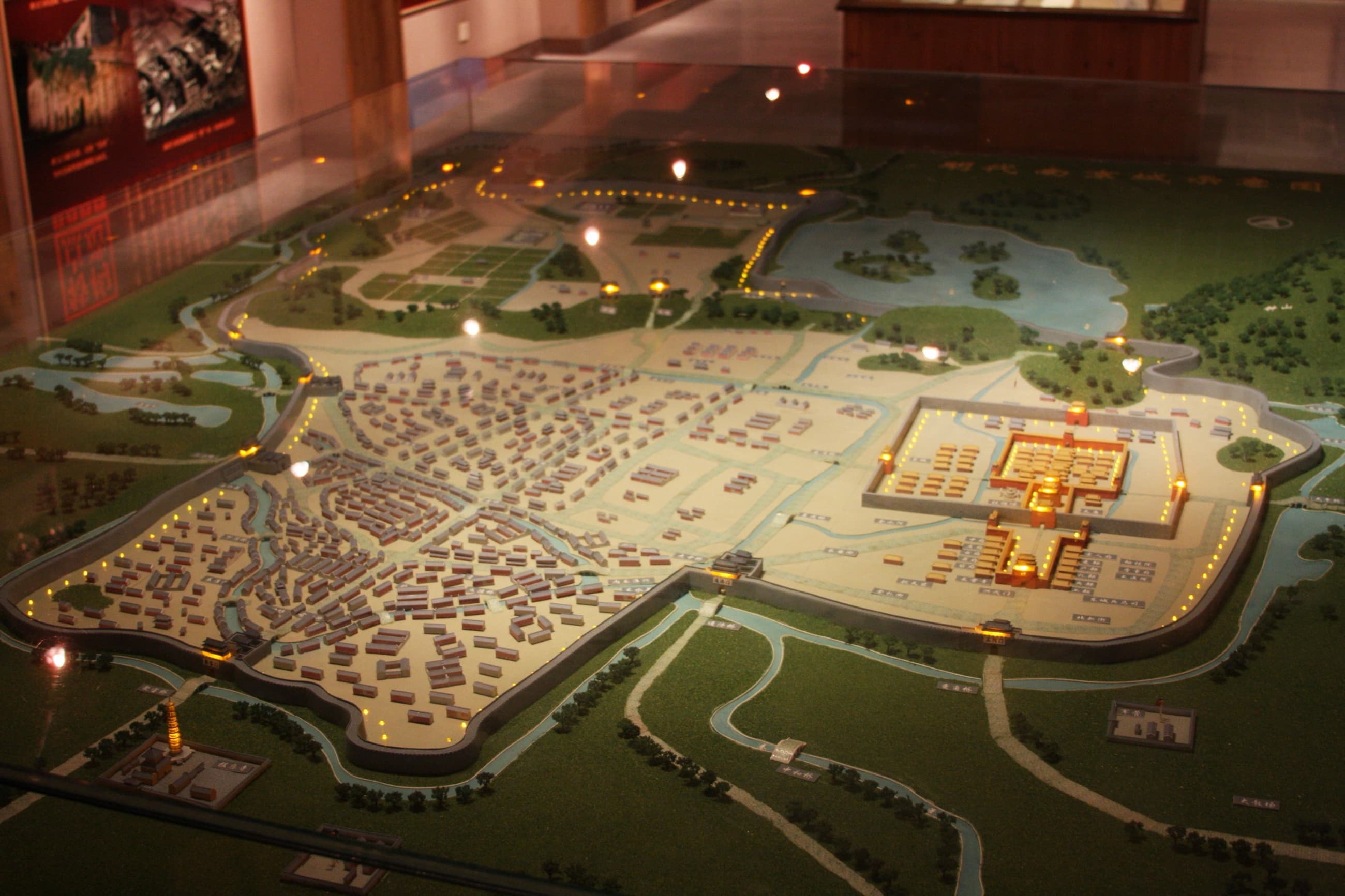
A museum model makes the ambition easier to see. Walls ordered palaces, streets, gates, water and neighbourhoods. But models can make history appear finished. The real city kept changing: gates disappeared, sections were lost and new roads crossed former lines.
The bricks hold imperial and local scales together. One side of the story is a founding emperor and capital project. The other is counties, kilns and workers connected by rivers. A model shows the completed design. A brick shows what the design demanded.
Image: a museum model of Ming Nanjing, not a photograph of the historical city at one exact date. Brady Montz / Wikimedia Commons, CC BY-SA 2.0; resized for web.
A Second Ledger
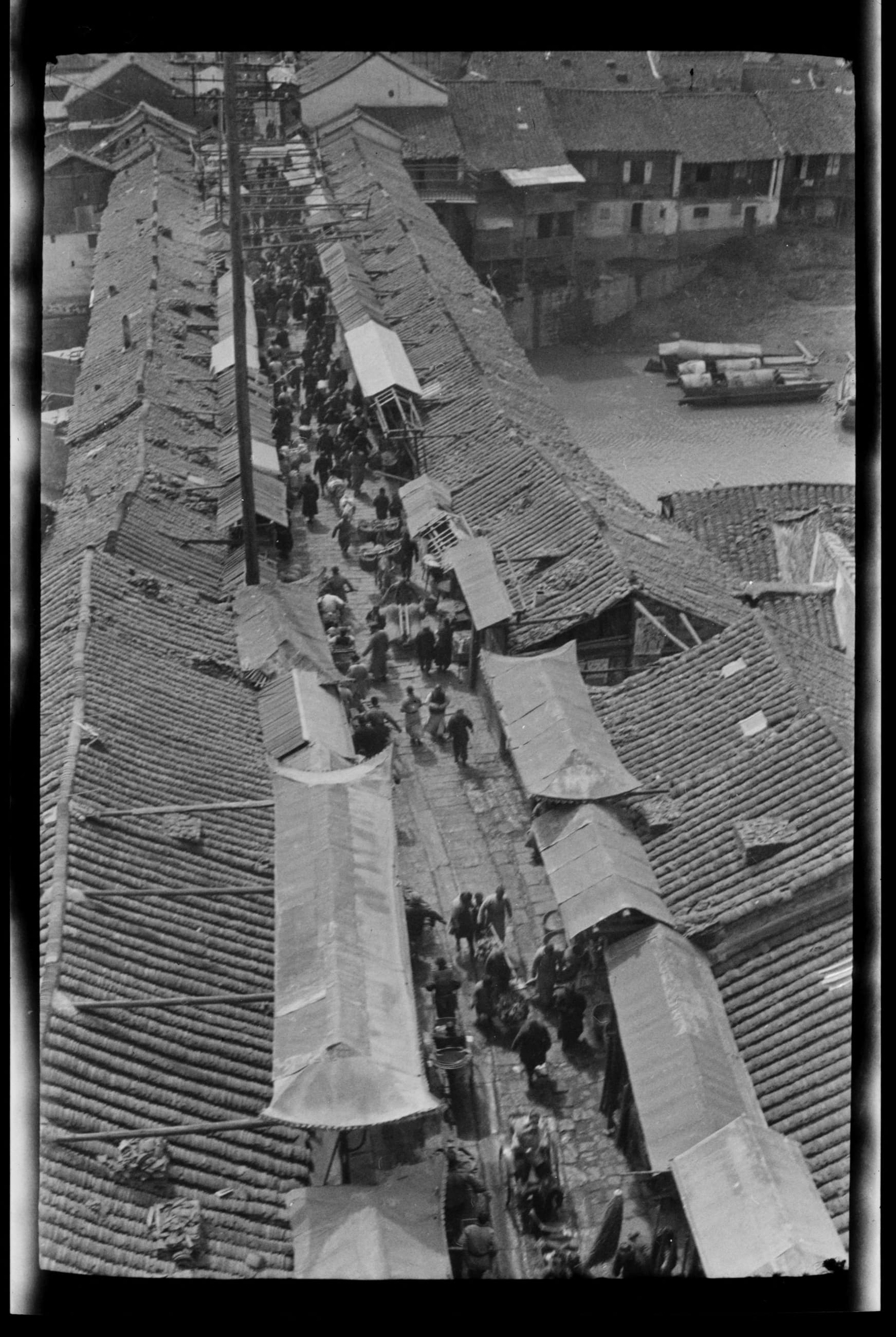
A photograph made from the wall around 1923–1924 captures a city already different from the Ming capital. Today, documentation has become a new form of accountability. One city report describes automated monitoring along approximately 25.1 kilometres of wall. A separate inscription survey begun in 2018 produced about 170,000 high-resolution photographs over three years. The old names are entering a modern record before weather makes them unreadable.
There is a striking reversal here. In the fourteenth century, names were fired into bricks so authorities could hold people responsible for the wall. In the twenty-first, researchers and conservators accept responsibility for the names.
Image: view from the Nanking city wall, c. 1923–1924. Harold Stephen Bucklin / Digital Commonwealth via Wikimedia Commons, Public Domain.
A Capital Dissolves Into Clay
Stand close to the wall and the capital dissolves into clay, handwriting and water routes. Step back and the bricks become a skyline. Nanjing’s wall survives between those views: a massive defence built by a state, and an accidental archive made from the lives that state organised.
Not every brick is inscribed, not every surviving mark is legible and not every name was written by the person it names. That uncertainty does not weaken the archive. It reminds us that the wall is not one perfect bureaucratic record. It is millions of objects that passed through unequal hands and then spent six centuries exposed to a changing city.