
Under the Eaves, Above the Map
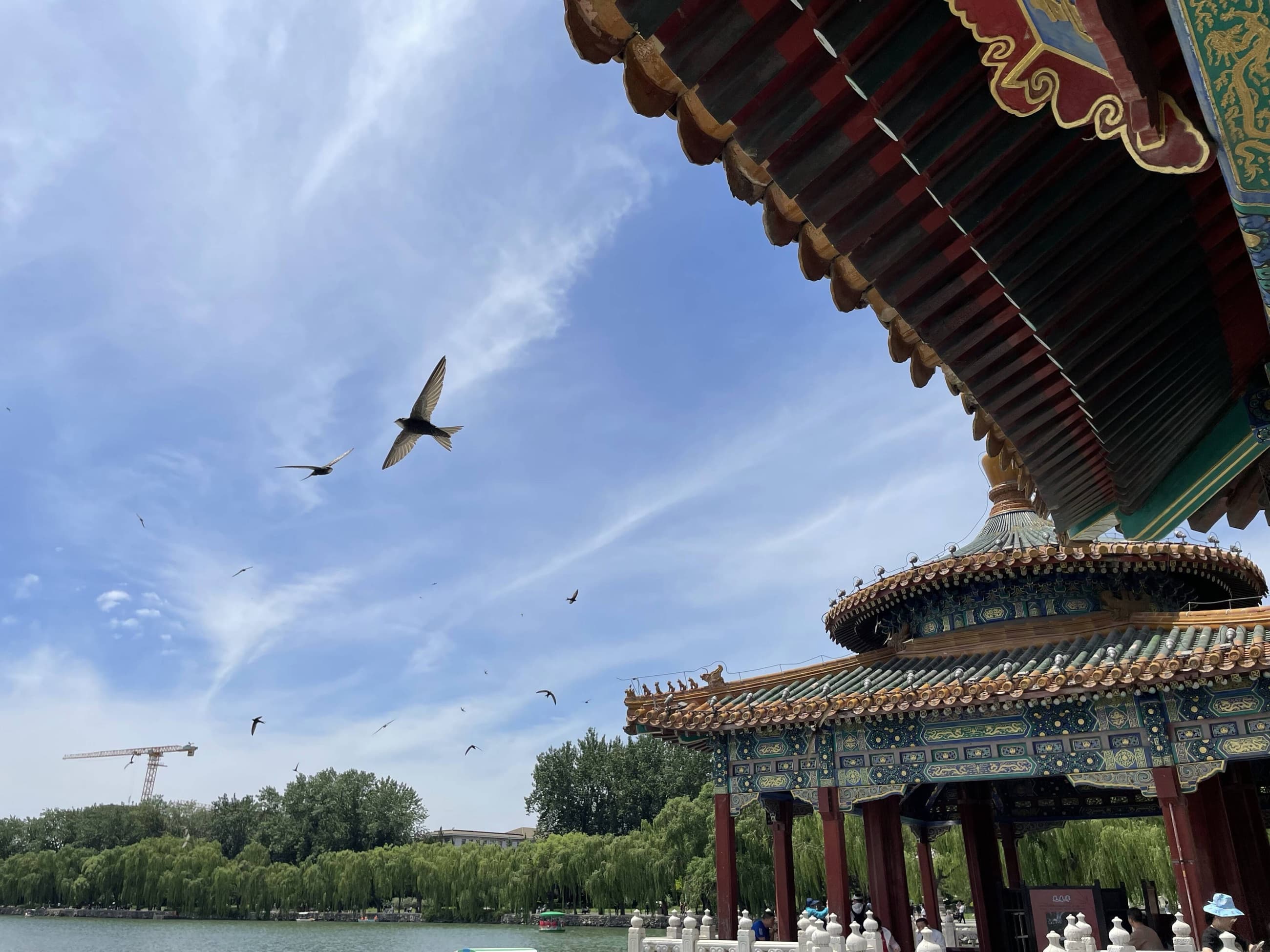
At the Summer Palace, visitors may look at the carved roofs, painted beams and water below. A swift looks for a gap under the eaves. To a bird that breeds there, the architecture is not simply scenery: it is a place to return to, raise young and leave again when the season turns. The human eye sees one pavilion. A tracking device can reveal a much larger map.
Researchers studying Beijing swifts at the Summer Palace's Kuoru Pavilion attached small light-level geolocators to adult birds. When some returned, the devices gave an approximate account of where they had travelled. The resulting route reaches from Beijing across Central Asia toward Africa and back. One analysis describes a round trip of roughly 30,000 kilometres. That is a finding from tracked individuals, not a measured guarantee about every swift in the sky.

A Local Bird with a Long-Distance Life
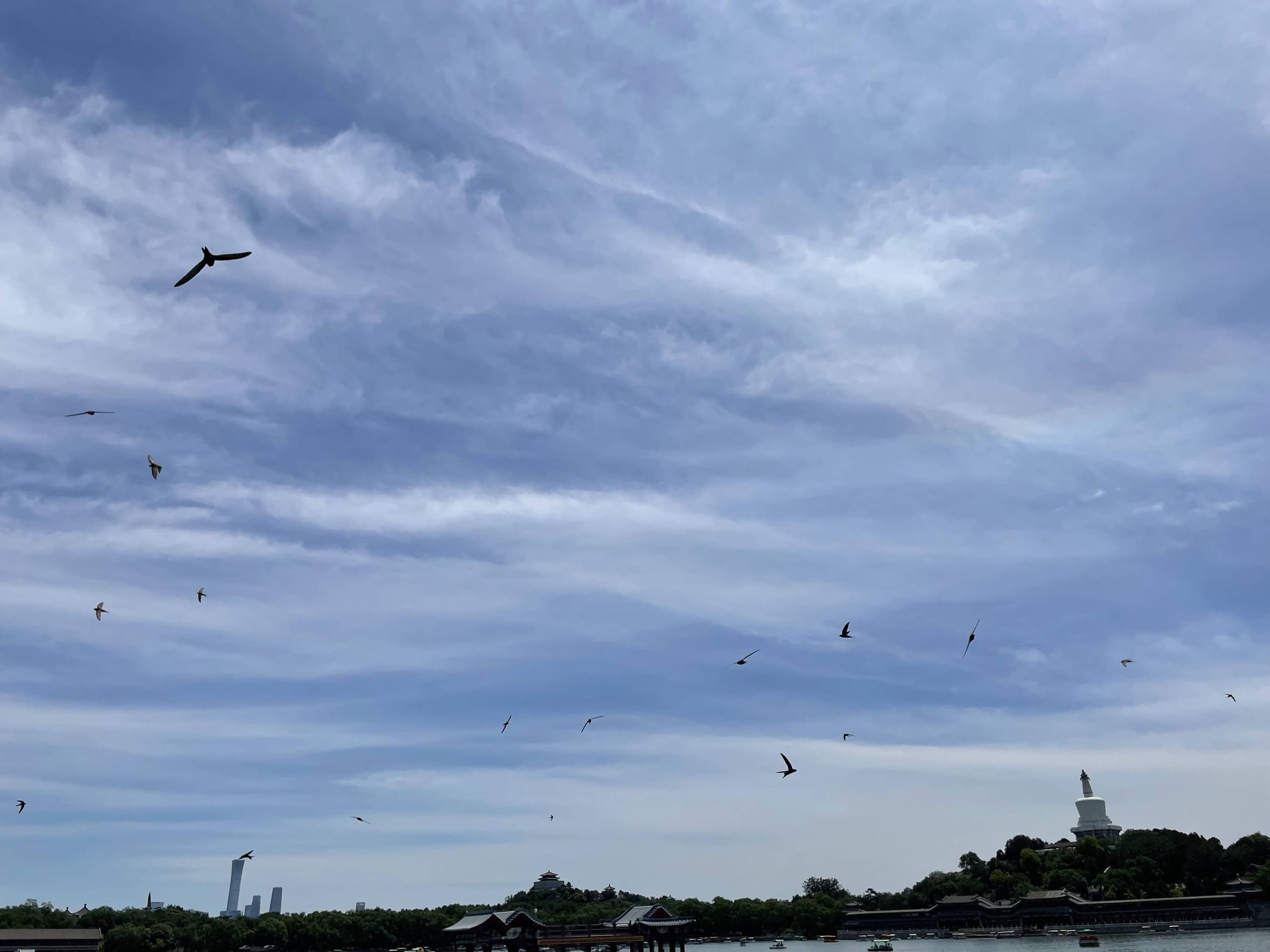
The Beijing swift is a form of common swift associated with the city in the breeding season. Its dark body and narrow, scythe-like wings can pass overhead so quickly that the bird becomes an impression rather than an object. It feeds on insects in flight. Historic buildings give it spaces to nest, making the city's built environment part of its natural history.
It is easy to call such a bird “Beijing's” and imagine its life ending at the city's edge. The geolocator research reverses that perspective. Beijing is one vital address in a year that extends through other countries and ecosystems. A sighting near a pavilion is the visible fraction of an itinerary no unaided visitor could follow.
How to Follow What Cannot Be Seen
A light-level geolocator estimates position from the timing of sunrise and sunset. It is small enough to travel with a swift, but it cannot transmit a live, exact dot to a tourist's phone. Researchers generally need to recover it after the bird returns. The positions it yields have uncertainty, especially around the equinoxes, when day length changes less distinctly with latitude.
Those limitations do not erase the journey. They tell us how to read its map. The study followed a set of adult birds during the mid-2010s and recovered enough data for multiple complete annual tracks. It traced the broad migration through Mongolia and parts of Central Asia, onward by the Red Sea and eastern Africa to wintering areas in southern Africa. The route is evidence-based at regional scale; a dramatic photograph of a desert cannot be labelled as the precise place a named bird stopped.
A Pavilion as a Point of Departure
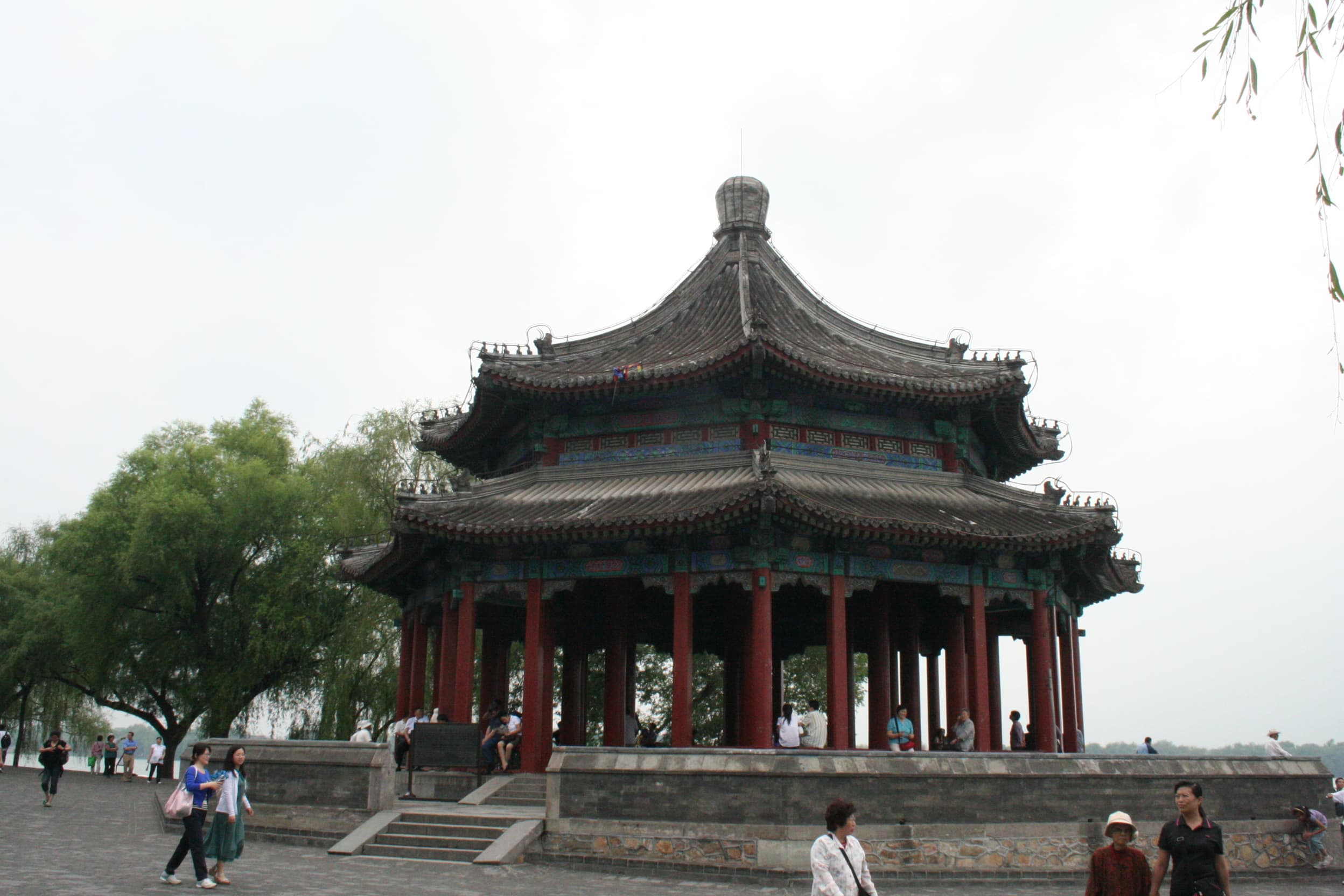
Kuoru Pavilion is the nesting site in the published study. In the palace setting, it is a substantial architectural object, yet the birds use small openings that most visitors would overlook. The research links a cultural landmark to an animal's seasonal routine without turning the palace into a wilderness.
The building pictured here supplies real site context. It does not show the tracking devices or a particular nest. The distinction is useful: the question is not whether every feather in the photo belongs to a study bird, but how scientific observation changes what the building means. Its roofline is a point on an intercontinental map.
Image: Robin Zebrowski / Wikimedia Commons, CC BY 2.0; resized for web.
The Summer Departure
The tracked birds generally left Beijing in July, after the breeding season. Their movement was not a single straight flight south. They crossed arid and mountainous regions, followed routes across Central Asia and reached Africa. Stopovers mattered because migration is a sequence of feeding opportunities and weather decisions as well as a line between endpoints.
Maps can flatten all that into one graceful arc. A swift's experience is more dynamic. Winds shift. Insect abundance changes. A place useful on one passage may not be used in the same way on another. The devices record enough to reveal the broad pattern but not every moment of hunger, shelter or flight. The gaps are not a failure of the story; they are part of the honesty of telling it.


A Second Season Far from Beijing
The study found wintering on the southern African plateau. That phrase identifies a broad region, not a perch. A swift seen in Beijing in spring may spend the northern winter above landscapes thousands of kilometres away. Its annual life cannot be understood from a Beijing street alone, even though the street may provide an essential nesting place.
The bird's return is perhaps more astonishing than its departure. The research animals carrying recovered geolocators had to survive the journey and come back to the study site. Their data turns “migration” from an abstract instinct into a connected sequence of places. It also reminds us that conservation cannot be limited to one city's roofs. Conditions along the route and in wintering areas matter too.
Not a Dot on the Tracking Map
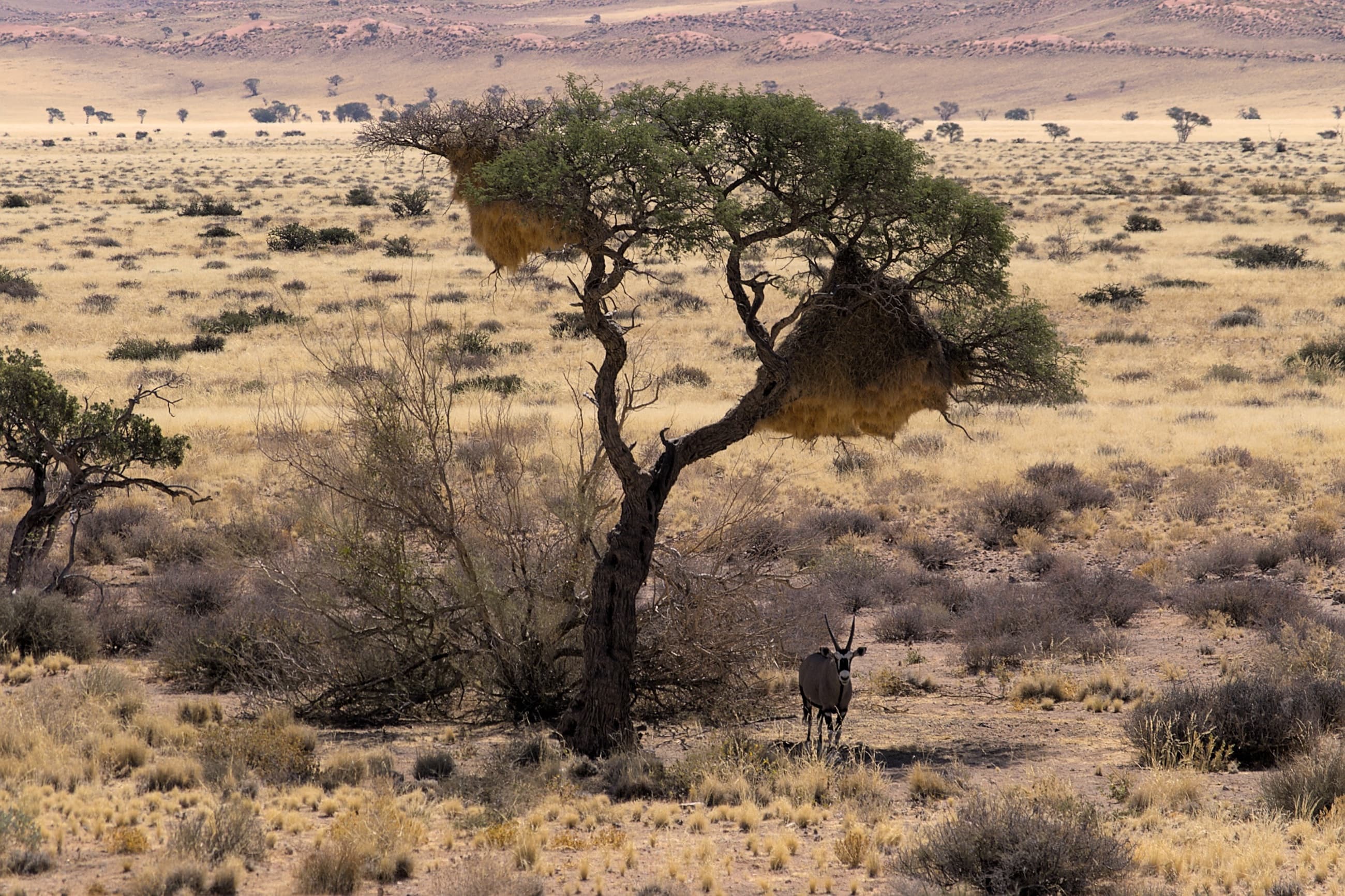
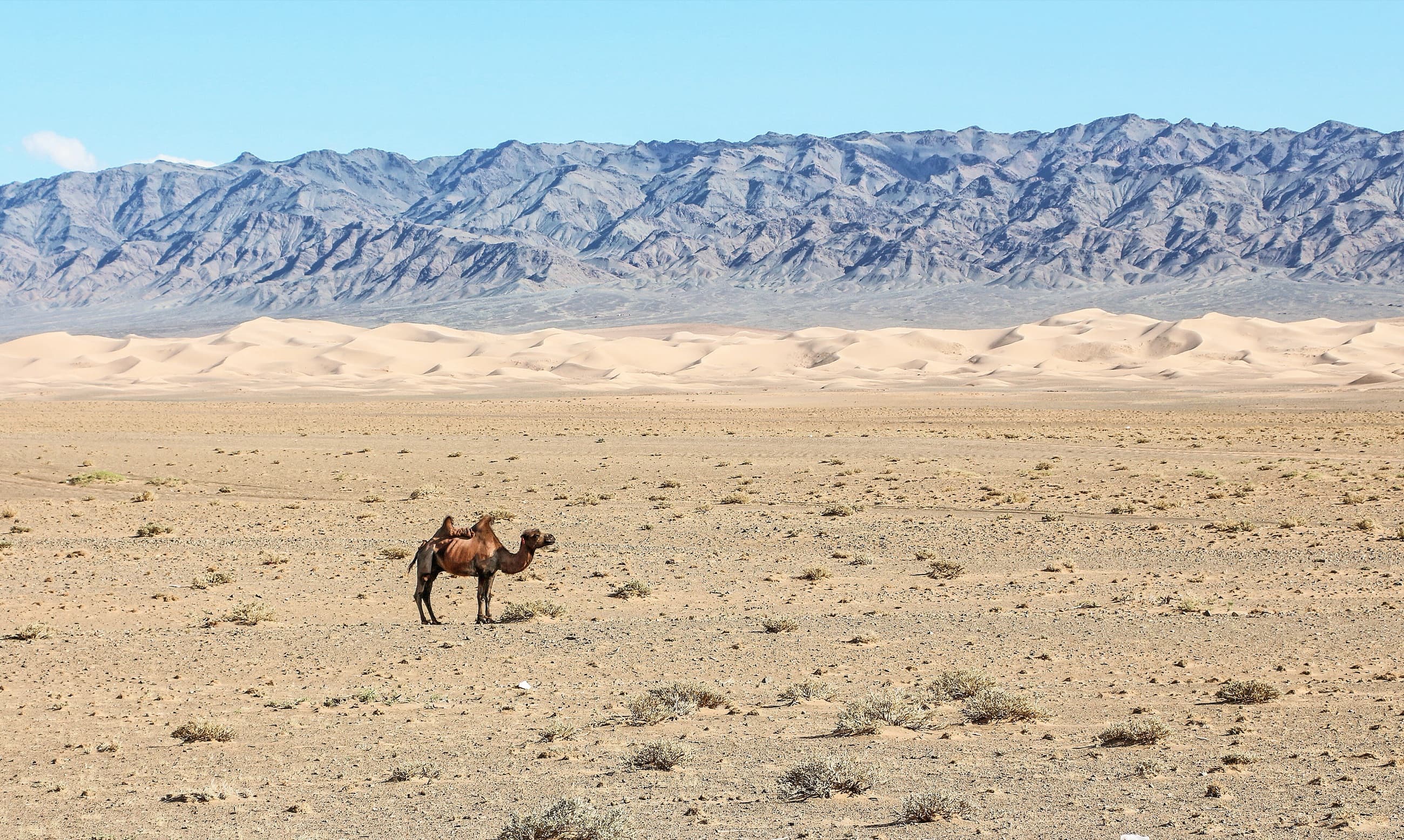
This landscape is included to give a sense of a region very different from Beijing. It is illustrative. The photo does not document a specific tracked swift, colony or feeding site, and it should not be mistaken for one.
That restraint makes the real finding more interesting. The science does not need a staged image of a bird “arriving.” It asks us to hold in mind that the same animal can belong to roof eaves in one season and to an African sky in another. Both are parts of its habitat.
Image: Rob Oo / Wikimedia Commons, CC BY 2.0; resized for web.
The City Is Part of the Route
Historic structures are often discussed as things to preserve for people. For swifts, cavities under roofs can also be breeding space. That does not mean every restoration decision can be answered by a bird photograph, but it does mean architecture and ecology sometimes occupy the same narrow seam. One can admire a pavilion's roof and ask what lives beneath it.
At the Summer Palace, a quiet pause may be more revealing than another panoramic shot. Look above the crowded paths at the eave line. Watch a bird's fast approach and its disappearance into a space that looked solid. The roof has not changed, but the story carried by that small movement has expanded dramatically.
What the Map Does Not Say
Researchers can estimate route, timing and travel distance; they cannot honestly assign an exact 30,000-kilometre itinerary to every Beijing swift. The sample is a studied group. Light-level positions blur in certain seasons. Other birds may choose different routes, and a returning individual is not proof that all survive.
These qualifications are not a dull appendix. They are the difference between seeing a living species and turning it into a legend. The measured journey is already large enough. It gains credibility when its edges remain visible.
Look Up Before Looking Out
Beijing offers monumental views, but one of its widest stories may be above the monuments. A swift crosses the city in seconds; its life crosses continents. The tiled roof, the July departure, southern African winter and spring return are connected by a body small enough to vanish against daylight.
When a dark shape cuts past an eave, it may be tempting to say, “That bird has been to Africa.” You cannot know that about the individual without tracking it. You can know that Beijing's swifts, in a carefully observed study, have made such a journey. That is more than enough reason to look up.