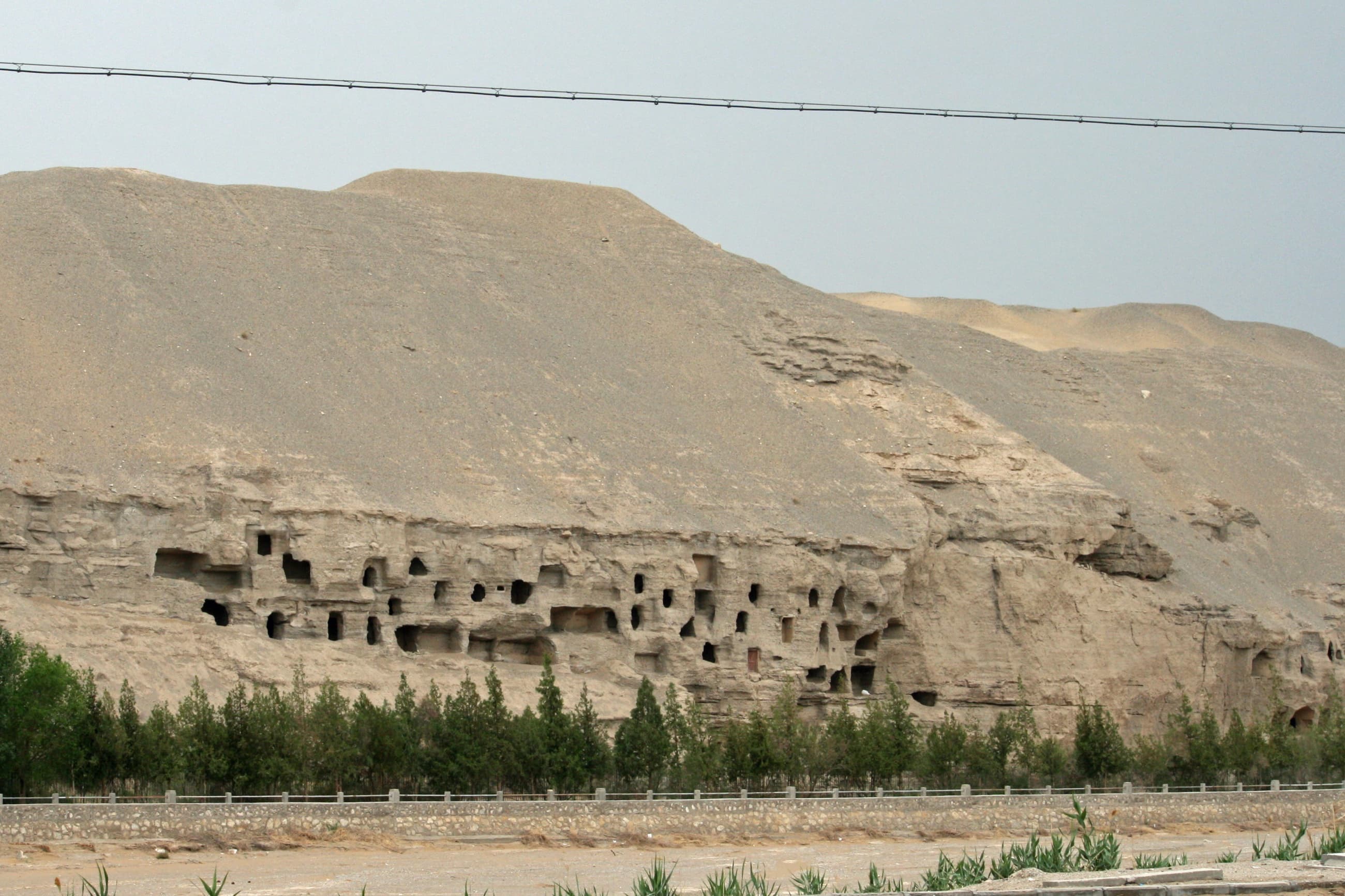
In June 1900, Wang Yuanlu was working at the Mogao Caves near Dunhuang. A former soldier and travelling Daoist monk, Wang had made himself the caves’ guardian and was trying to repair a sacred site that had fallen into disrepair.
In the corridor leading into Cave 16, he discovered the outline of a sealed doorway hidden behind a mural. Beyond it was a small chamber packed so tightly with bundles that there was scarcely room to stand.
The chamber, now called Cave 17 or the Library Cave, contained more than 50,000 manuscripts, printed documents, paintings, textiles and other objects dating from the fourth to eleventh centuries. Dry desert conditions had helped preserve material that might have decayed elsewhere.
For a brief period, one person stood between a sealed medieval archive and the twentieth-century world that was about to divide it.
The Room’s Keyholder
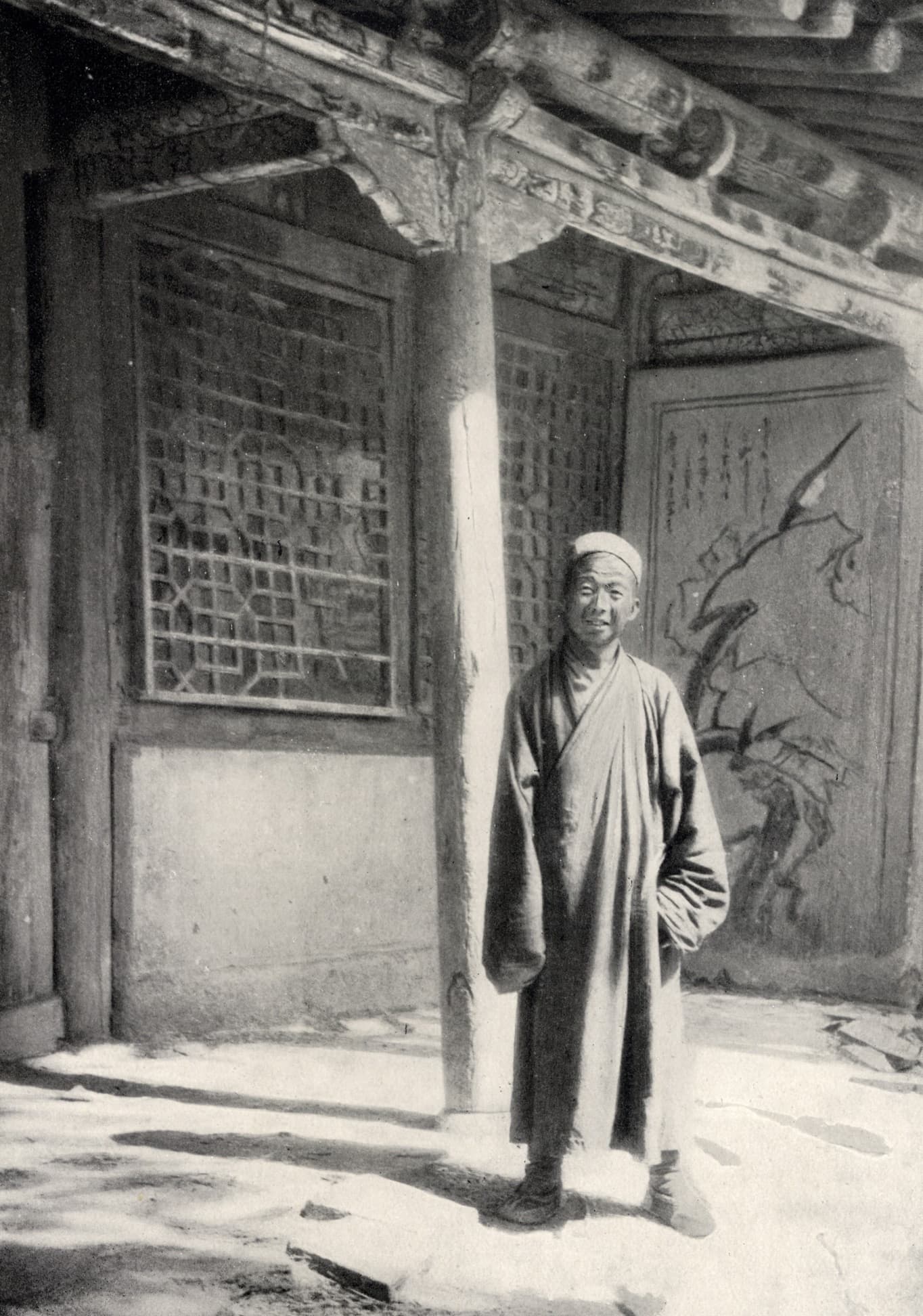
Wang Yuanlu was discoverer, custodian and participant in the later dispersal. Reducing him to a simple hero or villain erases the site’s difficult historical setting: limited protection, foreign expeditions, religious commitments, financial need and an emerging international market for Central Asian antiquities.
The photograph gives a face to the moment, but not a simple explanation. The decisions that followed involved unequal power and competing ideas of preservation.
Image: Wang Yuanlu, photographer unknown, Public Domain; converted to JPEG and resized for web.
A Shrine Becomes an Archive
Cave 17 was not built as a library. Research associates it with the ninth-century monk Hongbian, a senior Buddhist official in the Hexi region. The chamber served as his memorial shrine. At some point, the statue was moved and the room filled with documents and devotional objects.
Why this happened remains unresolved. Scholars have proposed respectful storage of worn sacred material, a repository linked with a monastic library, funerary deposition, or some combination. The reason for sealing is also uncertain. An older theory suggested texts were hidden from invasion, but evidence for one specific threat is weak. Deposits may simply have accumulated until the room was full and closed in the early eleventh century.
Uncertainty is not a gap to fill with legend. The people who sealed the chamber left no explanatory note.
A Library Wider Than Religion
Most manuscripts were Buddhist, but the cave was not a shelf of repeated scripture. It preserved legal and government papers, letters, calendars, medical material, literature, contracts, diagrams and ordinary transactions. Chinese and Tibetan material dominated many bundles, while Sanskrit and Central Asian languages recorded Dunhuang’s religious, political and commercial connections.
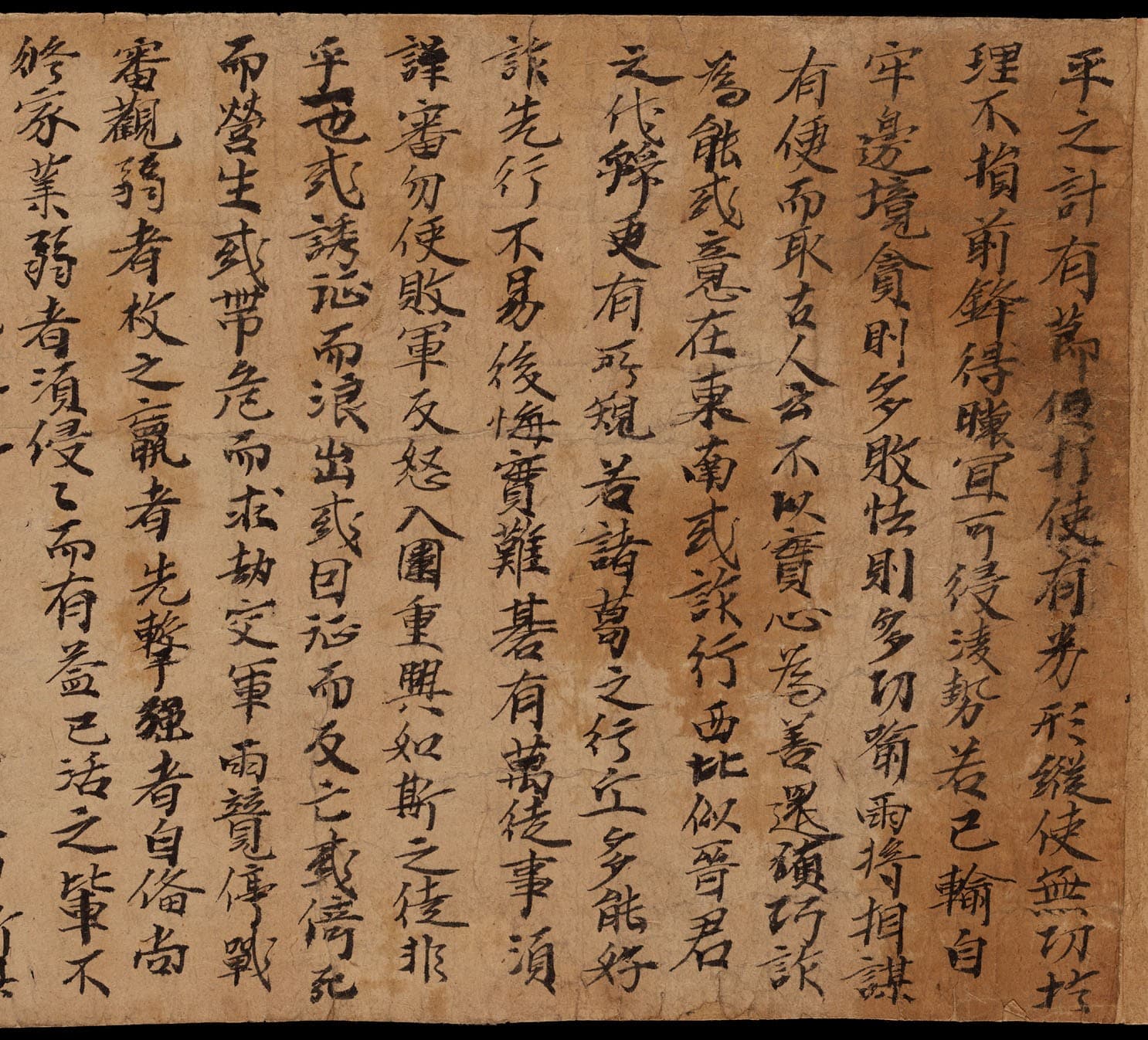
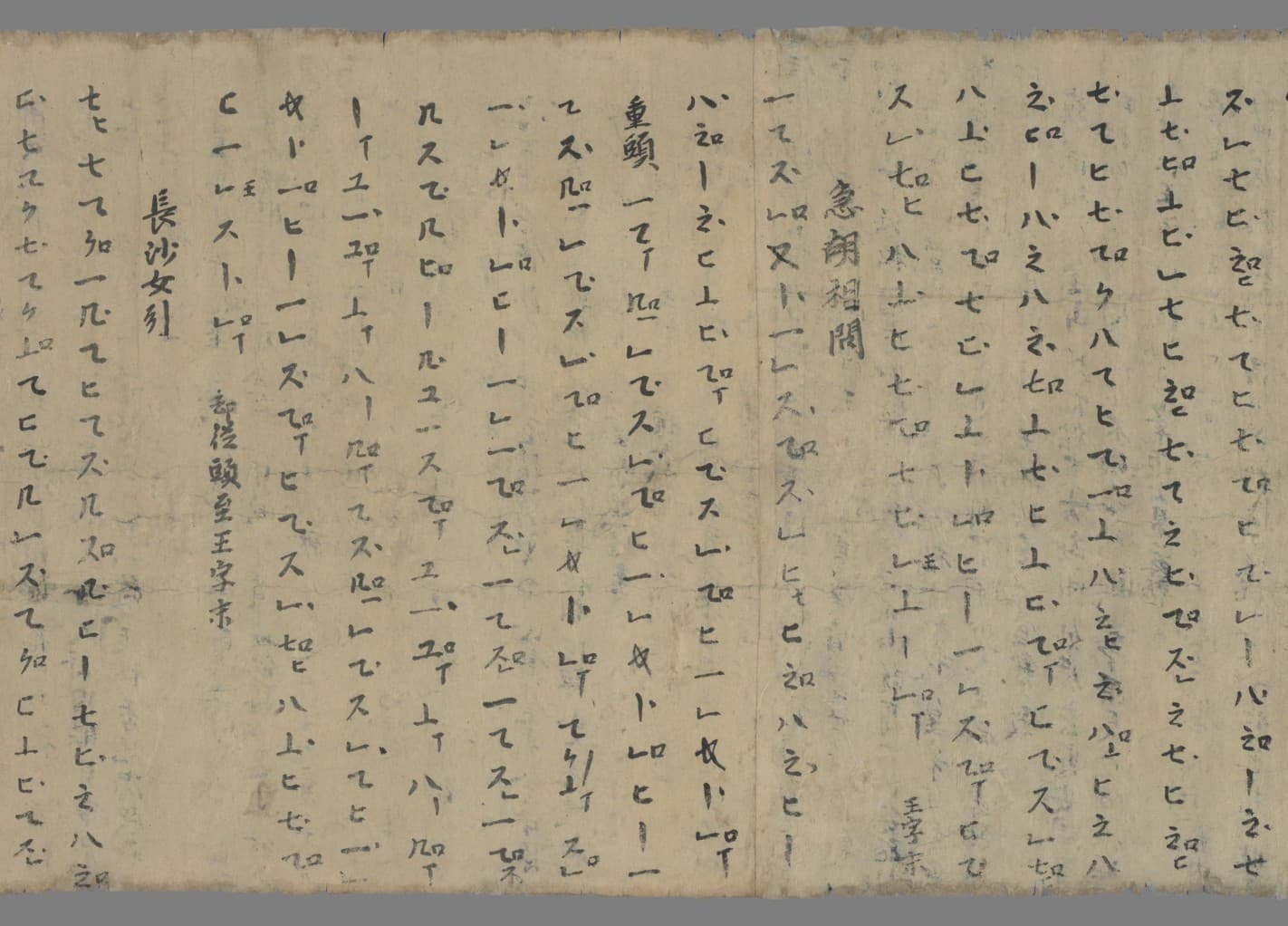
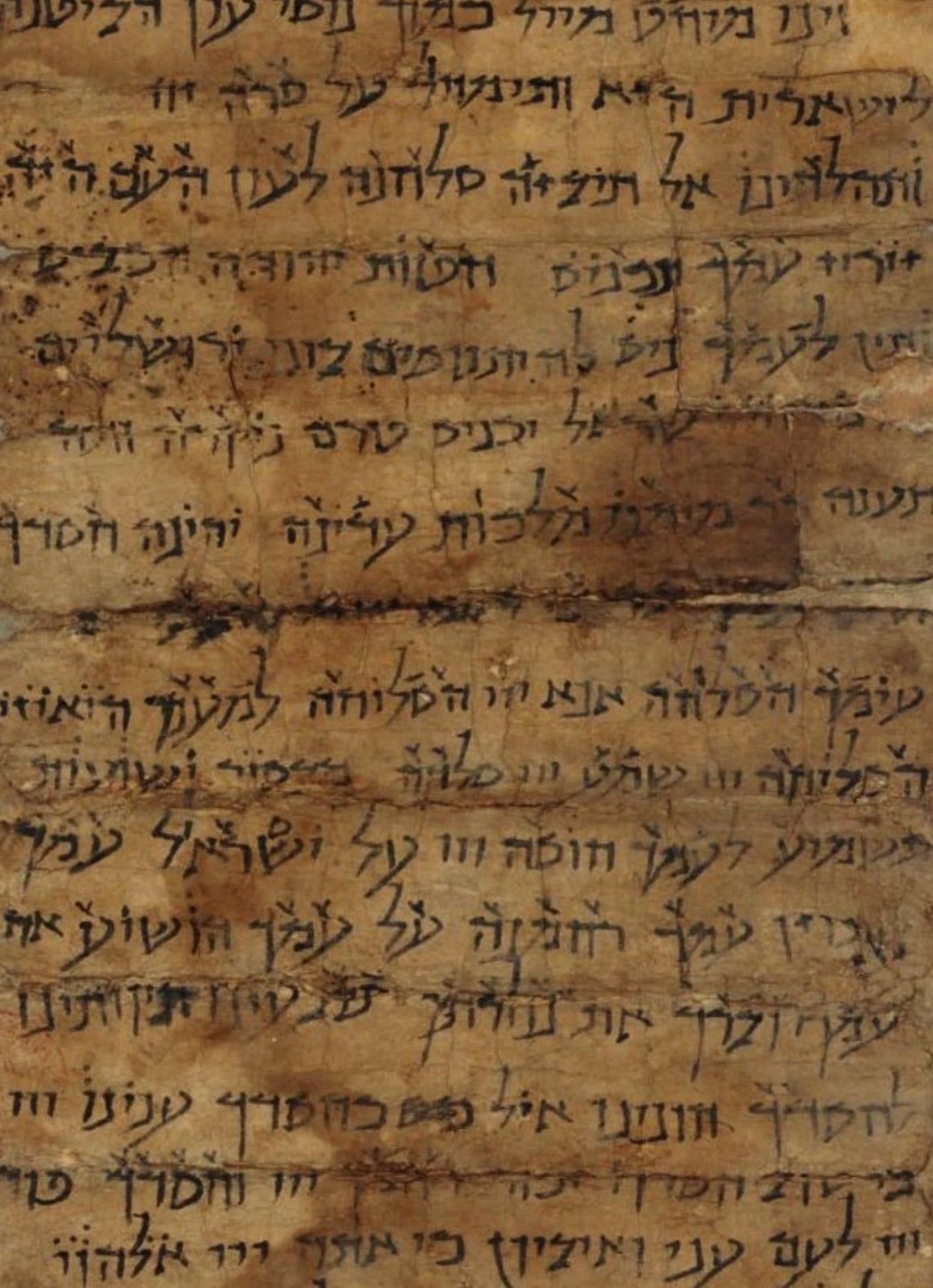
A Go manual explains a board game. Musical notation preserves marks for sounds no longer immediately recoverable. A Hebrew penitential prayer reveals the movement of a Jewish text far from regions many readers would expect.
Together, these objects change the meaning of the Silk Roads. They were not one highway carrying luxury goods between two map ends, but overlapping networks in which prayers, games, languages and technical knowledge moved alongside merchants.
One Scroll Carries a Date
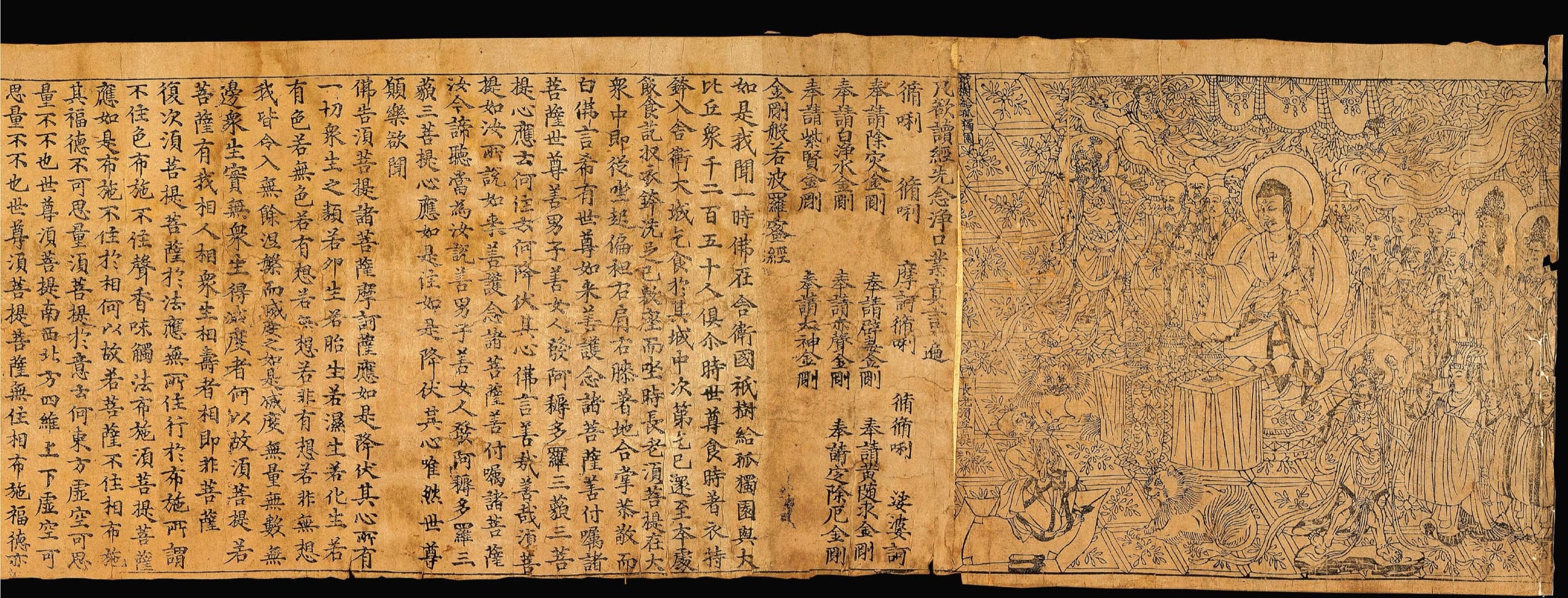
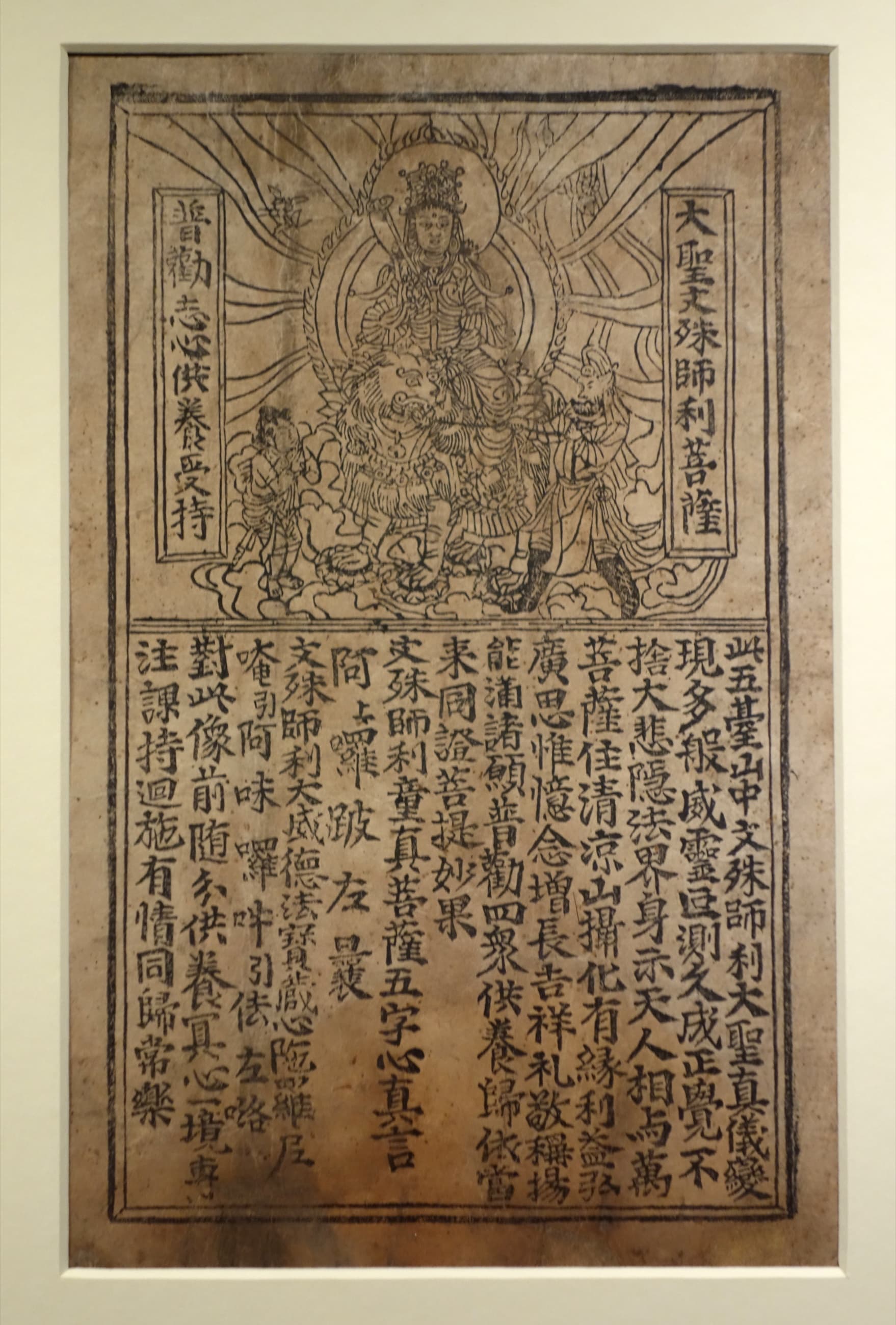
Among the works is a Chinese printed Diamond Sutra. Its colophon gives a date equivalent to 11 May 868 and records that Wang Jie commissioned it for universal distribution on behalf of his parents.
Earlier printing survives, but this is recognised as the earliest known complete printed book carrying a date. It is a scroll, not a modern bound volume: printed paper sections extend more than five metres and begin with an illustrated teaching scene.
Its date does not mark printing’s sudden invention. The scroll’s refinement reveals a mature collaboration among artists, scribes, block carvers, papermakers and printers. A milestone in global book history began as an act of devotion made for two parents.
Image: the 868 Diamond Sutra. British Library via Wikimedia Commons, Public Domain; resized for web.
A Sky Drawn on Paper
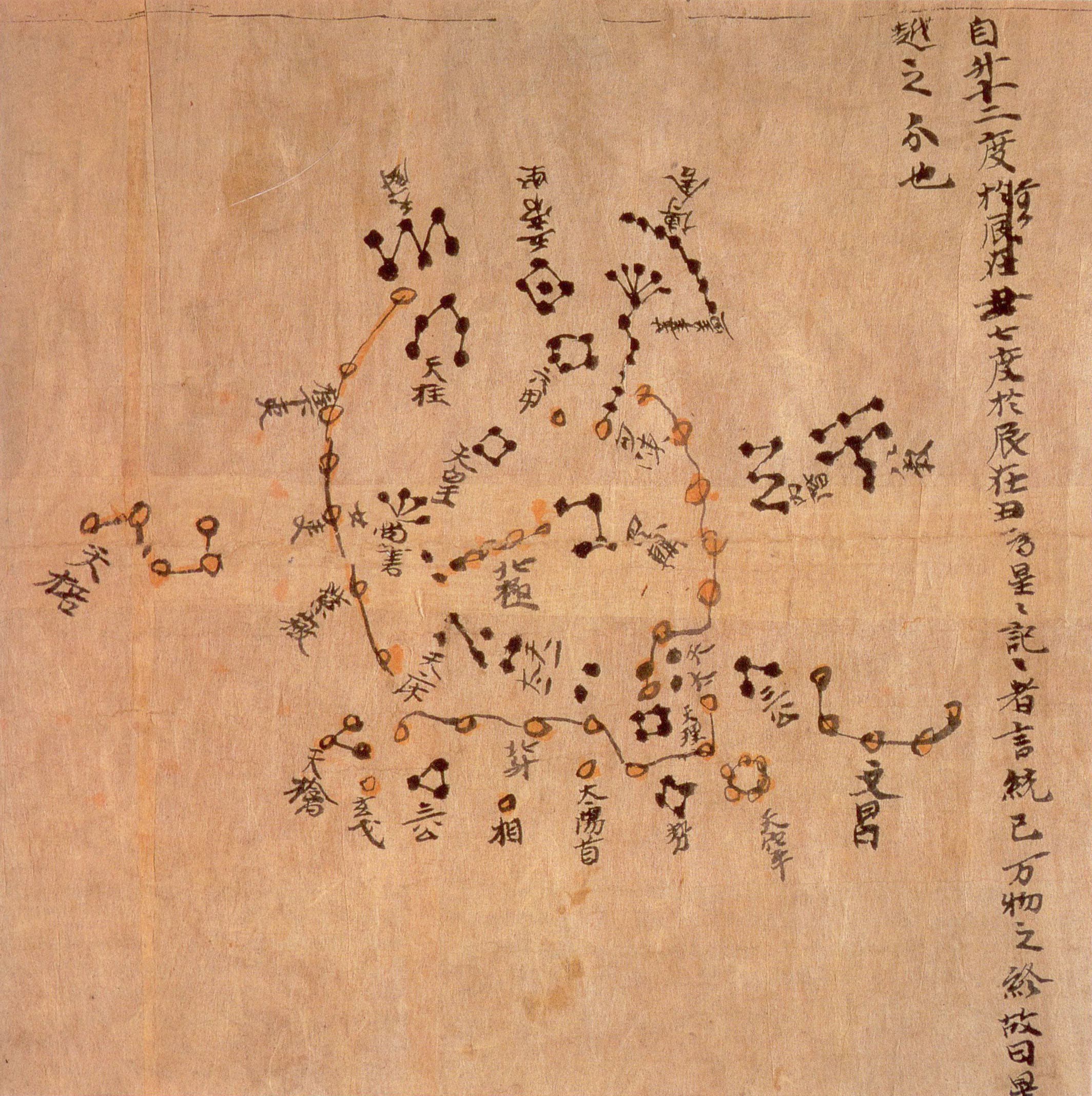
The Dunhuang star chart maps the night sky in a sequence of paper panels. The International Dunhuang Programme describes it as the earliest known manuscript atlas of the night sky from any civilisation.
The chart converts observation into a portable system. The same principle runs through the archive: music became notation, a board game became written strategy, prayer became ink and paper. Orders, accounts and private concerns became records capable of outliving their makers.
Cave 17 preserved these transformations because it kept fragile carriers dry and undisturbed. When the chamber reopened, knowledge made portable began to travel again.
Image: Dunhuang star chart, Public Domain; resized for web.
The Room Begins to Empty
Aurel Stein reached the caves in 1907. After negotiations with Wang, he acquired thousands of manuscripts, paintings and textiles for payment and sent them toward British collections. Paul Pelliot arrived in 1908 and acquired thousands more for France.
These transactions occurred in an unequal historical setting shaped by foreign expeditions, limited local protection and the antiquities market. Calling them only scholarly rescue hides that imbalance; describing objects as moving without negotiation also erases Wang’s complicated role.
In 1910, the Qing government ordered remaining material sent to Beijing. Wang retained some bundles, and other expeditions acquired more. Within roughly a decade, one room’s contents had been distributed among institutions in China, Britain, France, Japan, Russia and elsewhere. The cave survived, but the library ceased to exist as one physical group.
Knowledge Gains Addresses — and Loses a Room
Dispersal created possibilities. Manuscripts entered conservation studios, catalogues and specialist collections. Scholars identified texts that might otherwise have remained unread. Fragile objects eventually received controlled storage and high-resolution photography.
But classification separated relationships that had existed inside the cave. A painting became an art object in one museum while a related text became a manuscript in another library. Departments organised material by language, medium or acquisition history, not necessarily by the bundles and deposits in which objects were found.
The original arrangement was disturbed before detailed documentation began. Individual works became more accessible while shared archaeological context became harder to reconstruct.
The Digital Return
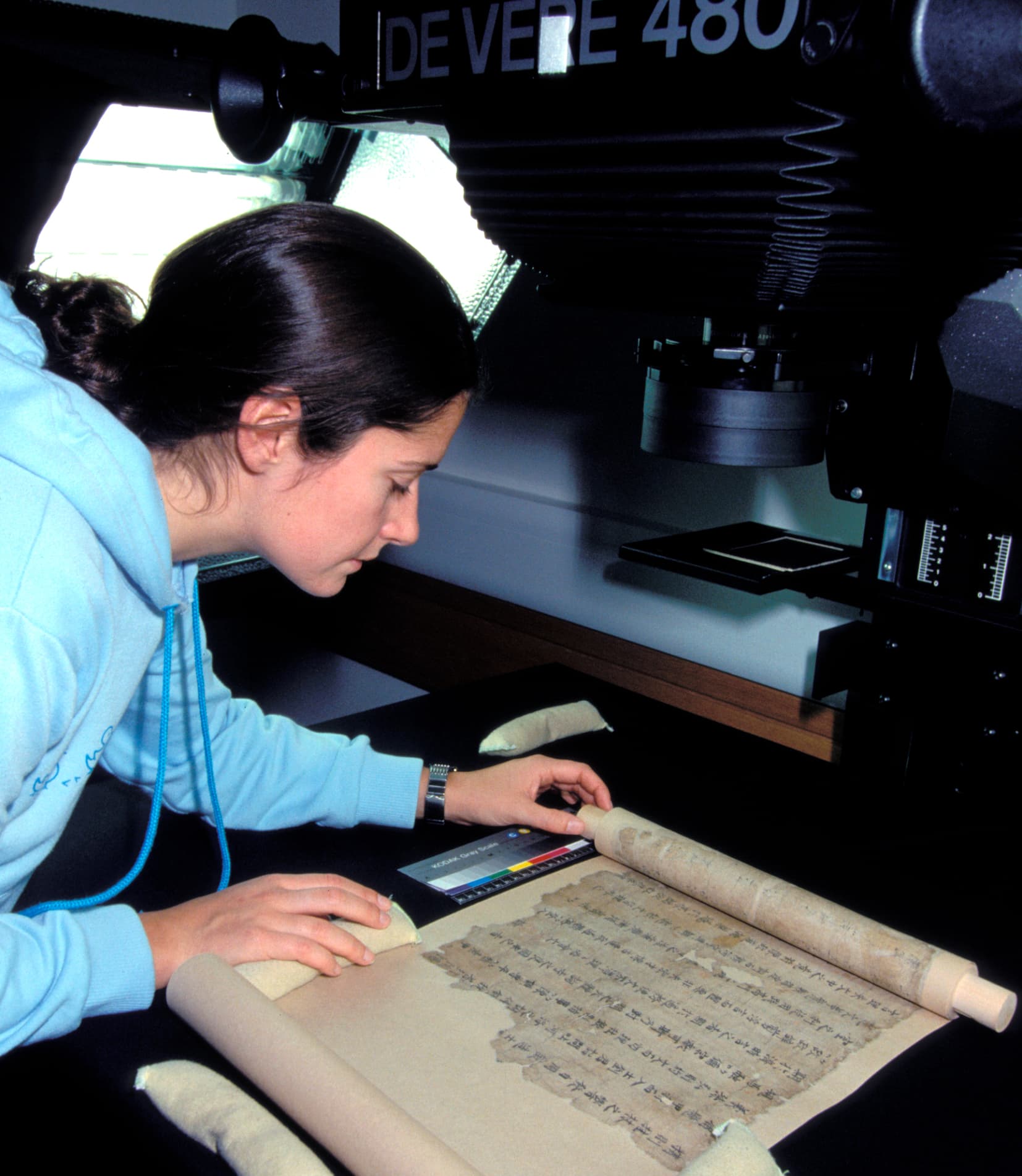
In 1993, representatives of institutions holding major Dunhuang collections met to discuss preservation and access. The International Dunhuang Project was established at the British Library in 1994. The divided Library Cave made international cooperation especially urgent.
Digitisation does not physically reunite the collection. The Diamond Sutra remains in London; other manuscripts remain in Beijing, Paris, St Petersburg, Kyoto and elsewhere. Shared databases place descriptions and images into a searchable network. Fragments in different institutions can be compared, and dispersed catalogues can begin to speak.
The return is powerful but incomplete. A digital image cannot restore the cave’s order, paper texture or scale, and cannot undo the conditions of dispersal. It can replace isolation with connection — and make the history of isolation visible.
Image: digitisation of a Dunhuang manuscript. International Dunhuang Project / Wikimedia Commons, CC BY-SA 3.0; resized for web.
Visit the Absence
Cave 17 is physically small compared with the historical space it occupies. It no longer contains the mountains of bundles described by early visitors. That emptiness is not a disappointment. It is the final chapter.
Before visiting, compare the printed Diamond Sutra with the handwritten Go manual, star chart, musical notation and Hebrew prayer. Their differences make the archive’s range comprehensible. Then stand before the cliff and remember that the collection now fills institutions across continents.
The Library Cave is no longer one library. Its history survives in the difficult work of finding connections between pieces.