Before archaeologists found her tomb, Fu Hao was already present in writing. Her name appeared in inscriptions made for the Shang royal court on cattle shoulder blades and turtle plastrons. Questions addressed to ancestors and powers beyond the human world asked about childbirth, illness, ritual and military campaigns. In that record, Fu Hao was not a shadow beside a king. She acted.
In 1976, an excavation at Yinxu in Anyang uncovered a small royal tomb that had escaped the large-scale looting suffered by many neighbouring burials. Bronze vessels inside carried inscriptions associated with Fu Hao. The written name and the archaeological assemblage began to meet.
That meeting is the real story. A famous biography can make the past look settled. Archaeology works more slowly: bone, bronze, placement and text overlap, but they do not answer every question.
A Name Scratched Into Bone
Oracle-bone inscriptions preserve acts of divination from the late Shang court. A prepared bone was heated until it cracked; specialists read the cracks and inscribed questions, outcomes or records around them. Fu Hao appears across this corpus in several roles, including royal partner, ritual participant and leader connected with campaigns.
Not every photographed oracle bone in a museum display contains her name. A contextual image can show the medium and script, but its caption must not claim a specific Fu Hao inscription unless the characters have been identified by a qualified catalogue. That distinction matters because a generic object can easily become false proof once placed beside a dramatic sentence.
The strength of the evidence lies in the corpus: recurring references that allow scholars to compare names, events and relationships.
Writing as Context, Not Illustration
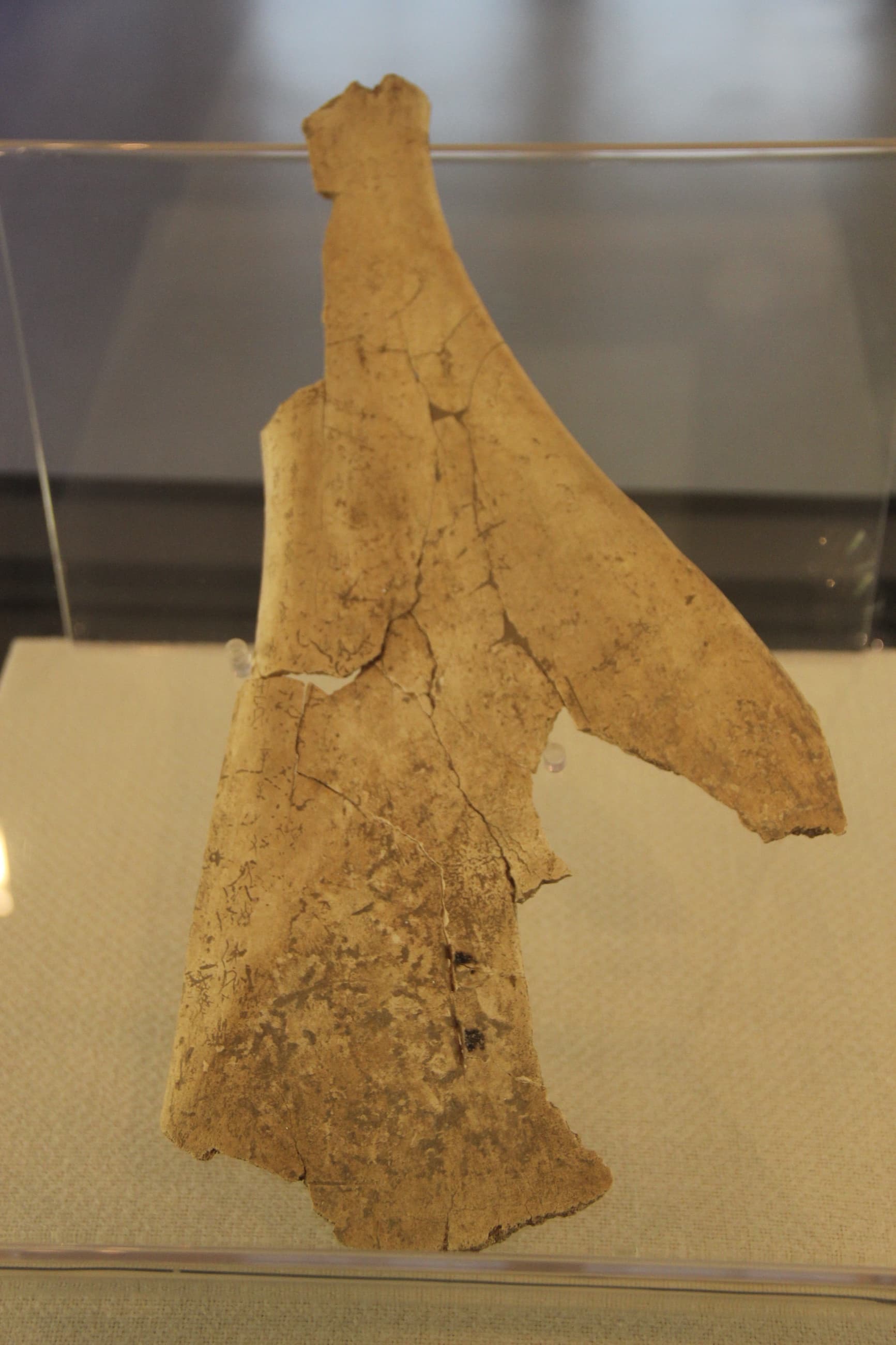
This ox scapula comes from the Yinxu tradition of oracle-bone inscription. It shows the scale of the writing, the irregular field of the bone and the way characters occupy space around cracks. It is included to explain the medium. The photographed fragment is not presented here as one of the inscriptions that names Fu Hao.
That caution preserves a more interesting truth. Fu Hao is not known because one convenient museum label supplies a complete life. Her historical presence emerges from comparison among multiple inscriptions and the material discovered at Tomb 5.
Image: Shang oracle bone from Yinxu. Gary Todd / Wikimedia Commons, CC0; resized for web.
The Tomb That Had Not Been Emptied
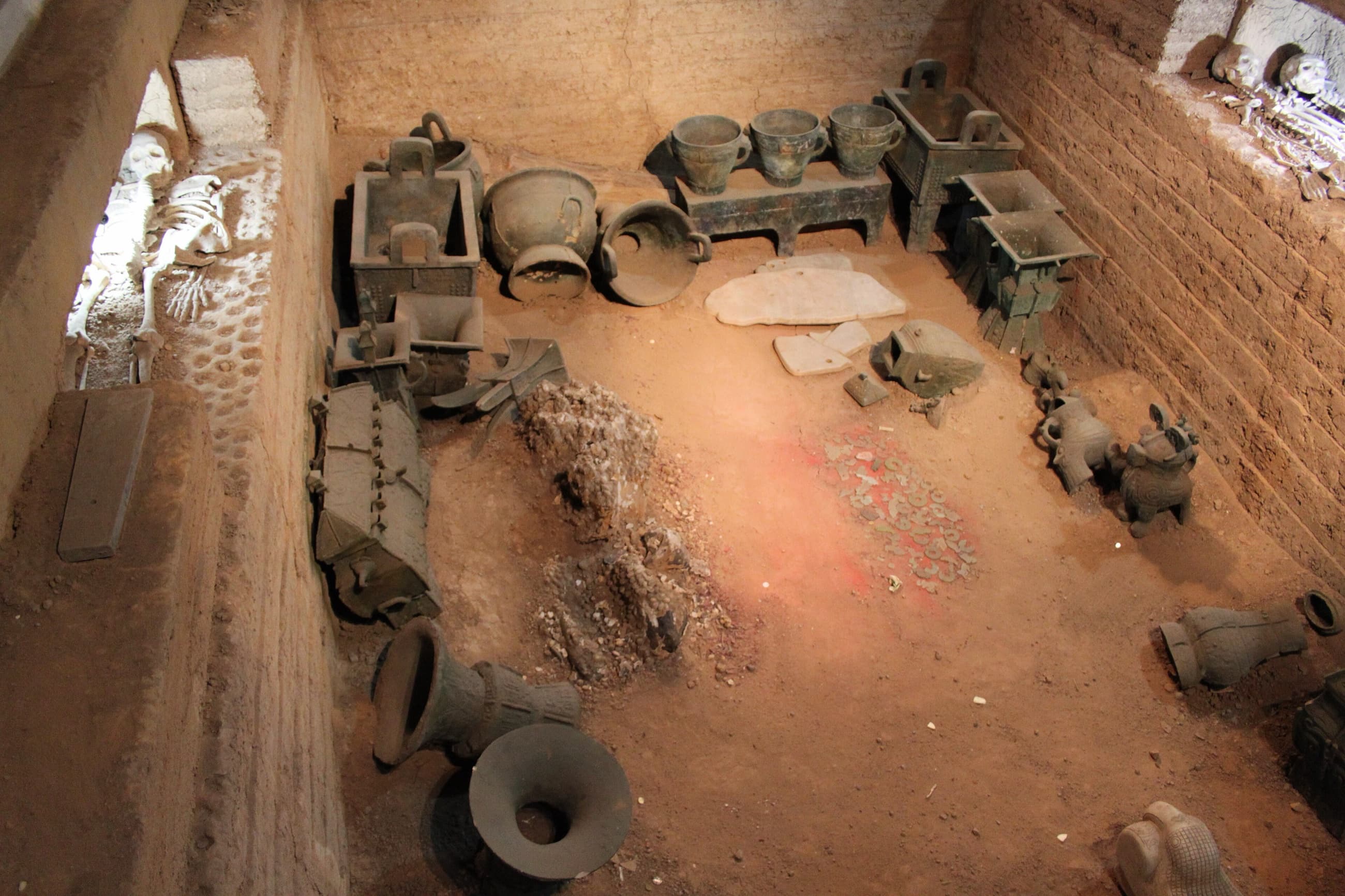
Chinese archaeologist Zheng Zhenxiang directed the excavation that exposed Tomb 5 in the spring of 1976. Its chamber was modest beside the enormous royal tombs at Yinxu, but its contents were exceptional because the burial had not been stripped in antiquity.
Recent official reporting from Henan records more than 460 bronze objects, including 210 ritual vessels, and nearly 800 jade pieces. The totals describe the excavated assemblage; they are not a measure of one person’s daily possessions. Tomb goods were selected for burial according to ritual, status and beliefs about death. Some objects may have been inherited, collected or remade long before they entered the grave.
An intact assemblage lets archaeologists study relationships: which objects were placed together, how weapons sat beside ritual equipment, and how materials were distributed through the chamber.
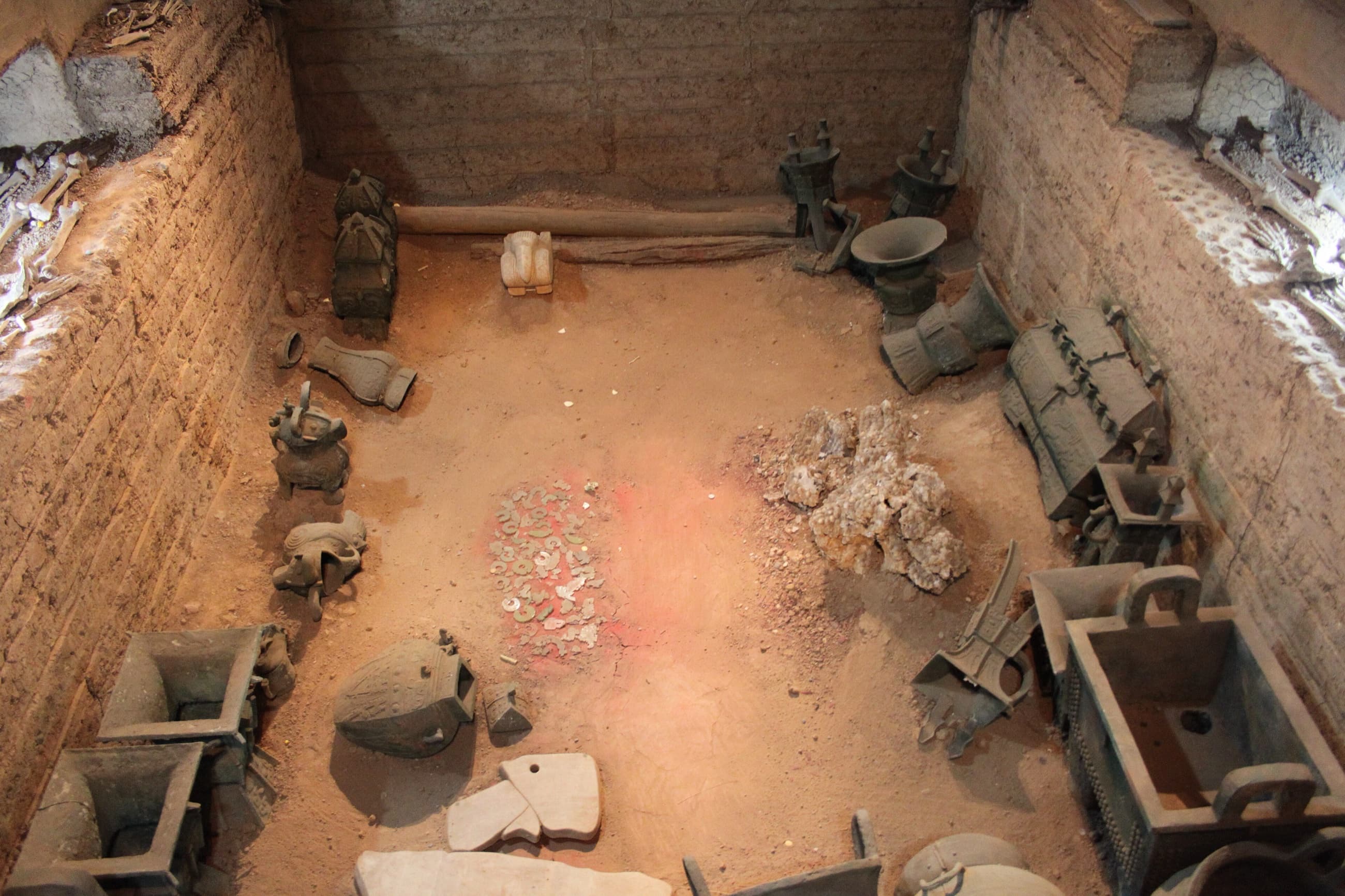
How a Tomb Acquired a Name
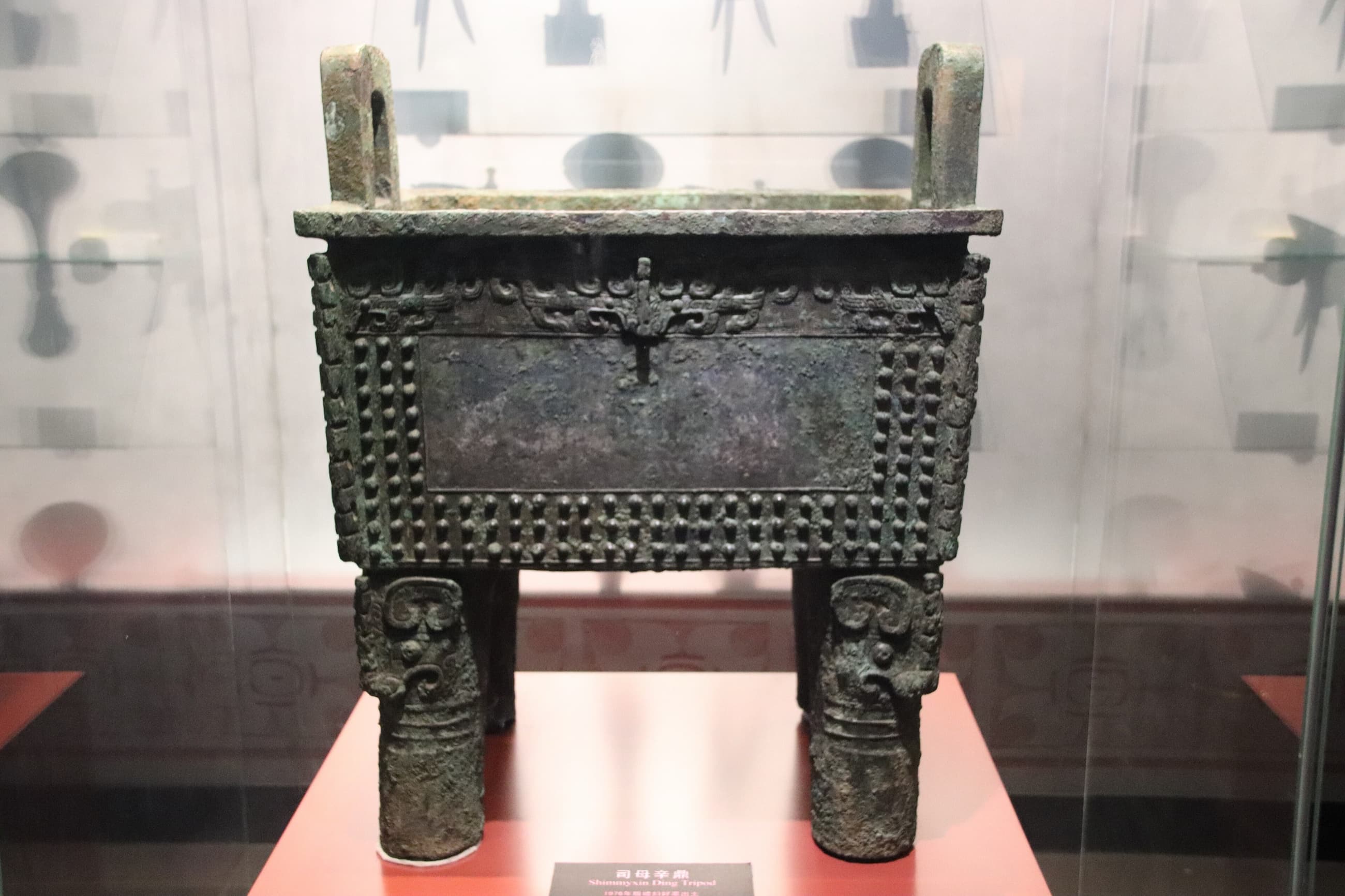
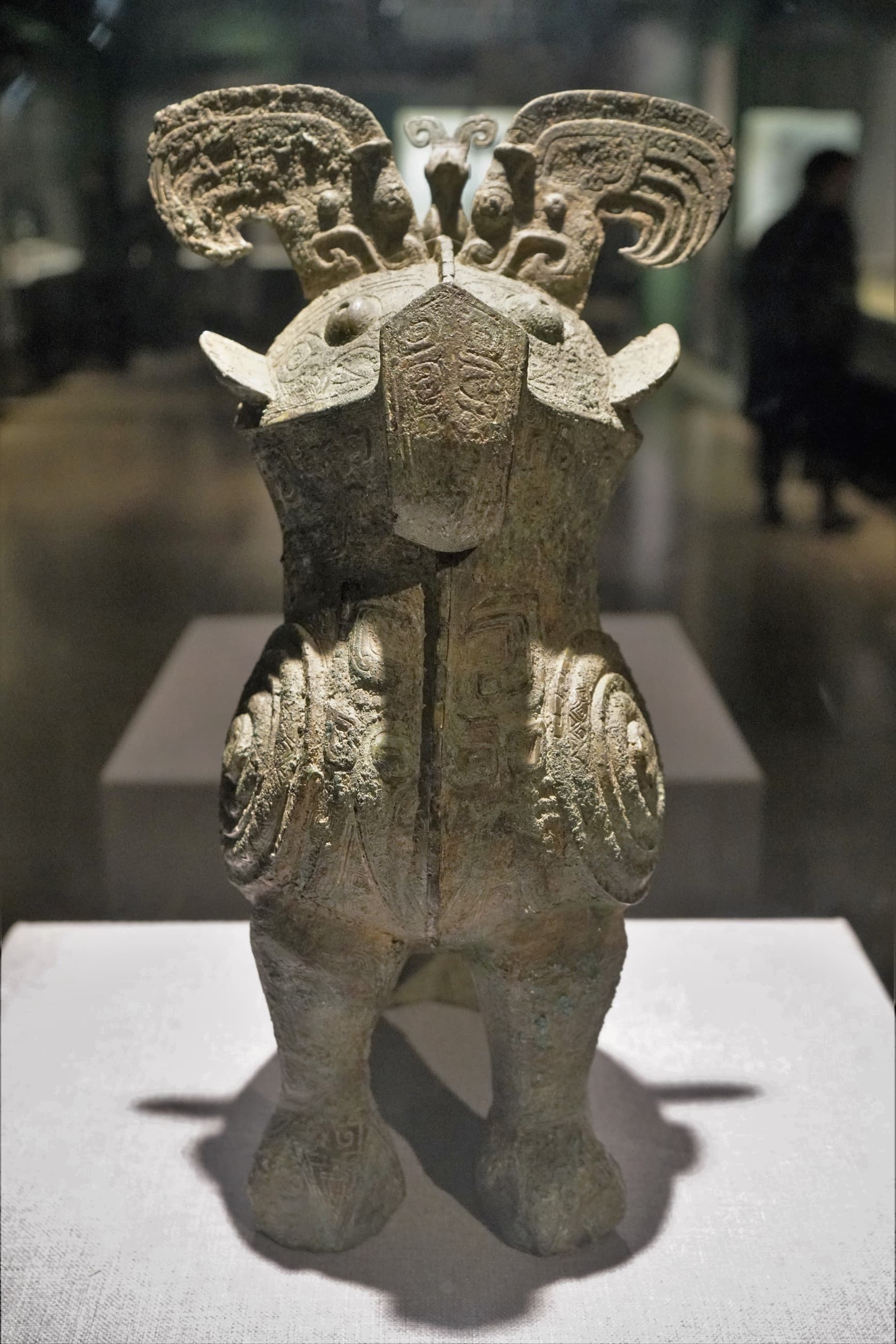
The identification rests on convergence. The tomb lies within the palace and ancestral-temple area at Yinxu. Its period fits the reign of King Wu Ding. Bronze vessels bear inscriptions associated with Fu Hao, while oracle bones place a woman of that name within the royal household and ritual world.
No single object operates like a modern identity card. Even the meaning of some bronze marks remains a subject of specialist interpretation. The safest formulation is that Tomb 5 is widely identified as Fu Hao’s tomb on the combined evidence of location, date, inscriptions and assemblage.
The bronze vessel pictured here is evidence of elite ritual practice and workshop production. Its weight and ornament can suggest power, but it cannot by itself narrate a campaign or private emotion.
Image: bronze ding from the tomb attributed to Fu Hao. Gary Todd / Wikimedia Commons, CC0; resized for web.
Queen, Ritual Specialist, Military Leader
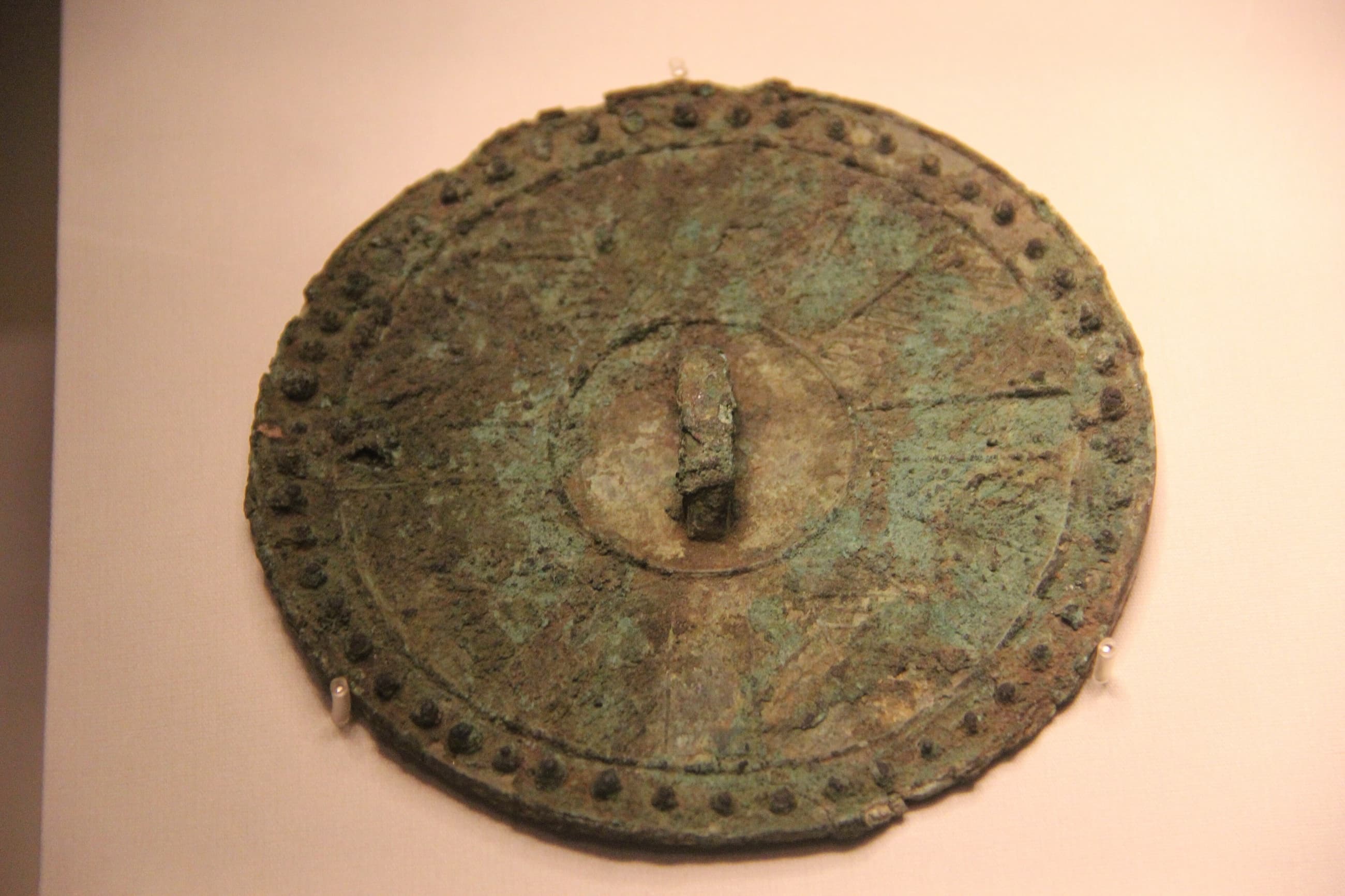
Modern summaries often call Fu Hao China’s first female general. The phrase is memorable, but it compresses a record created in a very different political system. She is often described more carefully as the earliest named female military commander in China’s surviving written record. Oracle-bone inscriptions associate her with campaigns, while weapons and ceremonial axes in the tomb support a world in which military and ritual authority overlapped.
She also participated in divination and sacrifice. These were not secondary religious duties detached from government. Communication with ancestors was part of Shang royal decision-making. Fu Hao’s significance comes from the combination of roles, not from making her resemble a modern officer who happened also to be a queen.
The inscriptions preserve activity; they do not preserve her voice in the modern biographical sense.
A Collector Before Archaeology
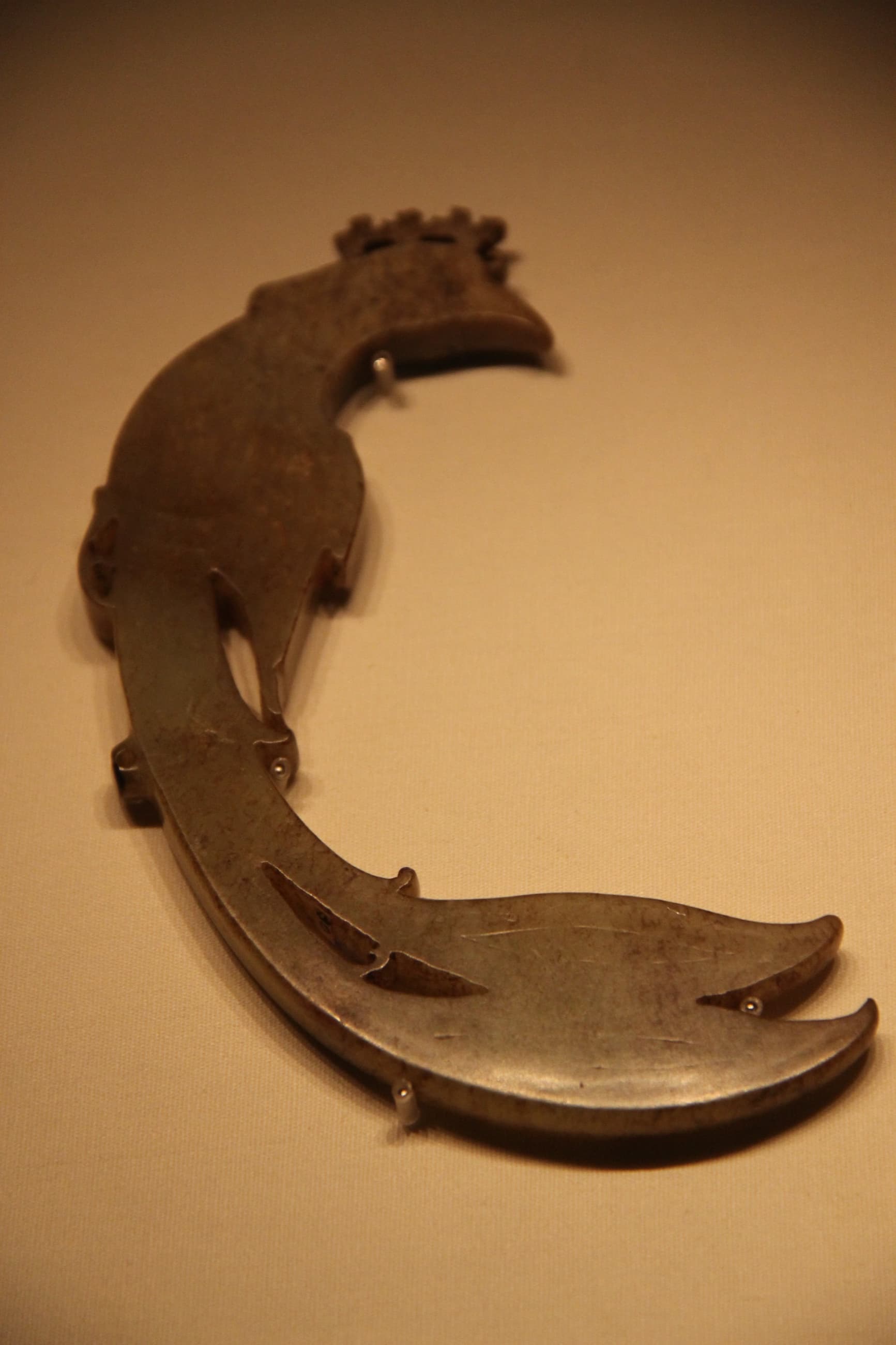
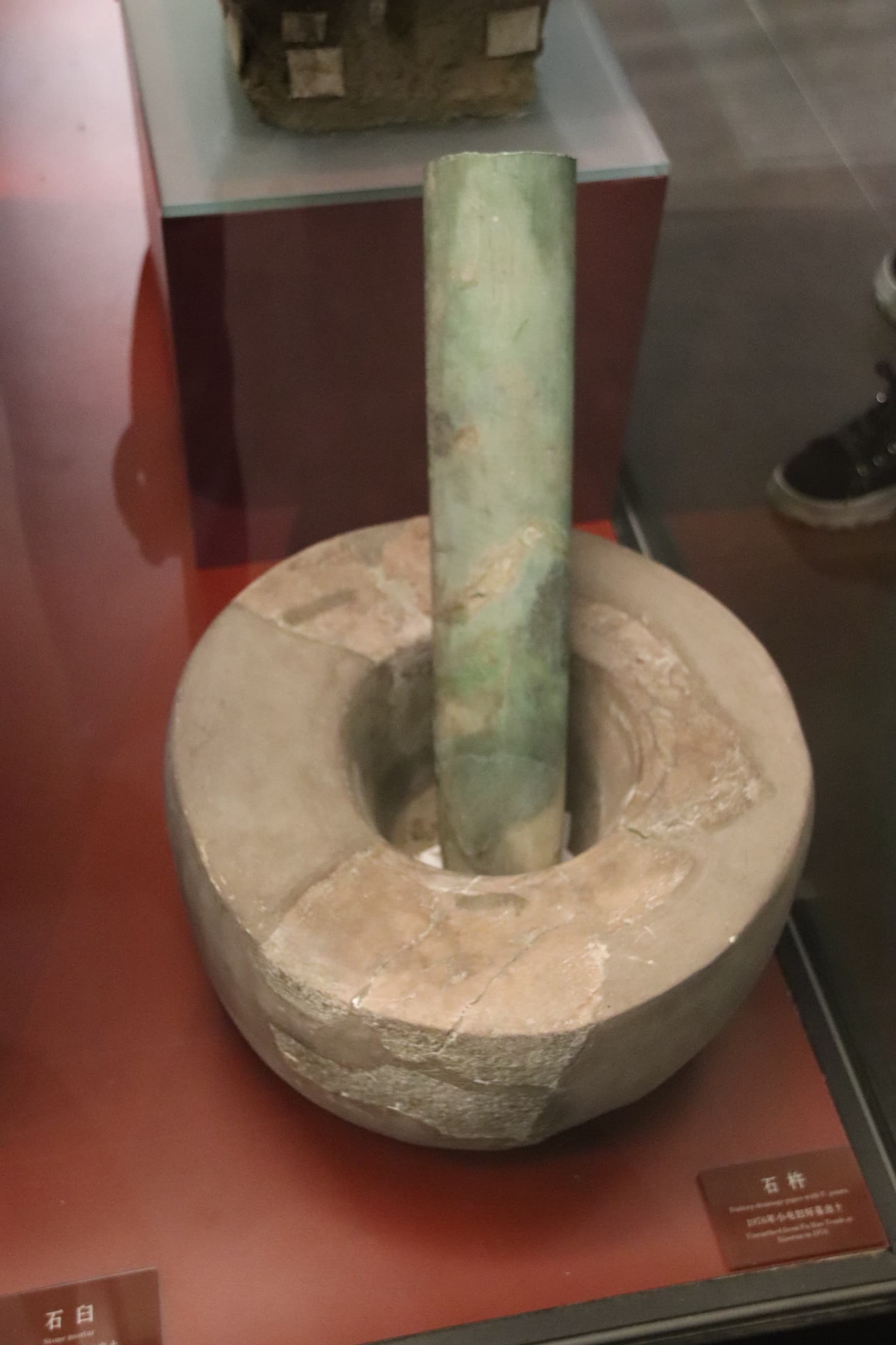
Some jades in the tomb were already old when Fu Hao was buried. Official museum reporting notes pieces connected stylistically with earlier cultures, including Hongshan, Qijia and Xinglongwa traditions, and evidence that some were reworked.
Calling Fu Hao an ‘ancient jade collector’ is an evocative modern shorthand, not a job title preserved in an inscription. Still, the older objects reveal intentional relationships with a deeper past. A material could be valued, inherited, altered and given a new ritual life.
The jade phoenix is especially easy to turn into personality evidence: elegant object, remarkable woman, perfect match. Archaeology cannot prove that she chose it for aesthetic reasons recognizable to us. What it can show is that the burial assembled objects with different ages, sources and histories around one royal identity.
A Face We Do Not Possess
Modern statues give Fu Hao a face, costume and posture. They help visitors recognise a historical name and create a meeting point at the site. They are not likenesses recovered from the tomb. No securely identified portrait tells us her facial features.
The distinction should remain visible rather than hidden in a footnote. A reconstruction reveals how the present imagines authority; it does not close the distance to the Shang period. The same principle applies to staged tomb displays. They help communicate depth and arrangement while remaining modern presentations built around protected remains.
The Modern Woman at the Ancient Tomb
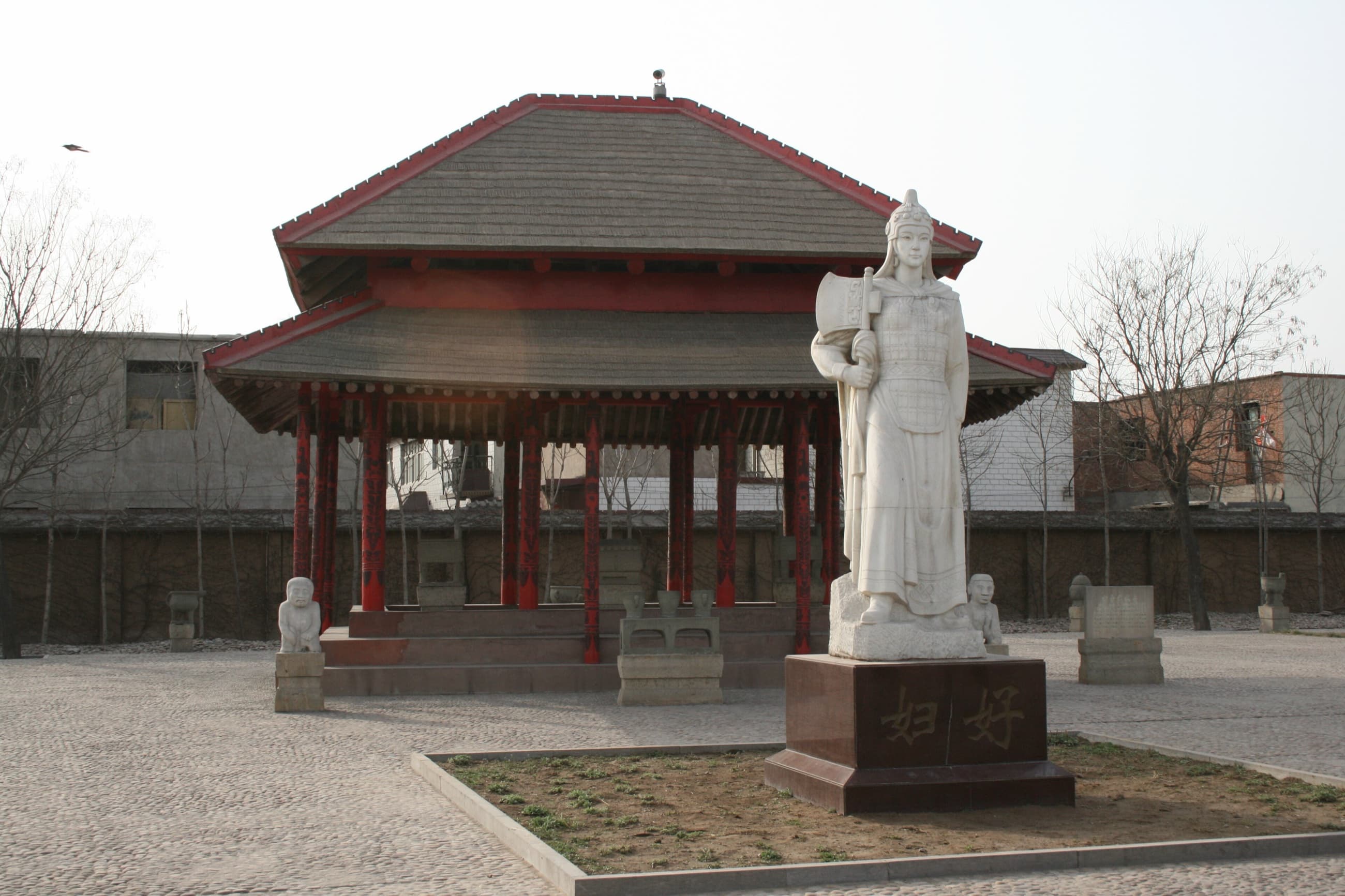
Visitors meet this modern figure before they meet inscriptions. Her upright stance and weapons translate archaeological arguments into an immediate public image. That translation is powerful, which is precisely why it must be labelled.
The statue is neither an excavated object nor a verified portrait. It belongs to the modern history of Fu Hao: the process by which a specialist archaeological identification became a widely recognised story about women and power.
Image: modern statue at the Fu Hao tomb site. Gary Todd / Wikimedia Commons, CC0; resized for web.
What the Grave Can — and Cannot — Return
The tomb changed Fu Hao from a name distributed across inscriptions into the centre of an archaeological assemblage. Bronze, jade, stone and writing can now be studied together. That is an extraordinary recovery, but not a complete biography.
We do not know what she looked like. We cannot turn every grave good into a personal preference. We should not assume that titles such as queen, priestess and general map neatly onto institutions today. The limits do not weaken the story. They show how historical knowledge is made.
Begin with a name cut into bone. Follow it into vessels cast with marks, objects placed in a sealed chamber and a site excavated three thousand years later. Fu Hao becomes visible not because archaeology removes uncertainty, but because several independent kinds of evidence hold her in view.