A City Beneath the City
The salt in your hand might weigh almost nothing. In Zigong, Sichuan, obtaining it once demanded a vertical journey deep enough to be hard to picture from the street. Workers did not wait for seawater to evaporate. They drilled through rock to reach underground brine, lifted it and boiled away the water. The industry also drew up natural gas, which could provide fuel for the same salt-making process.
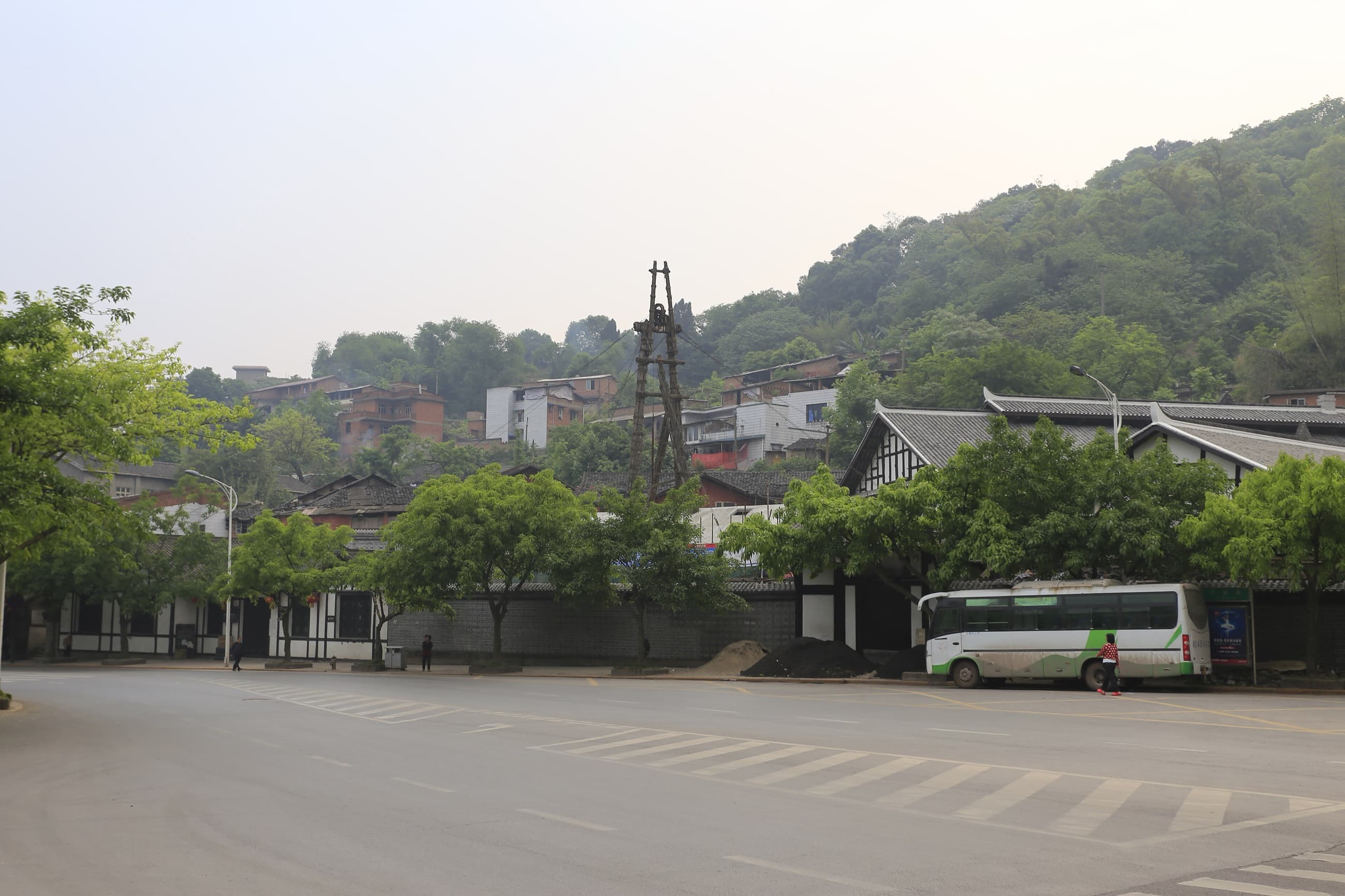
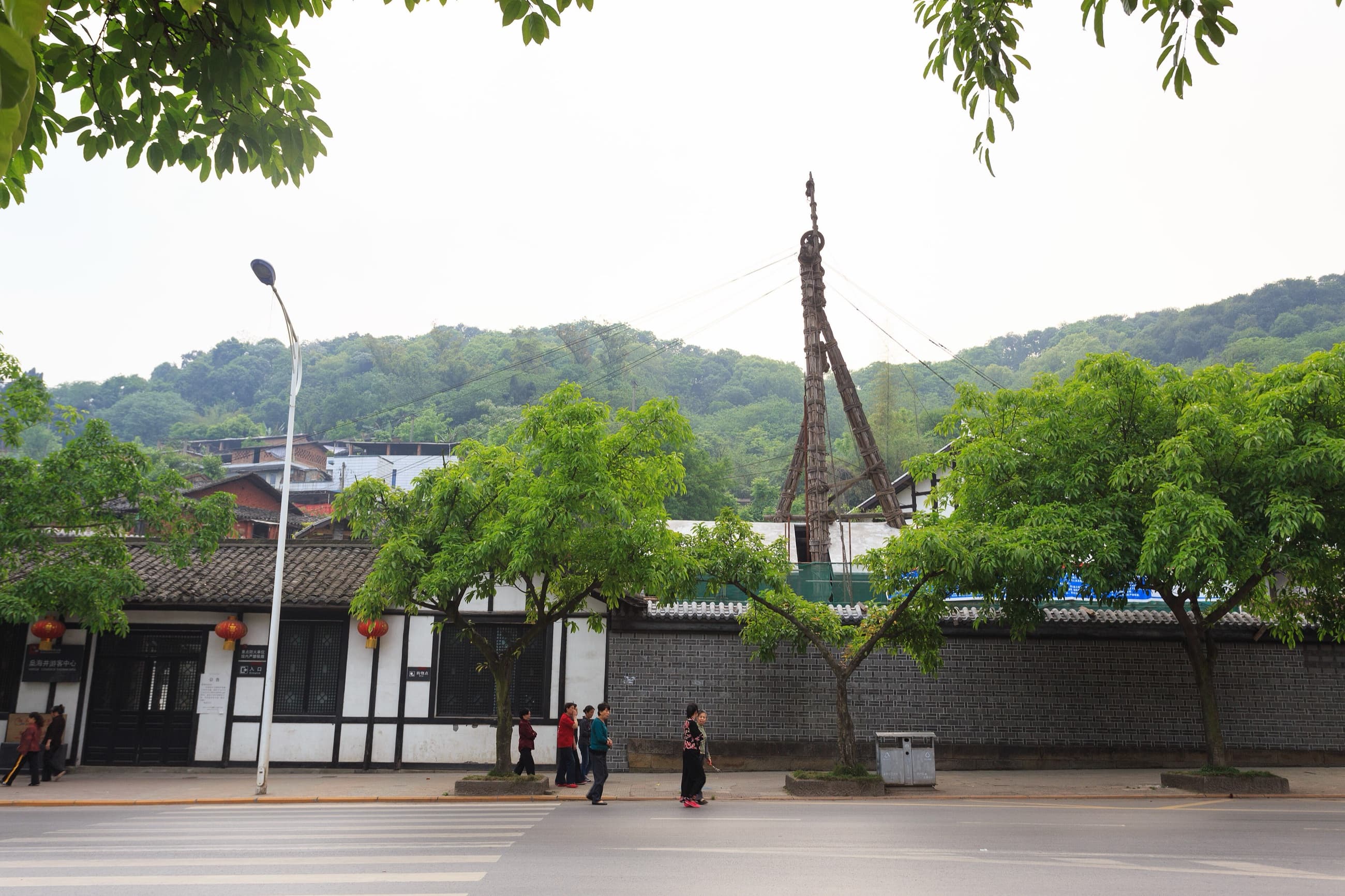
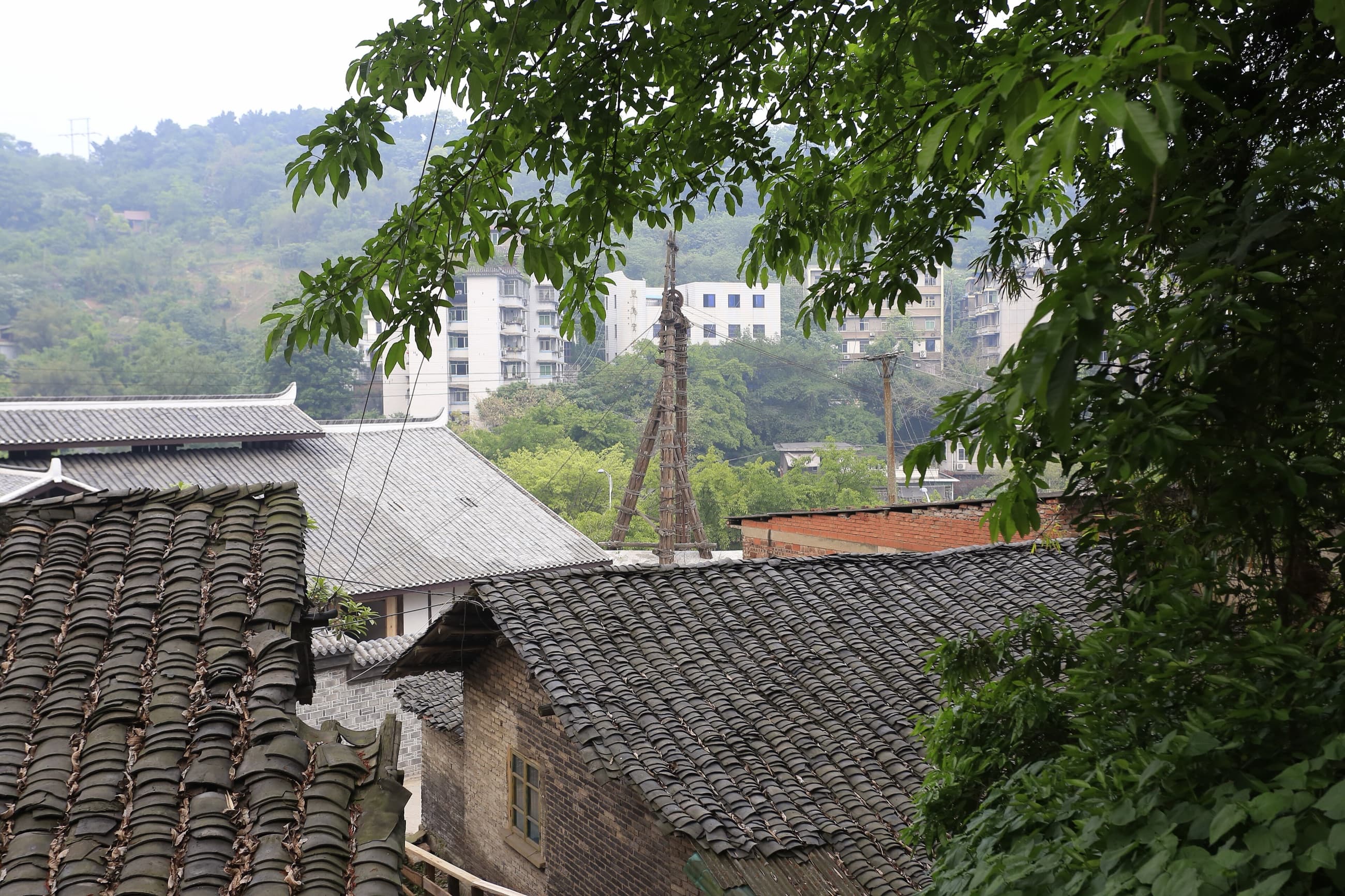
Stand at the historic Shenhai Well and the scale becomes tangible. The structure above ground is only the visible end of a much longer story below it. Zigong's UNESCO Global Geopark describes a salt-and-gas landscape shaped by unusual geology and generations of engineering. A visitor sees a wellhead, a tall framework, boiling equipment and buildings. The most consequential dimension — depth — has to be imagined.
Why Go Down Instead of Out?
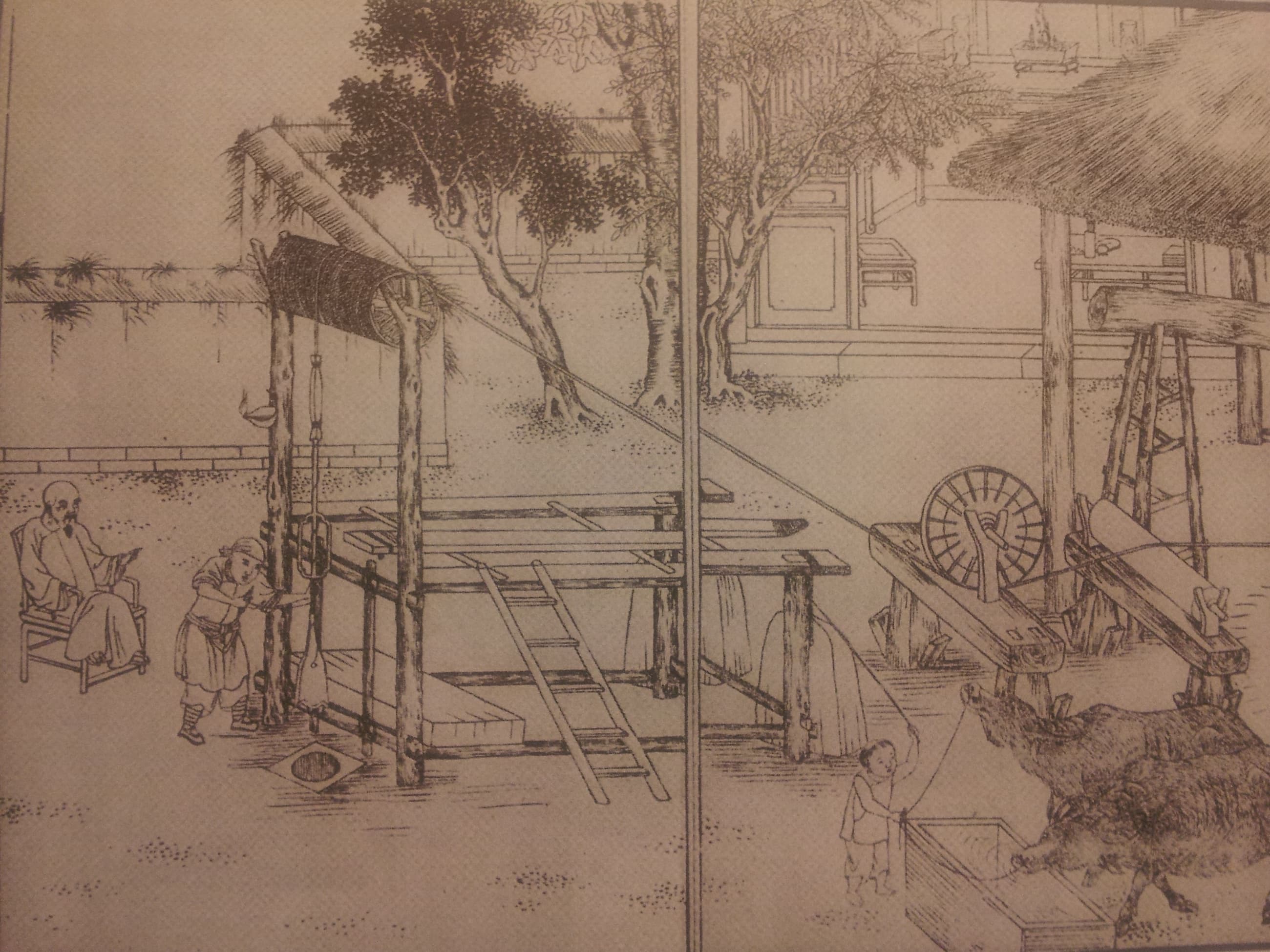
Much of the world knows salt through coasts and shallow salt pans. In the Sichuan Basin, buried brine offered another source. The problem was access: the useful liquid lay far below the places people could dig by hand. A deep well required not one heroic strike but countless repeated movements, tools that could work within a narrow bore, and the ability to manage failures in stone.
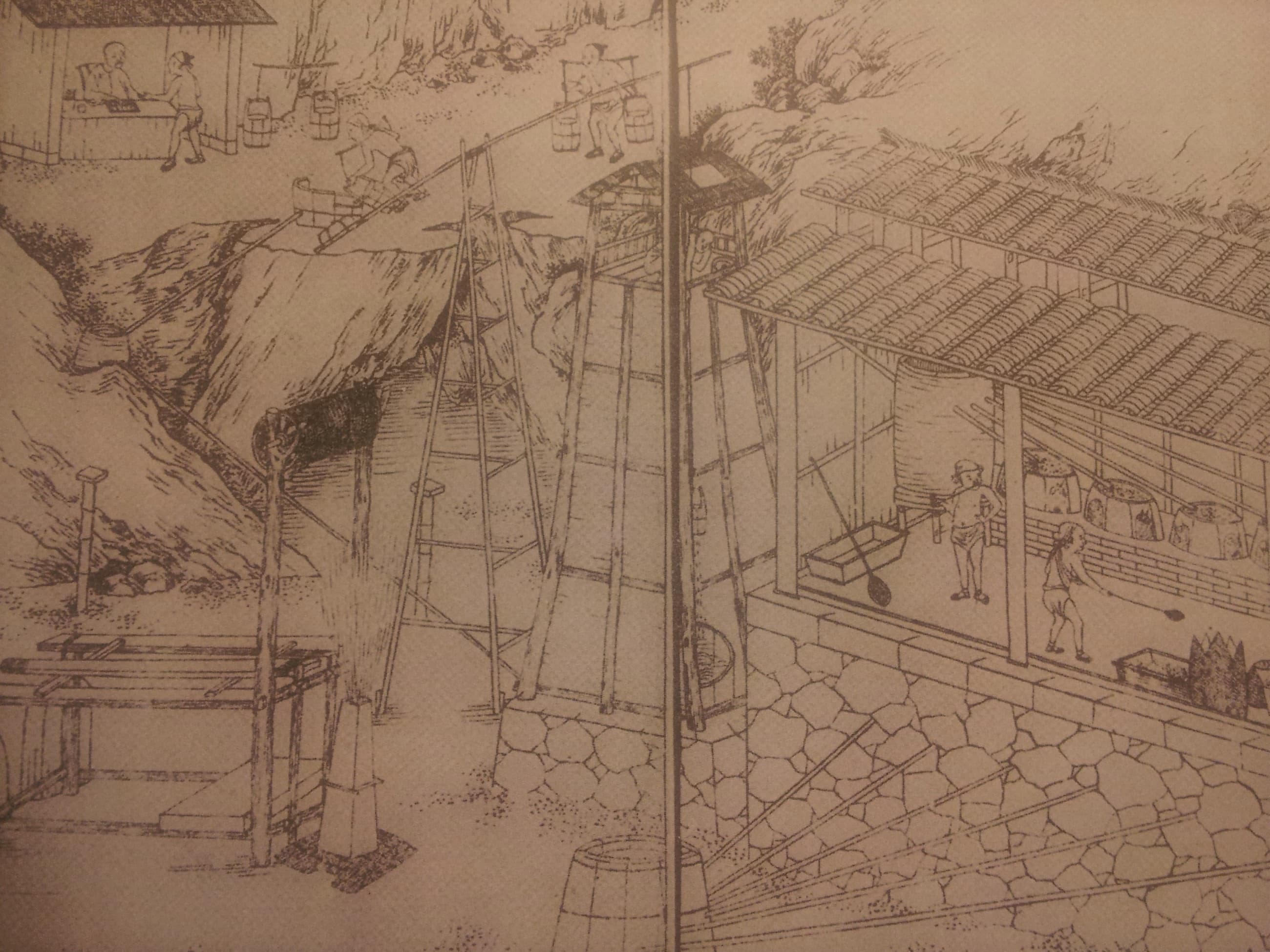
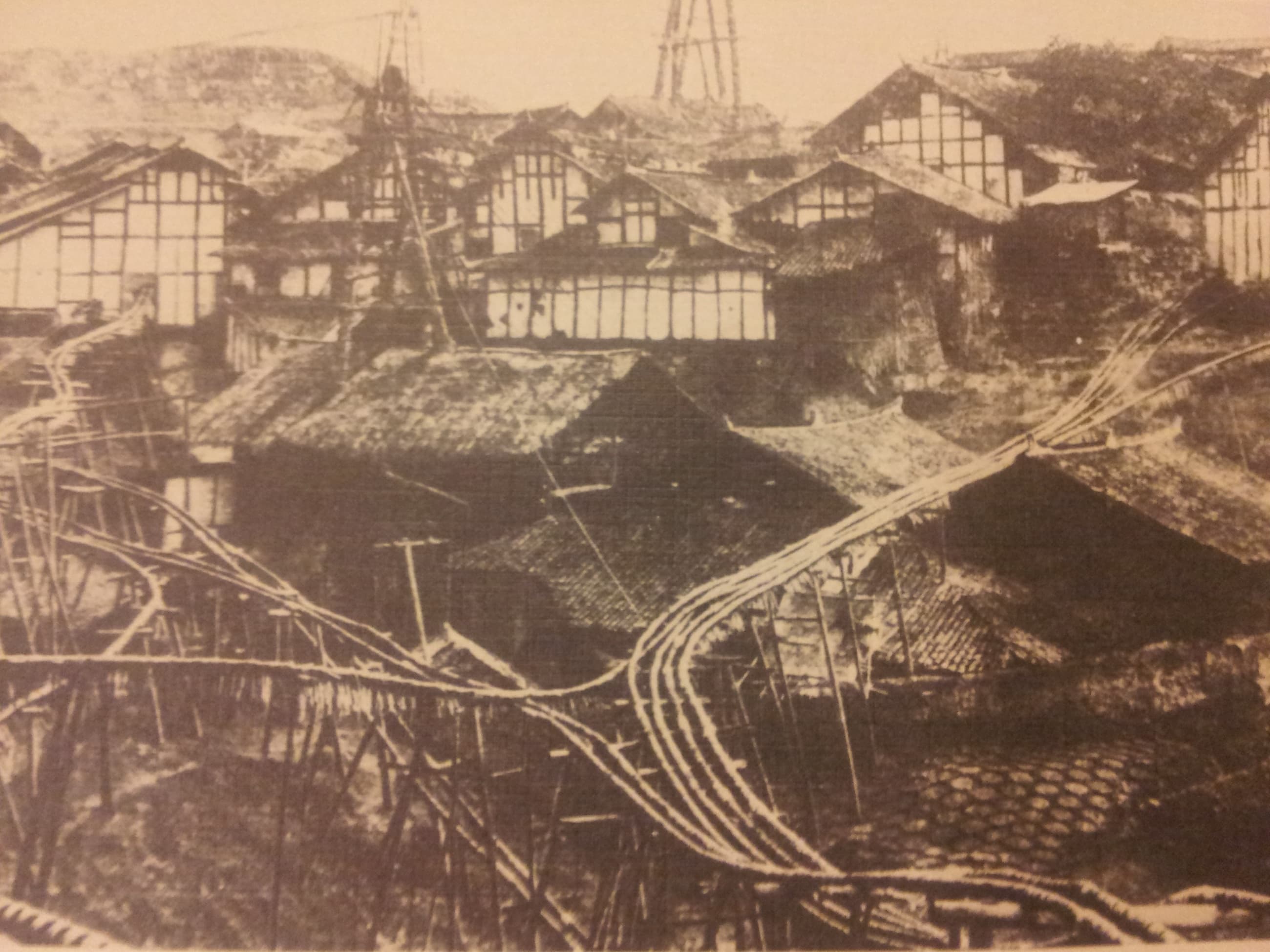
That is why the historic illustrations of drilling are worth looking at. They show an engineering imagination before motorised rigs, although they should not be mistaken for a precise photograph of the equipment at Shenhai in 1835. The mechanism and workforce evolved over time. What stayed constant was the problem: turn a long, slender hole into a reliable route between a hidden deposit and an industry at the surface.
The Measured Depth of Shenhai
The Shenhai Well was completed in 1835. The Zigong Geopark gives its depth as 1,001.42 metres — a number whose two decimal places can distract from the astonishing first four digits. A kilometre is a long walk above ground and a remarkable bore through rock. The geopark identifies Shenhai as an early or pioneering example of a well beyond that threshold, a claim best kept with its source rather than turned into an unqualified global first.
This depth belongs to this well. It should not be used as shorthand for every salt well in Zigong. There were many wells, different scales and different working lives. The extraordinary one helps us see the whole industry, but it must not flatten that industry's variety.
The Visible Half of a Deep Machine
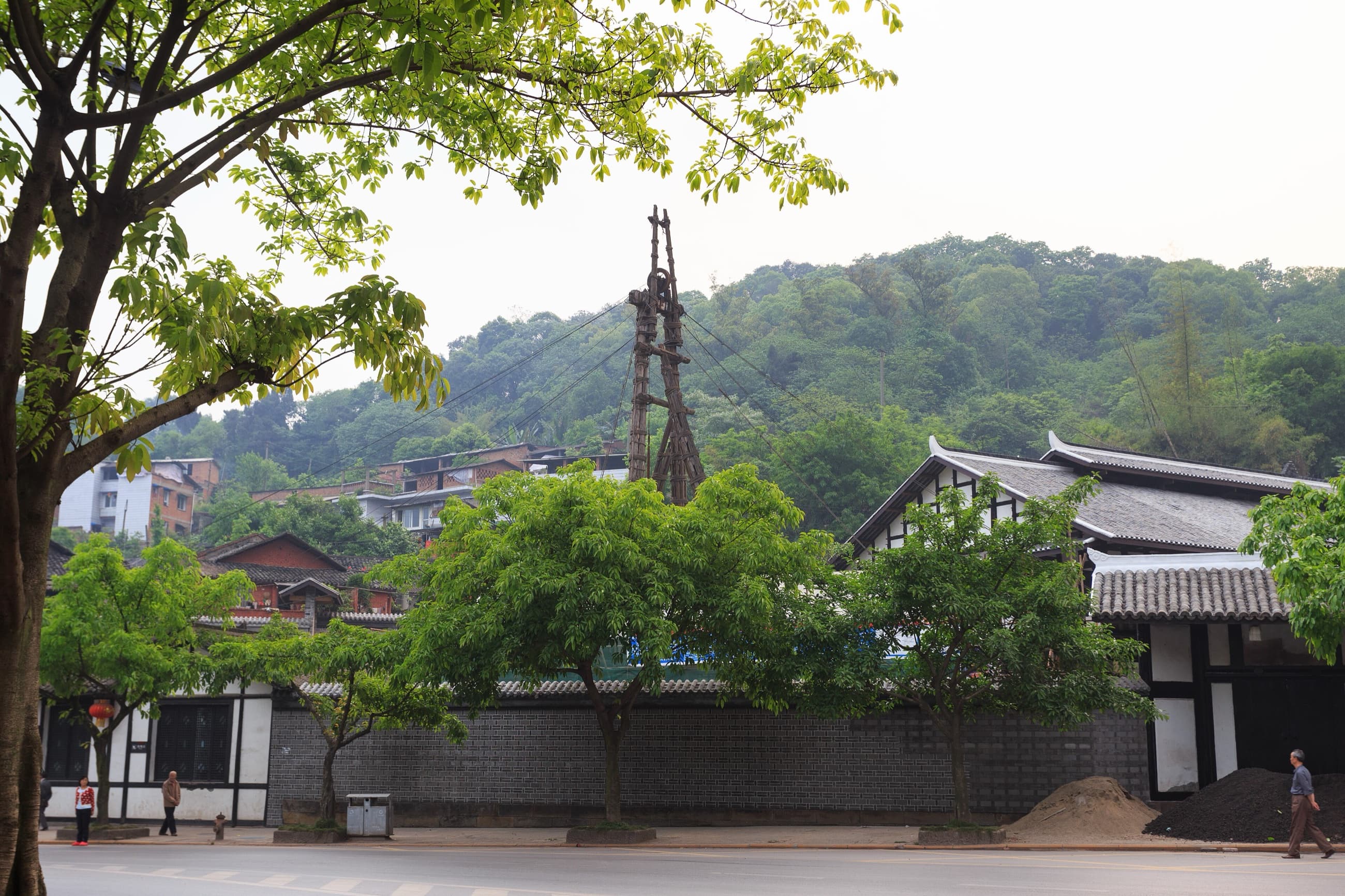
Visitors can inspect structures and equipment around the well, yet the underground shaft remains inaccessible to the eye. This is a peculiar challenge for an industrial heritage site: the object that gives it significance cannot be taken in at a glance.
The surviving complex has been maintained and restored. What is visible now is a preserved interpretation of a long-lived working place, not an untouched room frozen on the day the well was completed. That does not make it less valuable. It makes it possible to ask which parts were operated, repaired, replaced and explained to later generations.
Image: Zhangzhugang / Wikimedia Commons, CC BY-SA 3.0; resized for web.
Two Things Came Up
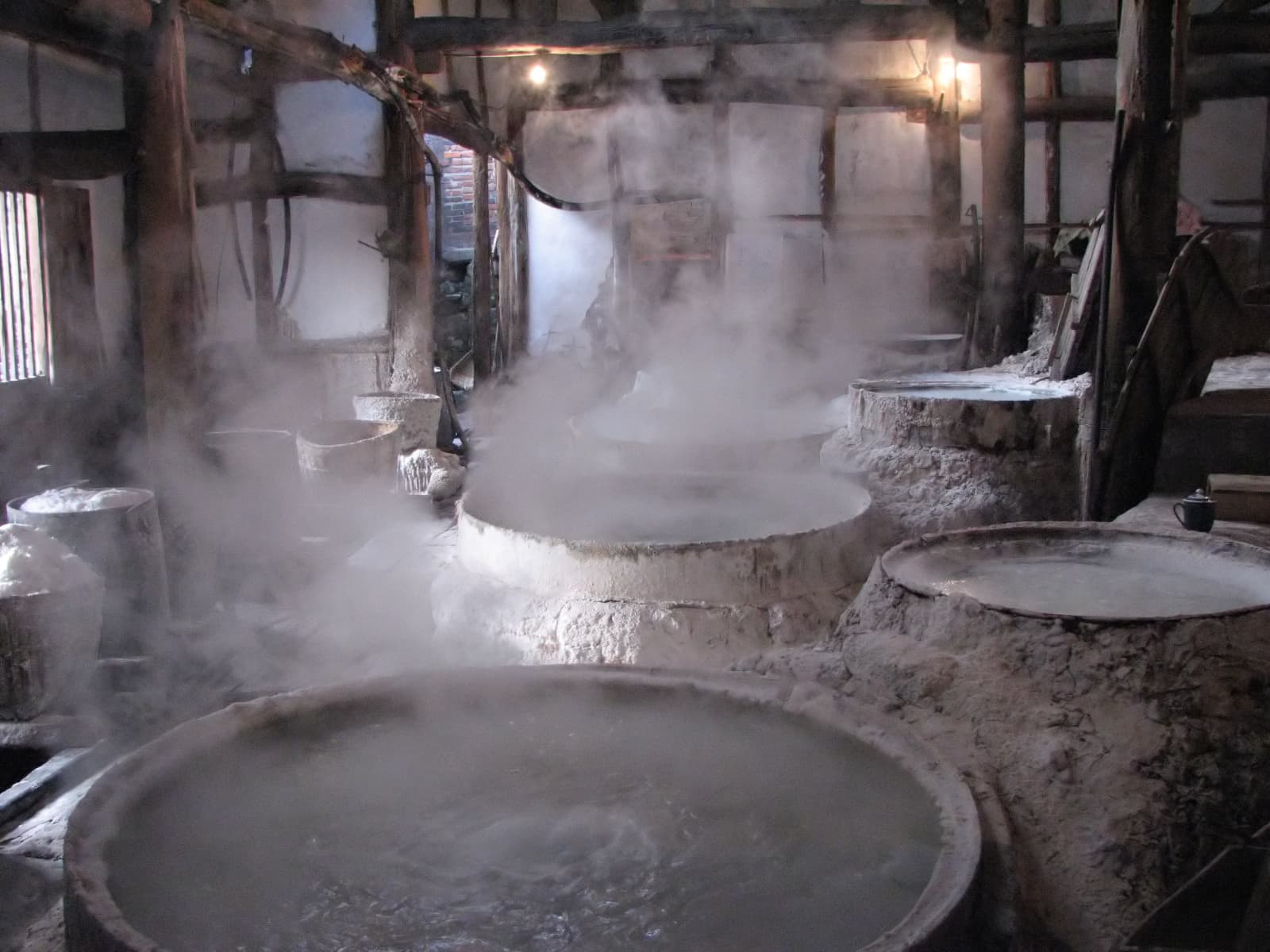
Brine was the material to be turned into salt. Natural gas was another resource emerging from the underground system. In the Sichuan salt industry, gas could heat evaporation pans; energy and product met at the same industrial site. A well was thus more than an isolated opening in the ground. It was part of a network of pipes, fuel, cooking equipment, workers, merchants and transport.
Boiling the brine removed water and left the mineral people wanted. The process sounds elementary until one considers its scale. Heat had to be maintained, liquid moved, pans tended and salt collected. Historical evaporation drawings make those stages legible, but their figures and furnishings are representative images, not photographs of a known Shenhai workday.
A Commodity Builds Architecture
Salt did not disappear once it had crystallised. It moved into markets and revenues, shaping the city around its production. Zigong's streets and historic halls offer clues to the wealth and organisations connected with trade. Xiqin Guildhall, pictured here, is part of that urban setting. An attractive building alone cannot prove a particular shipment or merchant's profit; it does show that the city's salt history extended beyond the wellhead.
This makes Zigong different from a single-machinery museum. The geology, wells, fuel use and built environment are all chapters of one landscape. The enterprise needed specialists and ordinary labour alike: drillers, haulers, pan-tenders, maintenance workers, traders and administrators. Their names are mostly less visible than the great well's measurements, but the industry could not function without them.
The Well's Above-Ground Neighbourhood
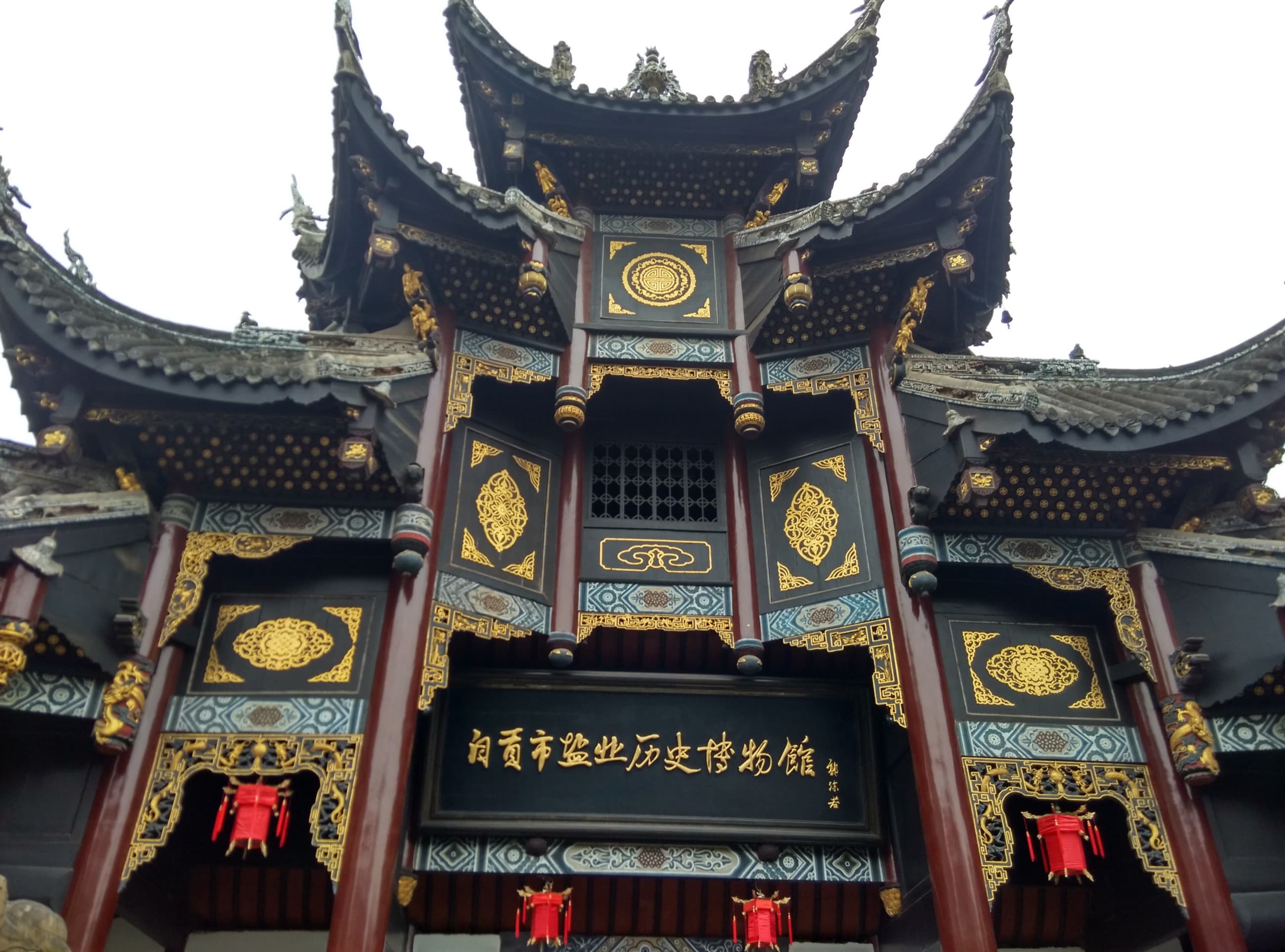
The guildhall is not part of a drilling mechanism. It is a reminder that extraction creates a social world. Buildings for assembly and commerce grew in a city whose fortunes were tied to salt. The machinery below the street and the architecture above it belong in the same history.
The stone, timber and decorative detail also change the pace of a visit. After imagining a kilometre-long bore, one returns to rooms where people met face to face. Industry is not only an invention or a production figure. It is a way a community organises work and its rewards.
Image: 苏你妹~ / Wikimedia Commons, CC BY-SA 4.0; resized for web.
A Historic Site Is Still Changing
The Shenhai Well complex has survived partly because it was preserved, repaired and interpreted. Those acts are not a footnote. Industrial sites are difficult to conserve: wood deteriorates, metal corrodes, processes become unsafe, and explanations have to be updated as scholarship improves. A restored component can help reveal how a system worked, but a responsible caption will not pretend it has never changed.
The same caution applies to grand claims about technological priority. Zigong's wells are remarkable on their own evidence — documented depth, interlinked brine and gas, and a city formed around them. They do not need to be described as identical to modern petroleum drilling or as the sole origin of every later technology.
Measure the Distance Twice
At Shenhai, measure a kilometre against the nearest street. Then measure it against the labour required to keep a well operating after the breakthrough. The first distance is geological; the second is social. Together they explain why an everyday seasoning could become the organising principle of a place.
The next grain of salt on a table may still look insignificant. In Zigong it is a small, bright endpoint of rock, brine, fuel, tools and human persistence. The remarkable thing is not merely that people went so far down. It is that they built a city capable of bringing what they found back up.