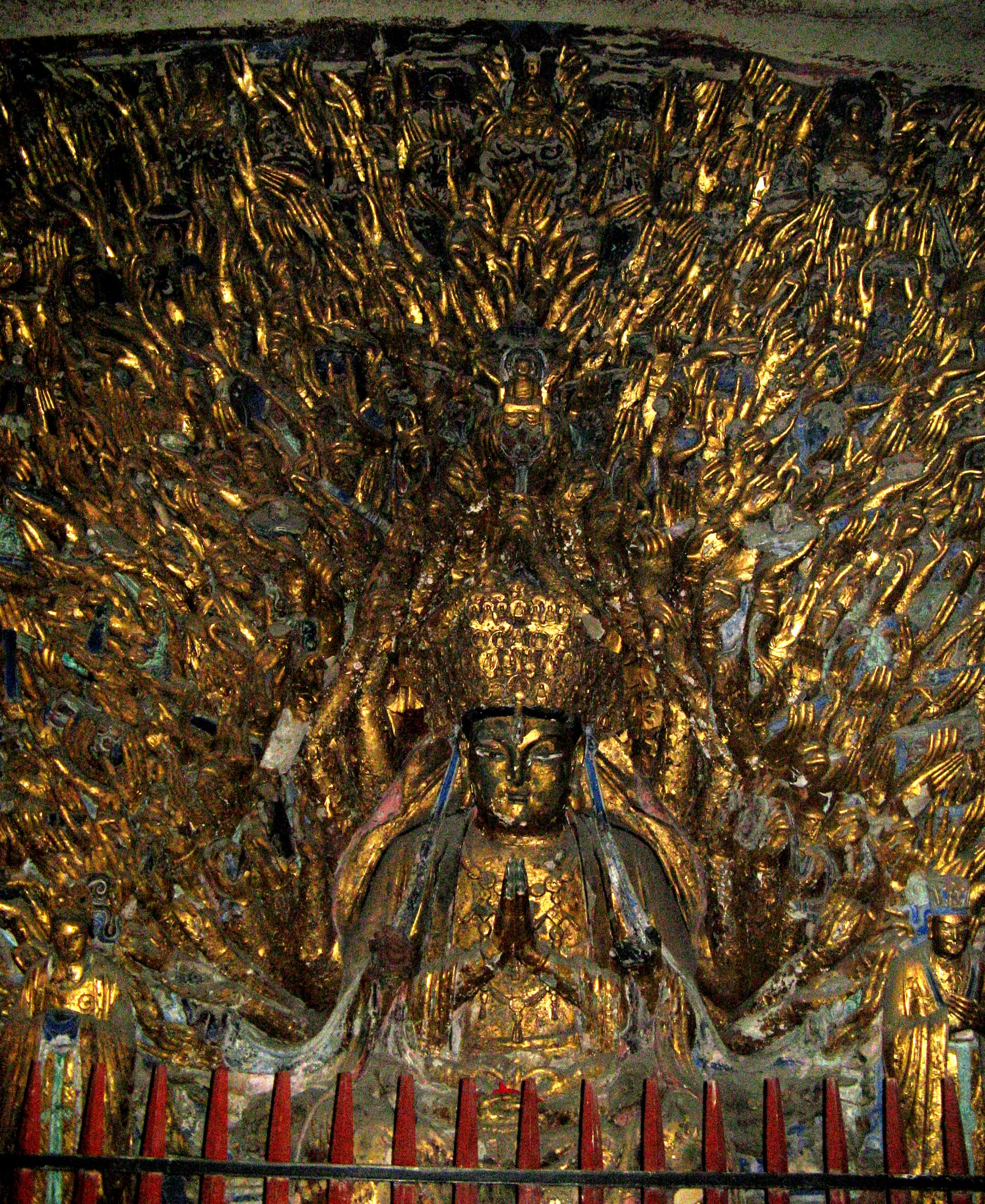
Begin with one hand. Its fingers may be stone, but the surface is a layered skin: preparation, lacquer, colour and gold. Moisture can move salts through the sandstone. A brittle layer can lift from the rock. A crack can pass through several materials that respond differently to heat and humidity.
Now step back. That hand is one point in a fan of arms spreading across a cliff at Baodingshan, part of the Dazu Rock Carvings in Chongqing. The composition commonly called the Thousand-Hand Guanyin surrounds a central figure with a field of hands, eyes and ritual implements. The name describes an idea of limitless compassionate action, not merely an exercise in counting.
To conserve the whole sculpture, specialists had to return to the scale of one hand — and then repeat the work across a surface too complex for any single treatment.
A Cliff Turned Into a Halo
The Dazu Academy describes the niche as 7.7 metres high and 12.5 metres wide, occupying about 88 square metres of cliff face. It was created during the Southern Song period. Hands radiate outward so densely that the rock seems to lose its weight and become a luminous halo.
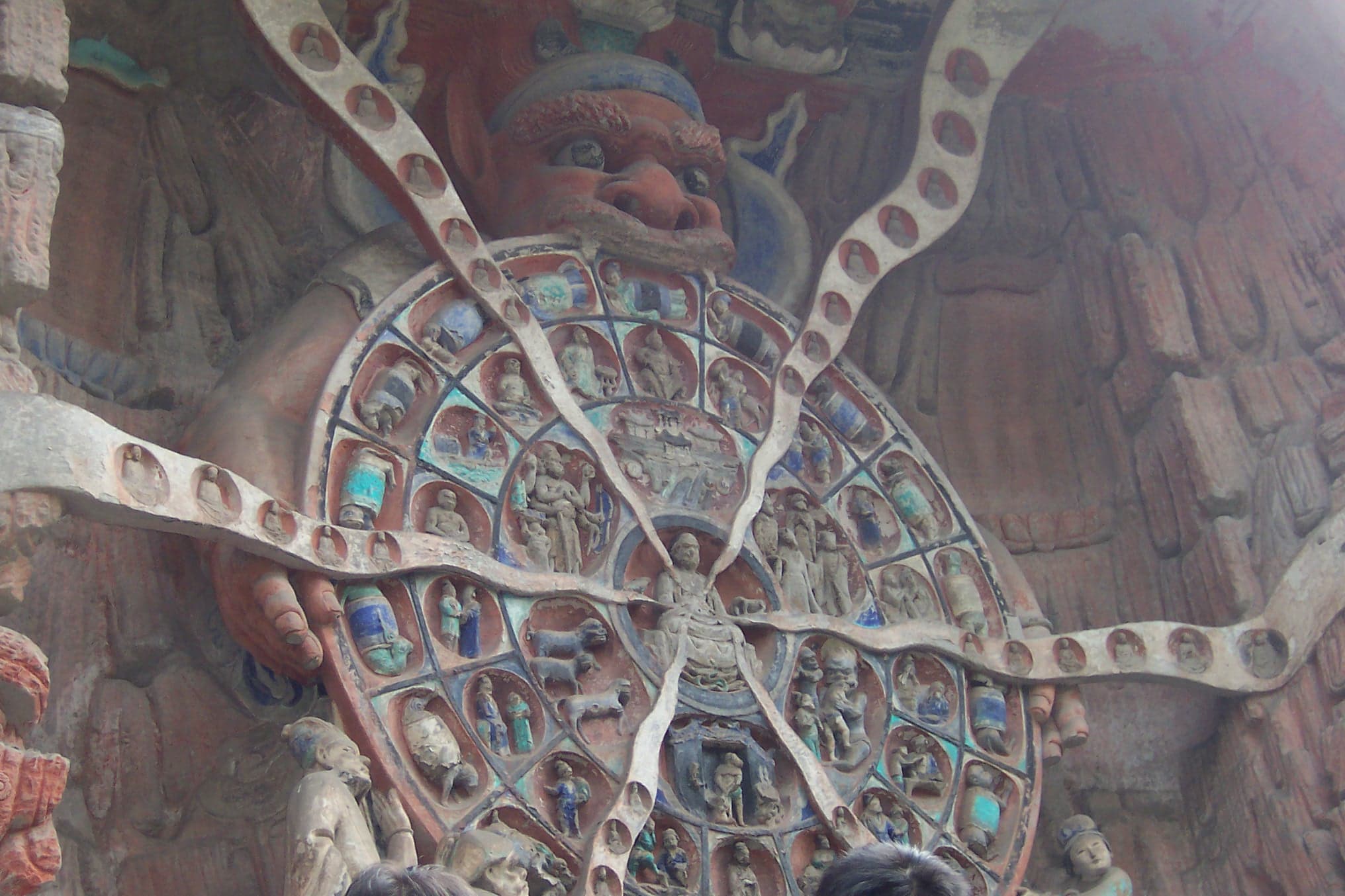
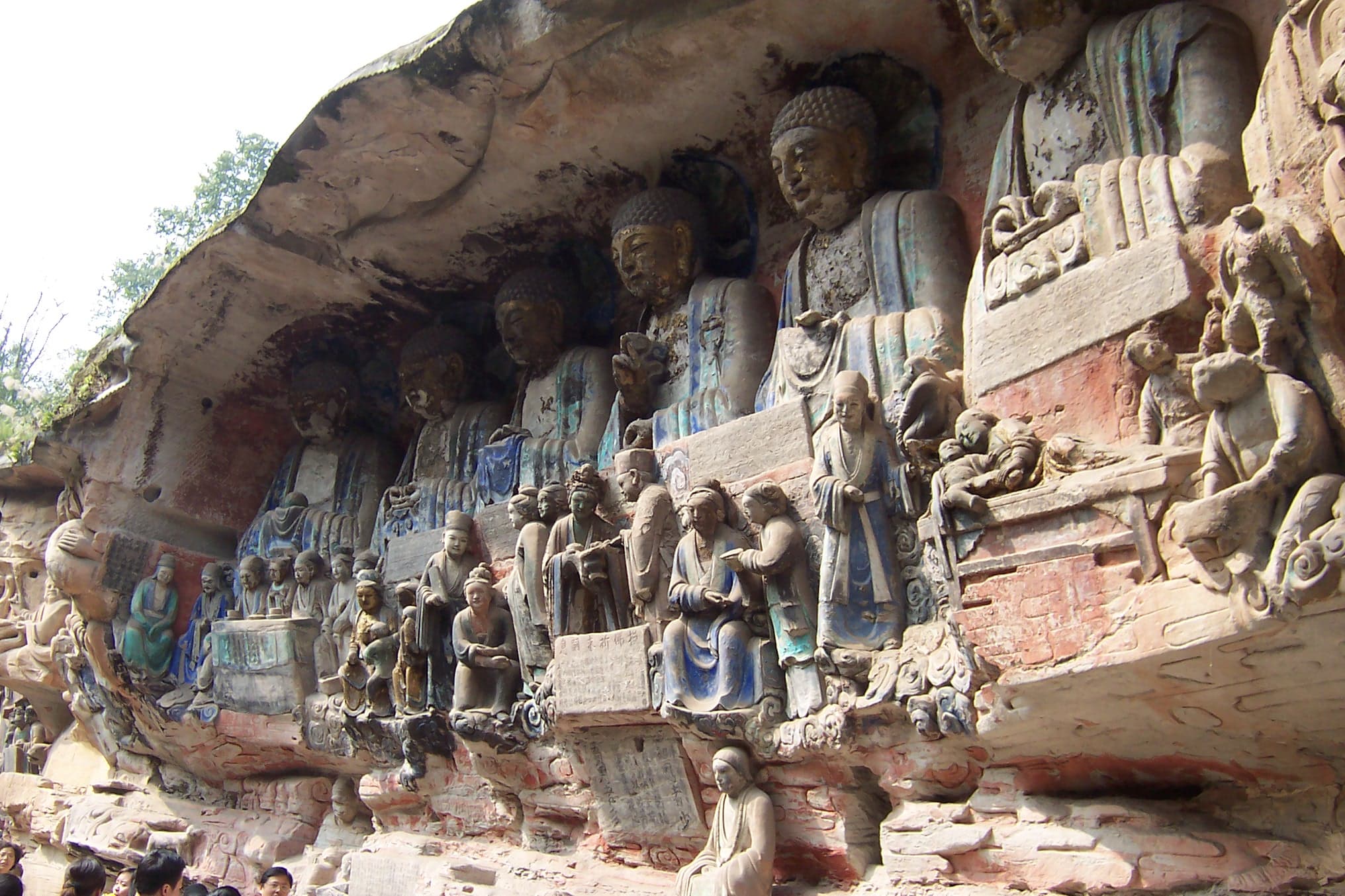
The figure belongs to Baodingshan’s larger programme of Buddhist carvings. Nearby scenes combine doctrine with narratives of family duty, judgement and everyday moral consequence. The Guanyin is monumental, but it was never an isolated sculpture designed for a neutral gallery. It remains part of a religious landscape shaped by movement, worship and repeated repair.
Official visitor materials currently use a count of 1,007 hands. Other publications have used different totals, often because damaged, paired or partially visible elements are counted differently. The story does not depend on one supposedly eternal number.
Stone, Lacquer, Colour and Gold
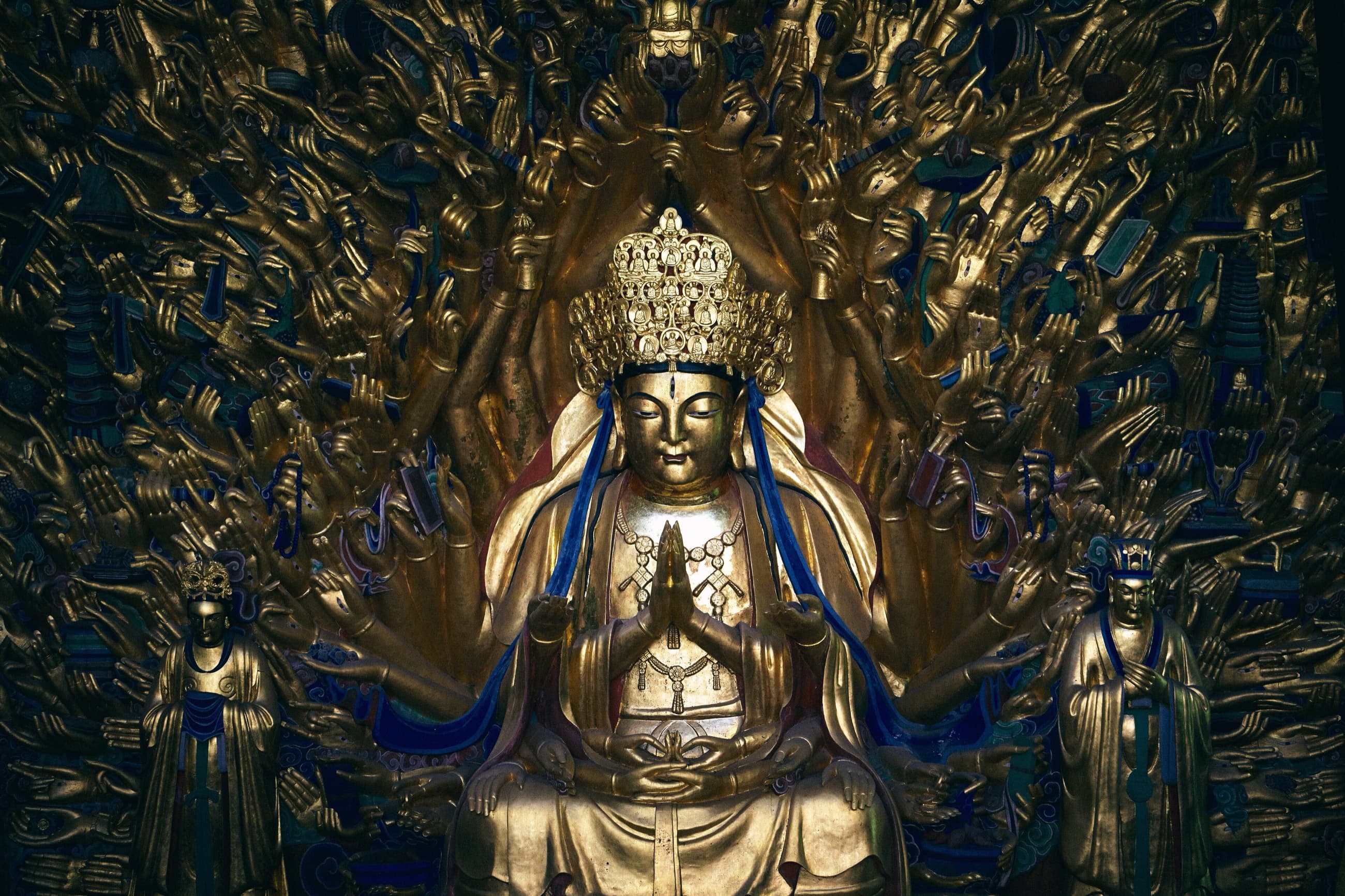
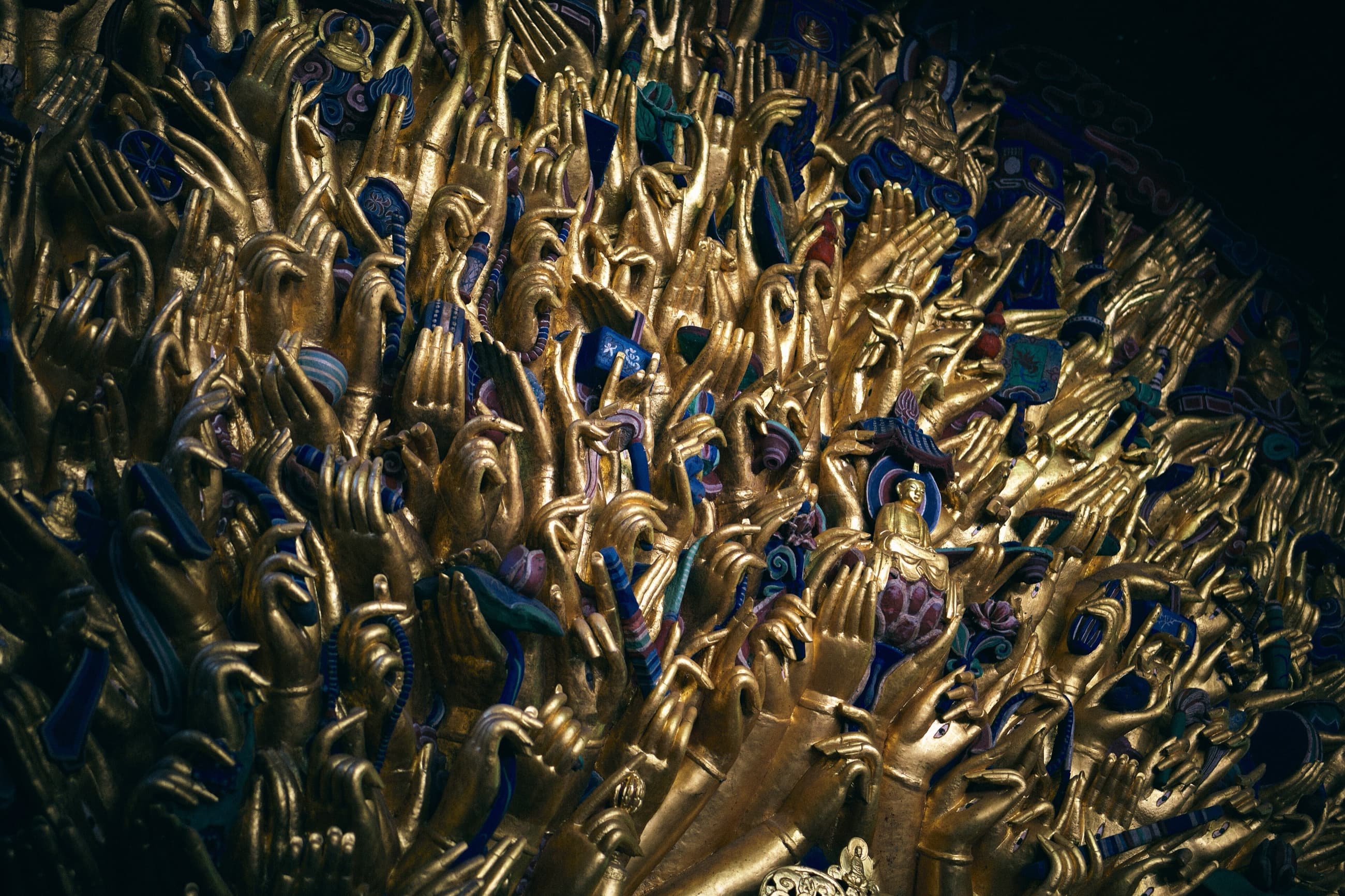
Calling the work a stone carving is correct but incomplete. The sandstone supplies mass and form. Surface preparations and lacquer help receive painted and gilded layers. Gold leaf catches light and separates hands from the dark recesses between them. Traces from different interventions can occupy the same small area.
That composite structure creates beauty and vulnerability. Stone can powder or crack. Lacquer can shrink or detach. Pigment can lose cohesion. Gold can lift with the layer beneath it. A treatment that stabilises one material may affect another.
The hands also carry attributes and eyes, multiplying tiny edges where water, dust and physical stress can act. Conservators were not repairing a single uniform surface. They were negotiating thousands of local conditions.
Image: details of gilded hands and objects. Truthven / Wikimedia Commons, CC BY-SA 3.0; resized for web.
Thirty-Four Kinds of Damage
The official conservation account identifies thirty-four categories of compound deterioration across stone, painted layers and gilding. The unfolded treatment surface reached roughly 220 square metres — much larger than the flat face of the niche suggests because every arm, finger, fold and recess adds area.
Damage did not arrive from one villain. Water movement, soluble salts, unstable rock, biological activity, older repairs, detached layers and microclimate interacted. Visible flaking might be the final symptom of a process beginning inside the cliff.
This is why cleaning could not be the first or only answer. Before changing appearance, the team investigated geology, stability, condensation, materials and environmental behaviour. Conservation began by asking what was happening and why.
Seven Years on the Scaffold
The rescue project ran from July 2008 to June 2015. The first phase focused on investigation and experiments: engineering geology, condition mapping, rock stability, microclimate, condensation, three-dimensional recording, material development and trial treatments. A conservation plan was then reviewed before full work advanced from the upper areas downward and from simpler interventions toward more difficult ones.
Treatments included removing dust, addressing salts, consolidating weathered stone, grouting voids, joining broken stone, stabilising detached gilding and painted layers, and making limited fills. Official records also describe lacquering, applying gold leaf and integrating colour where the approved plan required it.
The sequence matters. The public sees a golden surface. The project was built on years of diagnosis beneath that surface.
When Conservation Looks New
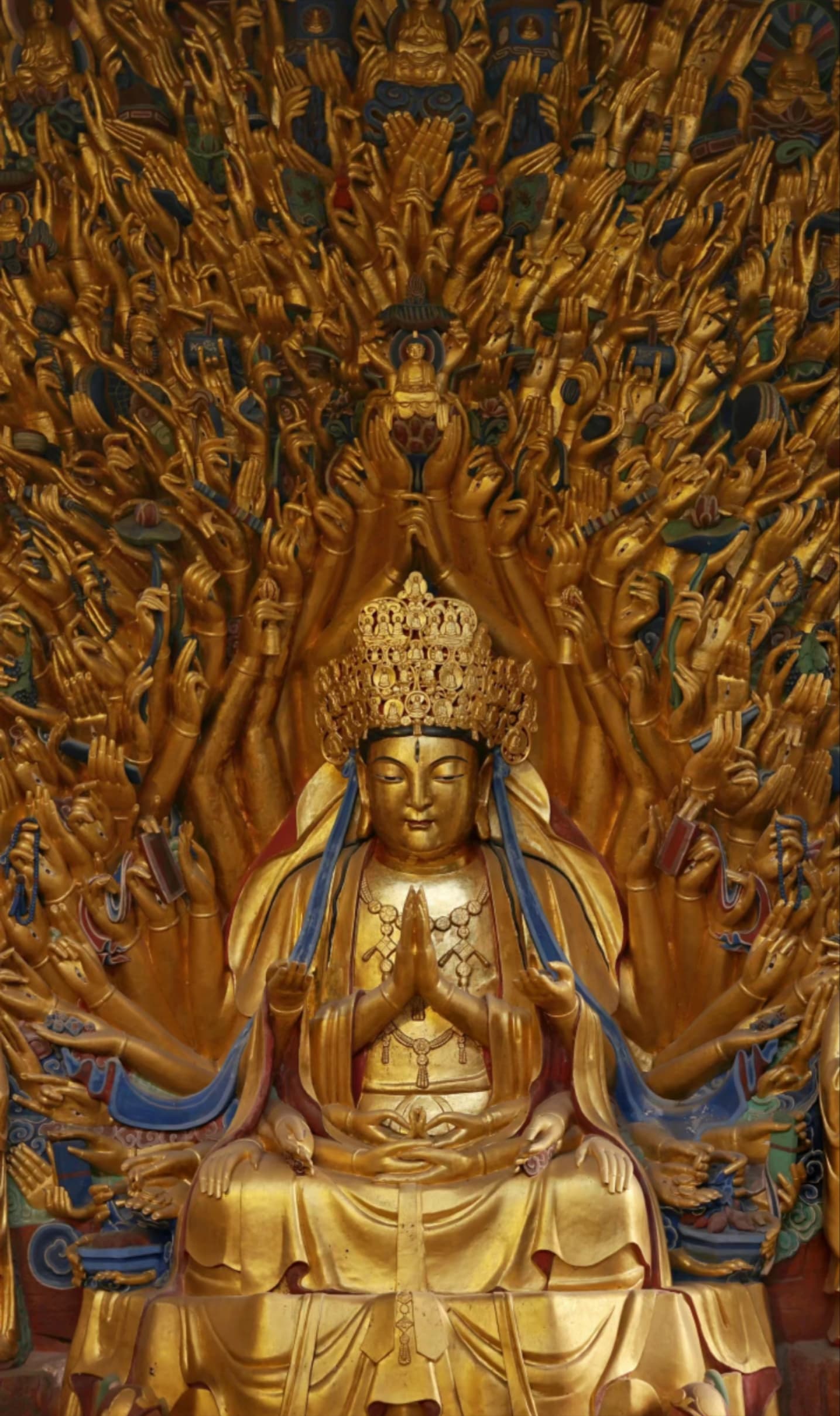
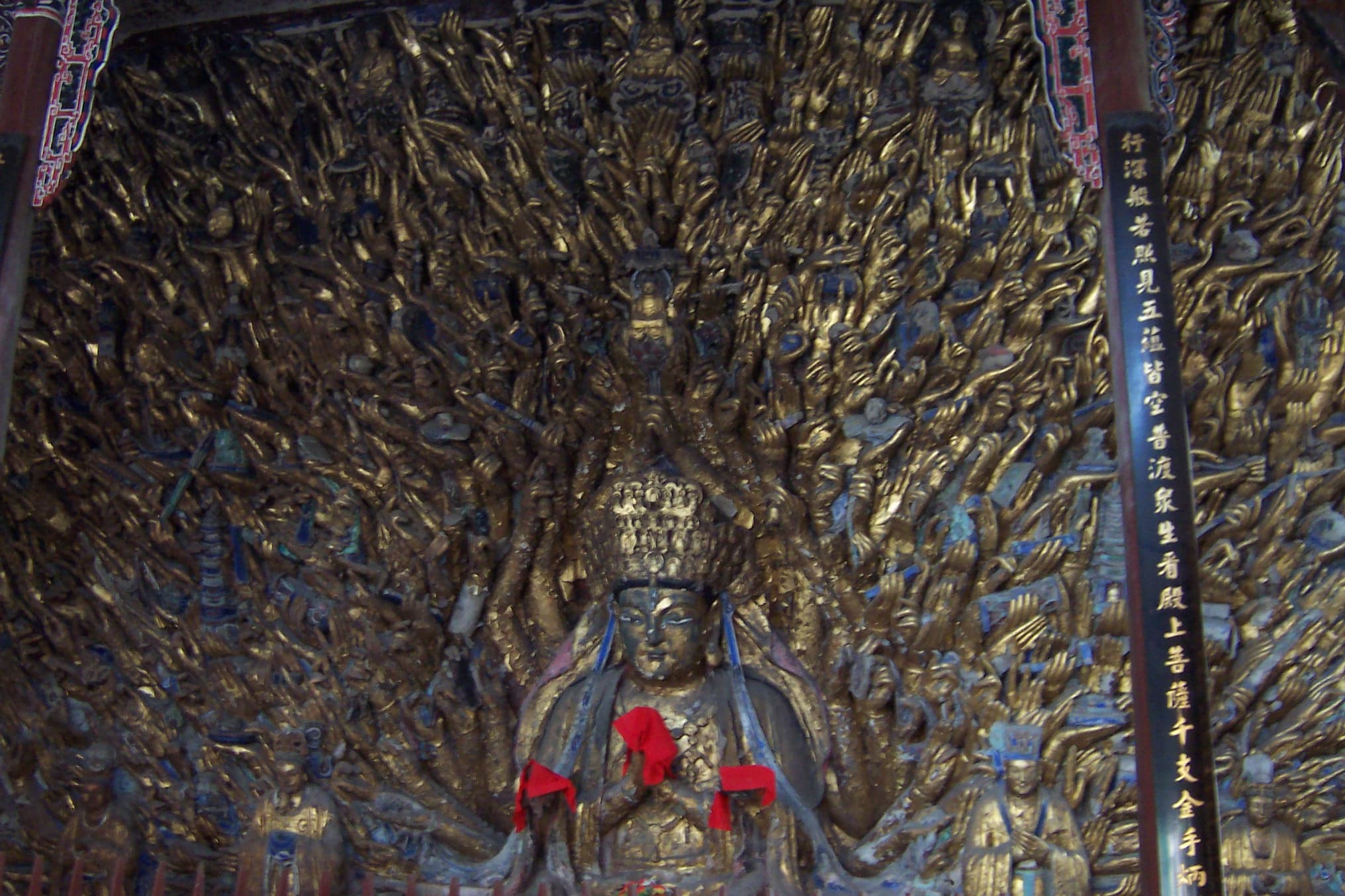
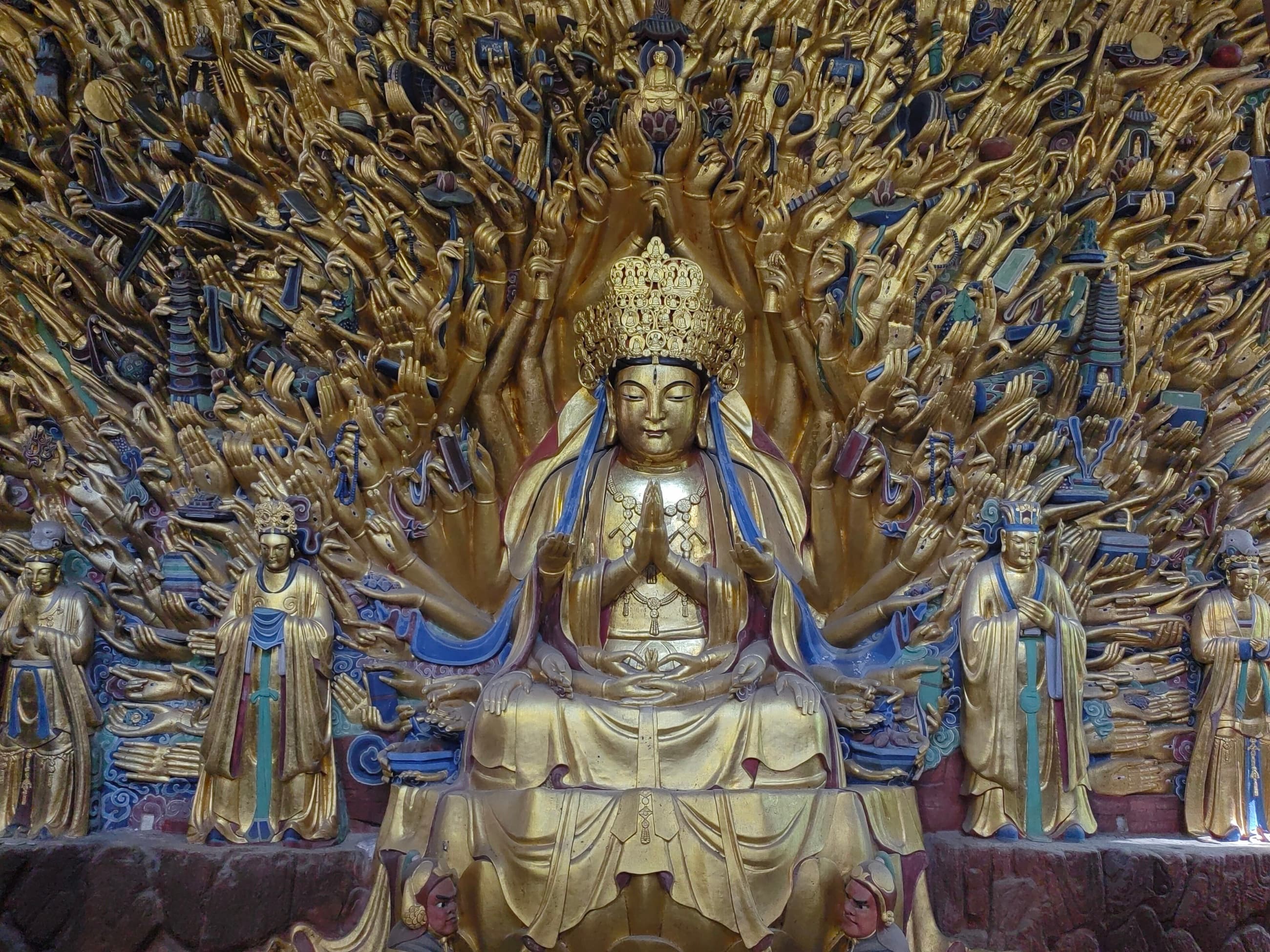
After treatment, the composition appeared more coherent and more golden. Some viewers celebrated the recovered visual force. Others felt that the surface looked too new. That reaction raises a serious question but does not by itself prove that the conservation was technically wrong.
Living religious heritage complicates the preference for visibly aged surfaces. Gilding had devotional and visual functions; historical repairs were part of the object’s life. At the same time, replacing material can blur the line between stabilising evidence and recreating an imagined original.
A responsible account should show both the pre-treatment and post-treatment states, identify what the project says it did, and leave room to examine intervention choices. ‘Old-looking’ is not automatically authentic, and ‘bright’ is not automatically faithful.
Image: post-conservation view, 2024. DK / Wikimedia Commons, CC BY 4.0; resized for web.
A Repair Found Inside a Repair
During the project, specialists found an inscription dated to 1780 in an area where a stone block had been inserted into the central figure. The discovery documented an earlier intervention. What appeared to be one Song-period object already contained later decisions about how to keep it present.
That finding resists the fantasy of untouched survival. Major monuments persist because people maintain, repaint, support and reinterpret them. Modern conservation differs in its documentation, material testing and commitment to identifiable evidence, but it joins a much longer history of care.
The task is not to erase every later layer in pursuit of a single birth moment. It is to decide which layers carry significance and how much new work is necessary to keep the whole structure stable.
What Does a Thousand Mean?
The many hands embody the ability to perceive suffering and respond in every direction. Some palms bear eyes; some hands hold ritual objects. Seen from a distance, repetition becomes radiance. Seen close, no two surviving surfaces have exactly the same condition.
Counting can be useful for documentation, but it can also reduce the figure to a record-breaking statistic. The more revealing number may be thirty-four: the categories of deterioration that made each hand a different conservation problem. Or seven: the years between the beginning and completion of the project.
The sculpture holds religious multiplication and technical multiplicity at once.
Return to One Hand
At the end, return to the hand with which the story began. Look for the edge of a gold leaf, the dark space between fingers and the uneven colour that records survival and intervention. The hand is not valuable because it has been made indistinguishable from a newly carved object. It is valuable because material, damage, repair and continued meaning remain legible together.
The full Guanyin overwhelms by design. Conservation had to resist being overwhelmed. It turned the cliff into mapped zones, the zones into materials and the materials into individual decisions. Then it assembled those decisions back into an image meant to be seen as one.
A thousand hands promise unlimited response. Saving them required the opposite: finite, documented acts carried out one by one.