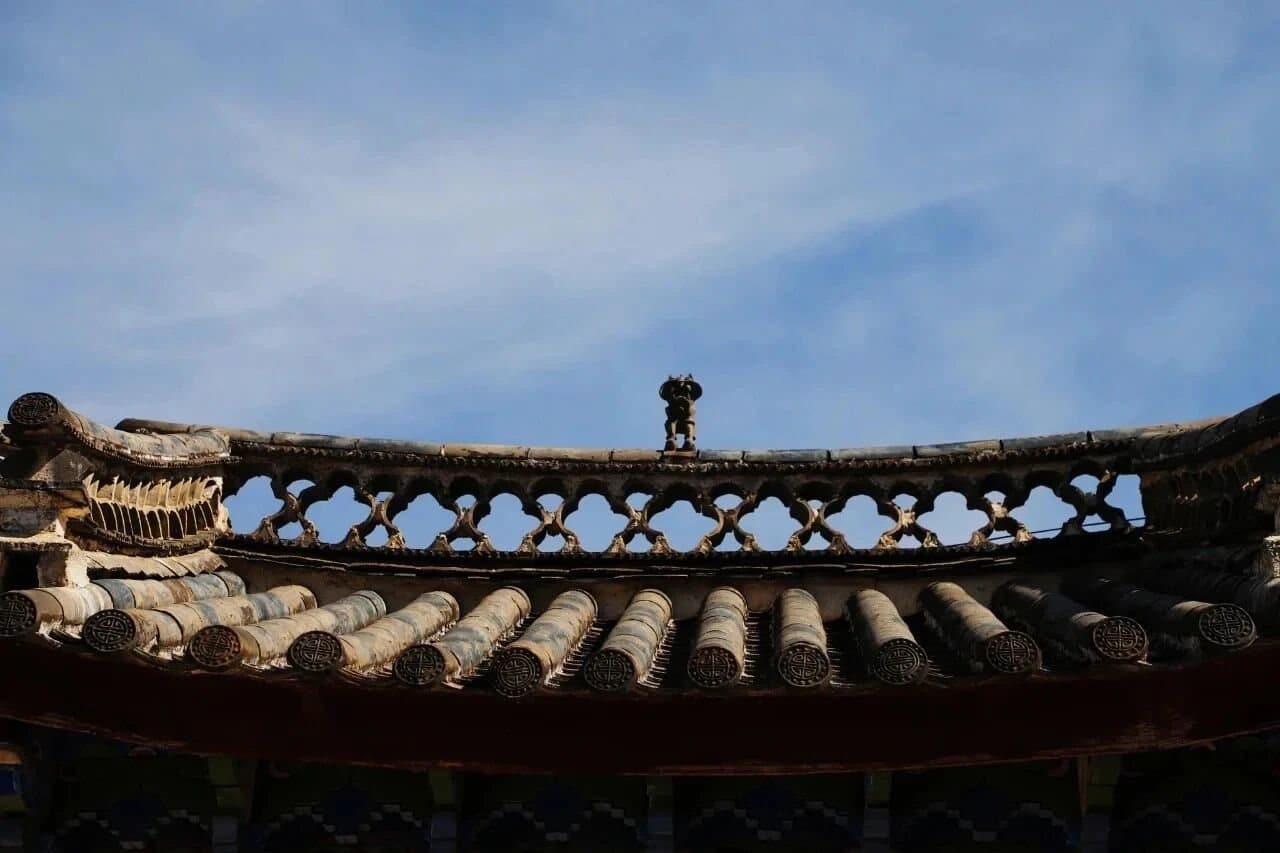
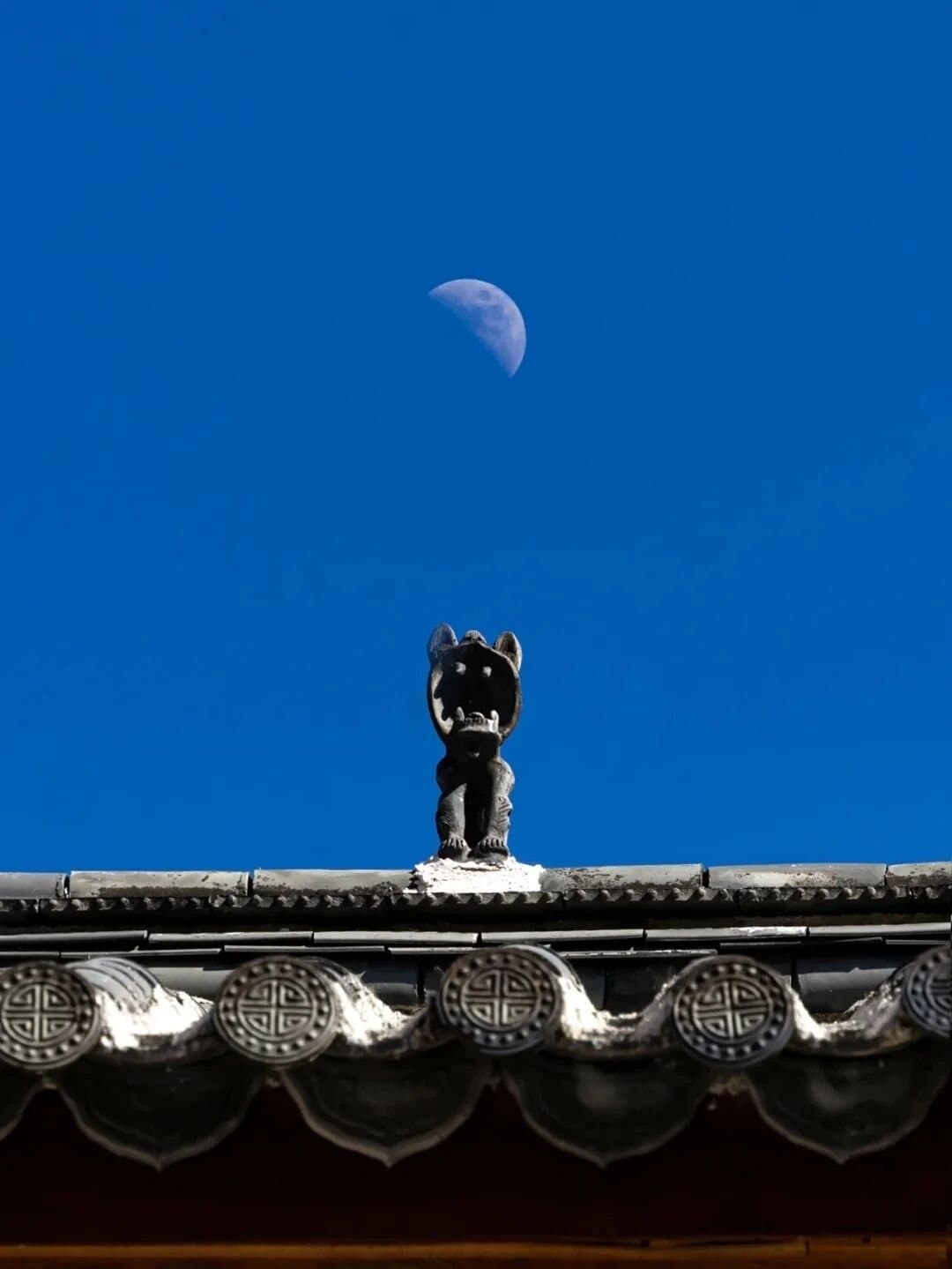
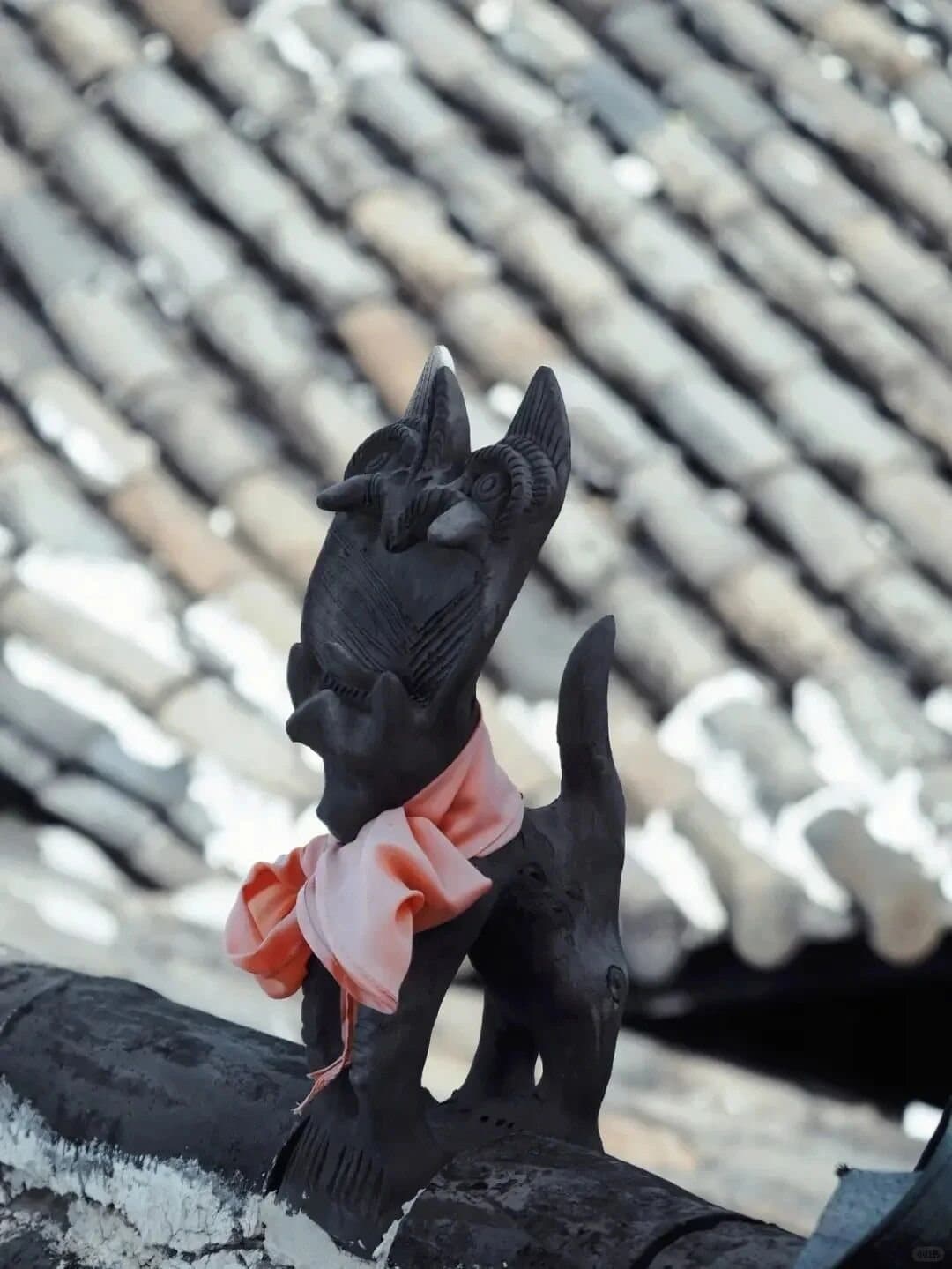
Perched quietly along the ridgelines of old houses, the tile cat is one of Yunnan’s most distinctive folk symbols. It is, quite literally, a cat that sits on roof tiles — but unlike ordinary cats, these never leap down and never roam the streets. For centuries, tile cats have stood watch above Yunnan homes, guarding the household from harm and becoming an enduring part of the province’s traditional architecture.
Though called a “cat,” the tile cat is often imagined with the spirit of a tiger. In Chinese folk belief, it borrows the tiger’s courage, power, and fearlessness, giving it the strength to protect a home and ward off evil. In this sense, the tile cat is more than decoration. It is a household guardian, a folk deity of the rooftop, and a quiet witness to Yunnan life.
A Folk Guardian on the Roof
In ancient China, the earliest protectors of the home were door gods, guardians believed to keep away evil spirits. Over time, these protective traditions evolved, and in Yunnan, the task of guarding the house took on a more local and imaginative form.
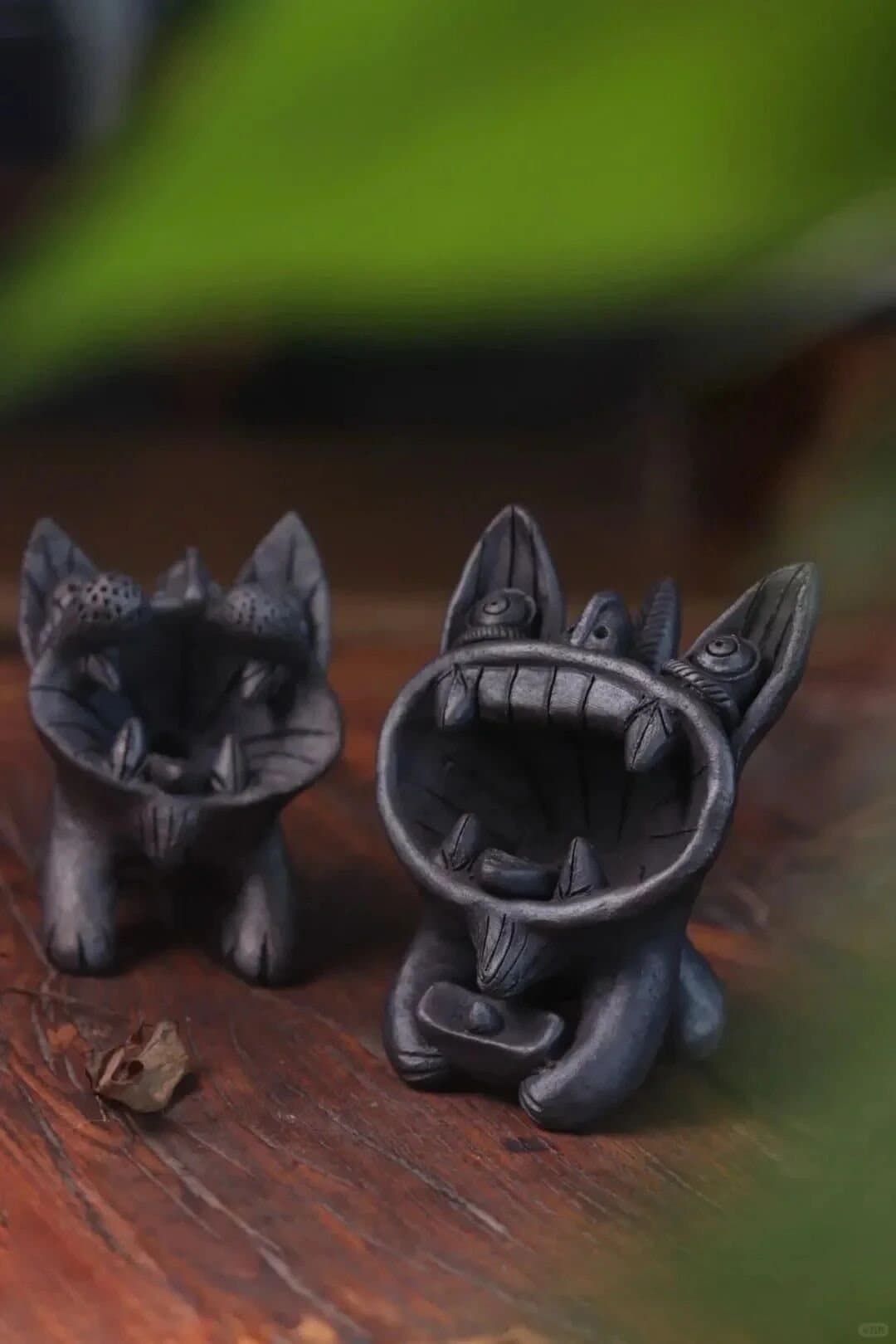
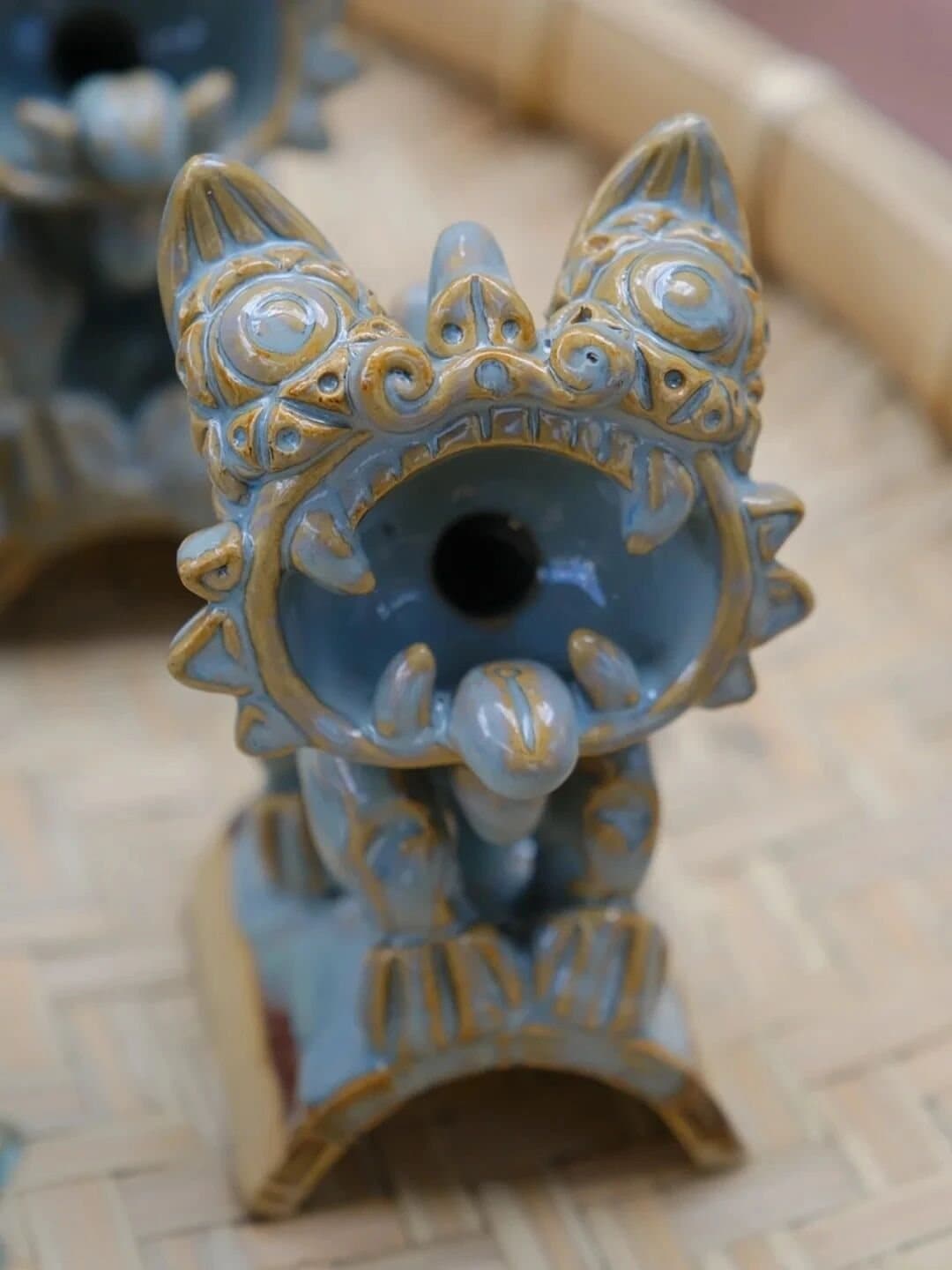
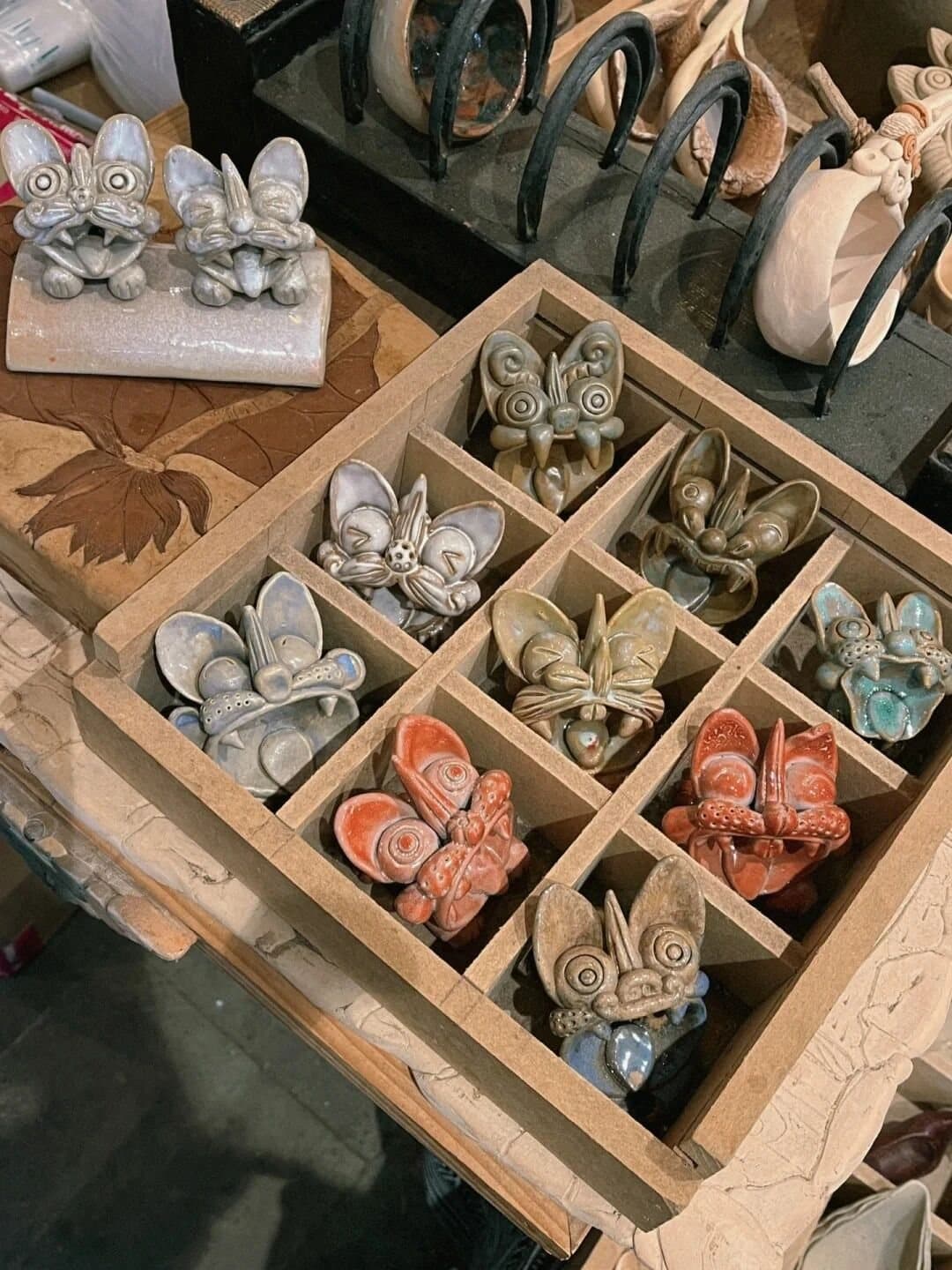
That form was the tile cat. With upright ears, wide staring eyes, sharp teeth, and sometimes even a painted 王 (king) character on its forehead, the tile cat appears fierce and alert. Some look playful, others look wild, and some seem almost half-cat, half-tiger. Raised high on the rooftop, they are believed to watch over the household, devouring wandering ghosts and protecting the family below.
But the tile cat does more than ward off evil. In Yunnan folk belief, it is also a bringer of good fortune. With its mouth wide open, it is said to “swallow in” wealth and blessings from the outside world — a symbol of prosperity, protection, and peace.
A Living Tradition Across Yunnan
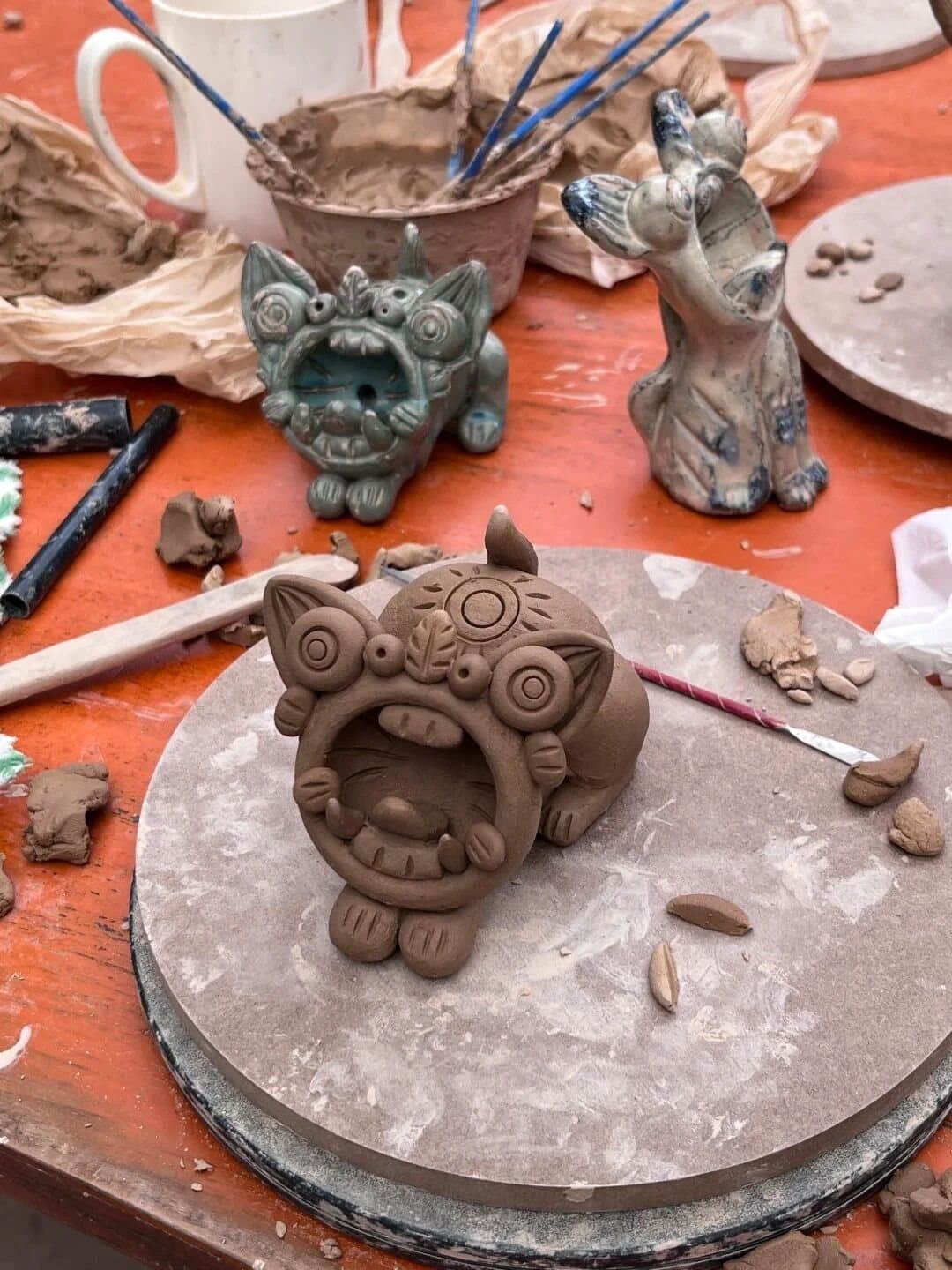
Tile cats have long been part of everyday life in Yunnan, especially in places such as Kunming, Chenggong, Yuxi, Qujing, Chuxiong, Dali, and Wenshan. Though they share the same protective purpose, their appearance changes from region to region.
In Chenggong, tile cats often have a childlike innocence. In Yuxi, they may resemble old sorcerers with beards. In Heqing, their forms can be highly exaggerated and theatrical. In Qujing, some tile cats even hold a bagua symbol between their front legs.
These regional variations make the tile cat especially fascinating. It is not one fixed design, but a living folk tradition shaped by local imagination, belief, and craftsmanship. Even today, many Yunnan people still respect the tile cat’s symbolic power. Traditionally, when “inviting” a tile cat to guard a house, people might perform a simple ritual to awaken its spirit — a process sometimes described as “opening the light,” or consecrating it so that it becomes spiritually alive.
How a Tile Cat Is Made
The craftsmanship behind a tile cat is as remarkable as its symbolism. From selecting the clay to shaping, carving, firing, and painting, each step requires patience and skill. The process begins with the careful selection of fine clay, usually high-quality local clay that is sifted and refined until it is smooth and free of impurities. Good clay gives the tile cat both its strength and its subtle texture.
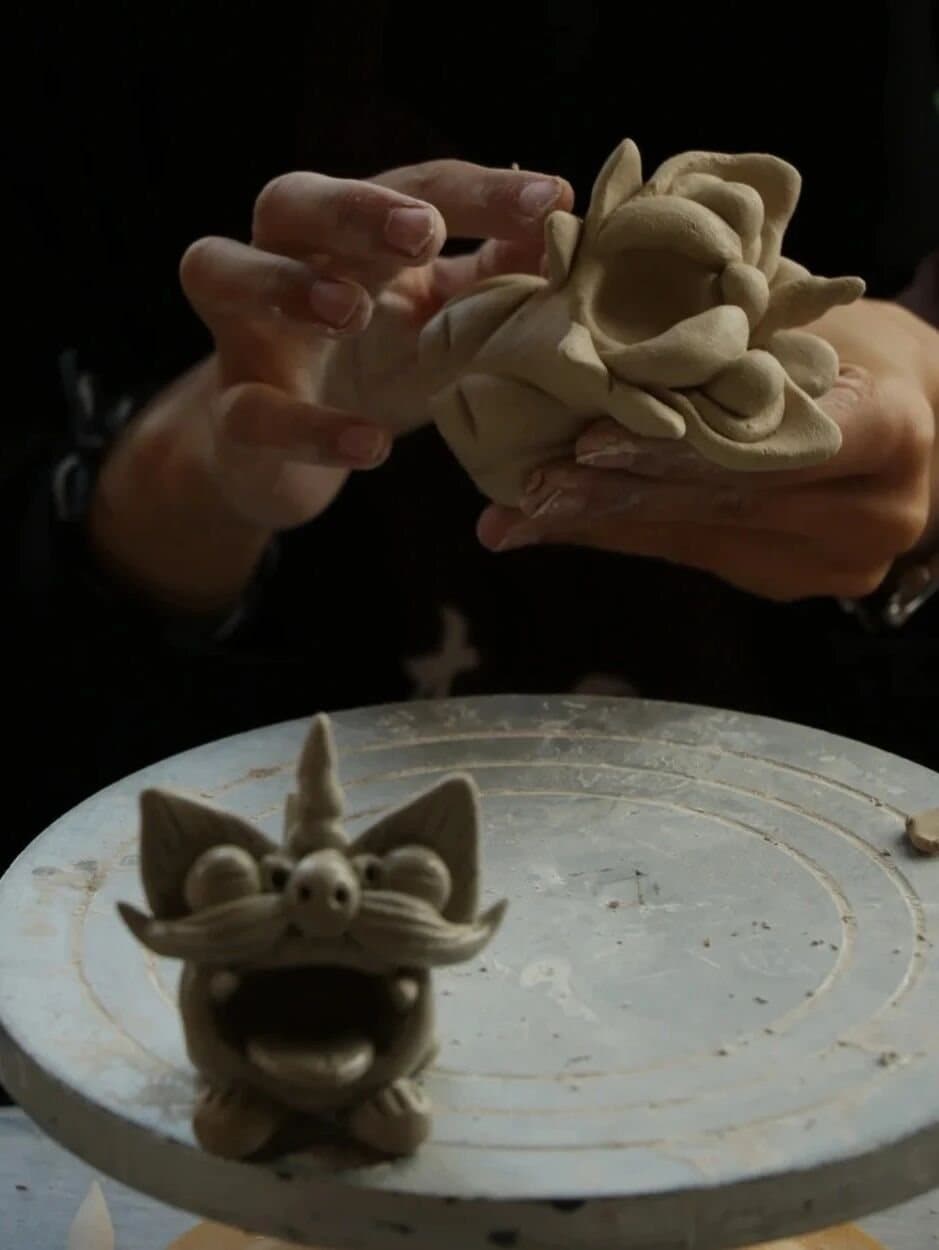
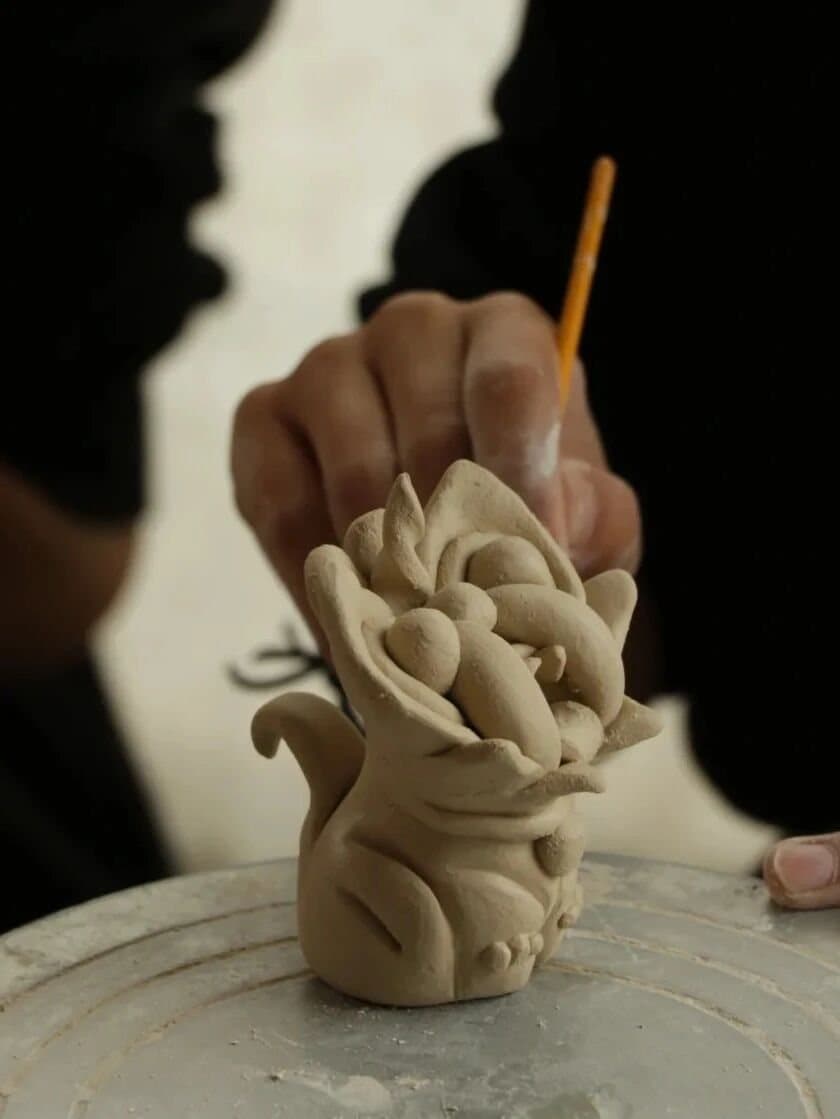
Next comes the shaping. Using only their hands and simple tools, artisans form the body, head, ears, legs, and mouth, carefully bringing out the expression and personality of each piece. This is where the tile cat truly begins to emerge: some look stern, some comic, some noble, some fierce.
After shaping, the piece must be fired in a kiln. The firing process is crucial, as the heat and timing determine whether the tile cat will be strong, durable, and able to withstand years of wind and rain. Finally comes painting. Traditional artisans often use mineral pigments or hand-applied color to decorate the surface, adding patterns, lines, and expressive details that make each tile cat unique. Some are simple and earthy, while others are bright and lively. No two tile cats are ever exactly the same.
The Bond Between the Artisan and the Tile Cat
There is something deeply moving about the relationship between the maker and the thing being made. A tile cat is not mass-produced in spirit, even when many are made. Each one passes through the hands of an artisan who shapes its body, adjusts its posture, carves its features, and waits anxiously for it to emerge from the kiln intact. In that process, the artisan gives more than labor — they give emotion, imagination, and hope.
The tile cat, in turn, becomes a vessel for that hope. It is entrusted to stand above a doorway, facing wind, rain, sunlight, and time, protecting the family below. It bears the marks of the maker’s hands, but it also begins a second life once it is placed on a roof, where it becomes part of the household’s story.
Over the years, tile cats have quietly witnessed the rhythms of life: births, marriages, festivals, harvests, farewells, and the slow turning of the seasons.
A Symbol at Risk of Disappearing
As old houses give way to concrete buildings and high-rise apartments, tile cats are gradually losing the roofs they once called home. In many places, they can now be found only in old towns, traditional courtyards, or the corners of historic villages. You often have to look up to spot them — a silhouette on a roof ridge, a faint expression weathered by rain, still keeping watch over the street below.
Their colors may fade. Their surfaces may crack. But their spirit remains. The tile cat reminds us of a world in which architecture was not only practical, but symbolic; in which homes were protected not only by walls, but by belief; and in which craftsmanship carried the emotional life of a community.
Why Tile Cats Still Matter
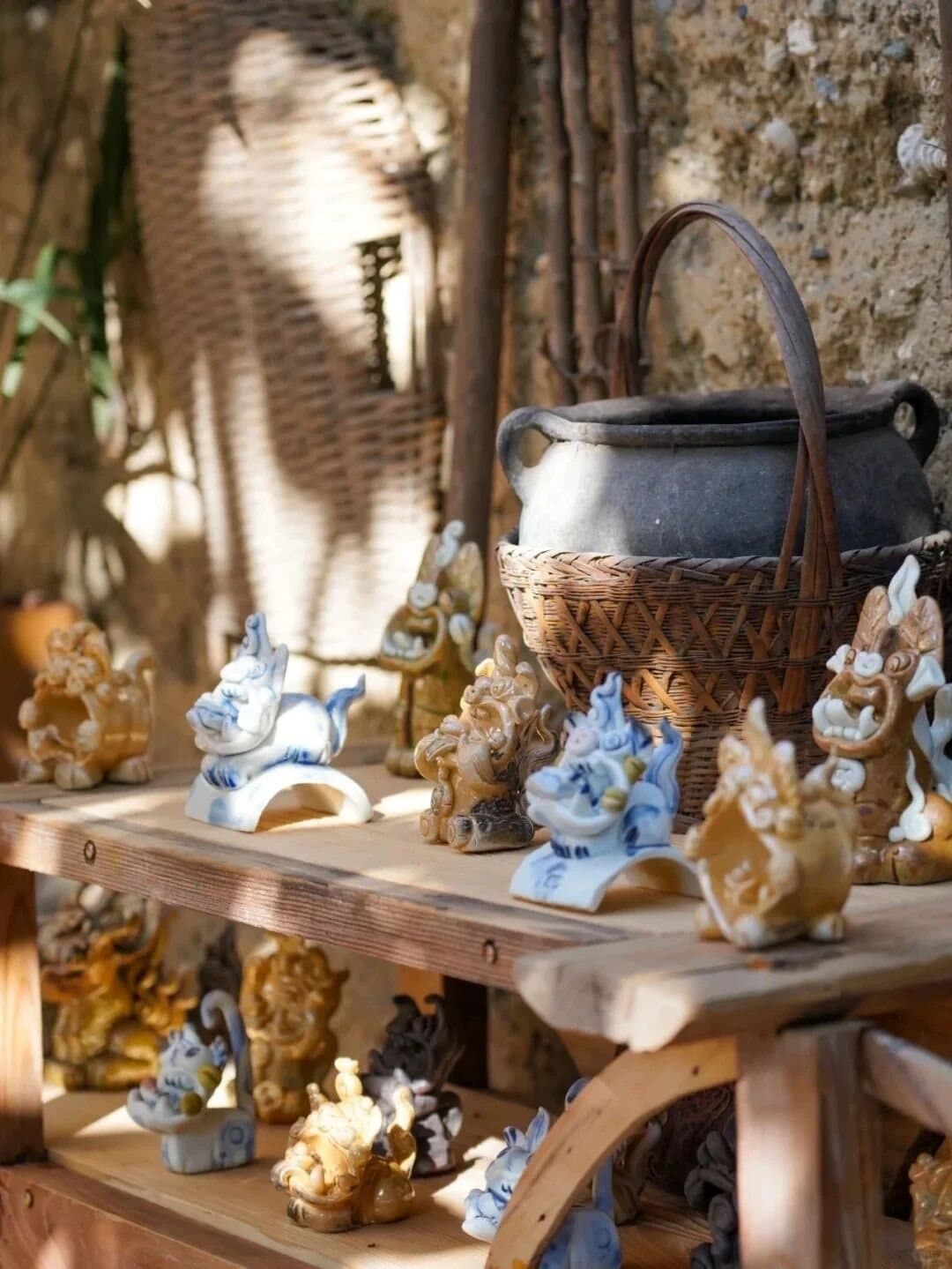
The tile cat is small, but it carries something large: a sense of continuity. It represents Yunnan’s folk imagination, its layered traditions, and the way everyday objects can hold extraordinary meaning. It is a guardian, an artwork, a handmade sculpture, and a cultural memory all at once.
More than anything, the tile cat reminds us that old traditions survive because someone chooses to keep them alive — the artisan who still shapes clay by hand, the family who still places one on the roof, the traveler who pauses, looks up, and asks what it means.
On the rooftops of Yunnan, these quiet guardians are still watching. They protect not only homes, but also the stories of the land beneath them.