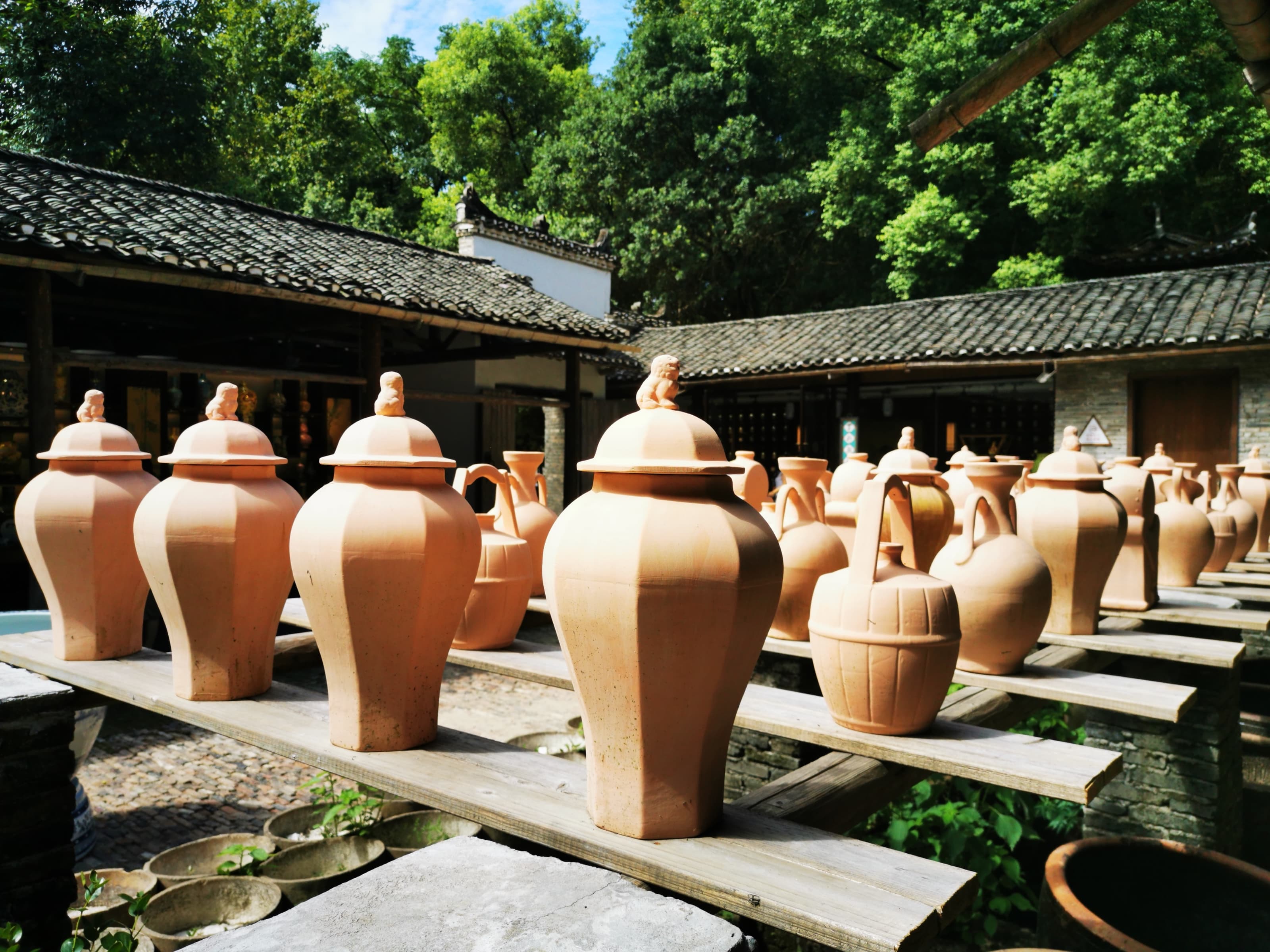
In the winter of 1979, workers digging a sewer in central Jingdezhen broke into a buried layer of porcelain. What emerged was not a collection of intact imperial treasures. It was an enormous mass of fragments — pieces of bowls, dishes, ritual objects and experimental wares that had been broken and buried centuries earlier.
Over the following decades, more than 6,000 boxes of fragments were recovered from the area. Among them, researchers found over 60 pieces that could be reassembled into six duck-shaped incense burners made during the reign of the Ming emperor Chenghua.
The burners had not survived because they were carefully protected. They survived because they had been rejected. Researchers believe that imperfect pieces made for the imperial court were deliberately smashed so they could not enter ordinary circulation. The refuse beneath the street had become an accidental royal archive: a record of colours, shapes and experiments that the palace itself had discarded.
A Town Named by an Emperor
Jingdezhen did not always carry its present name. During the Jingde reign of the Northern Song emperor Zhenzong, between 1004 and 1007, the town was renamed after the emperor’s reign title. The name linked the place permanently with the porcelain made there — but a name alone did not create the city’s success.
Jingdezhen possessed something much more difficult to reproduce: an entire landscape organised around porcelain. Nearby mountains supplied porcelain stone. Kaolin — the pale clay whose international name comes from Gaoling, a place near Jingdezhen — made porcelain bodies stronger and more suitable for high-temperature firing. Forests supplied fuel, while waterways moved raw materials into town and finished wares outward.
The familiar white cup on a table therefore began long before a potter touched it. It began inside a mountain.
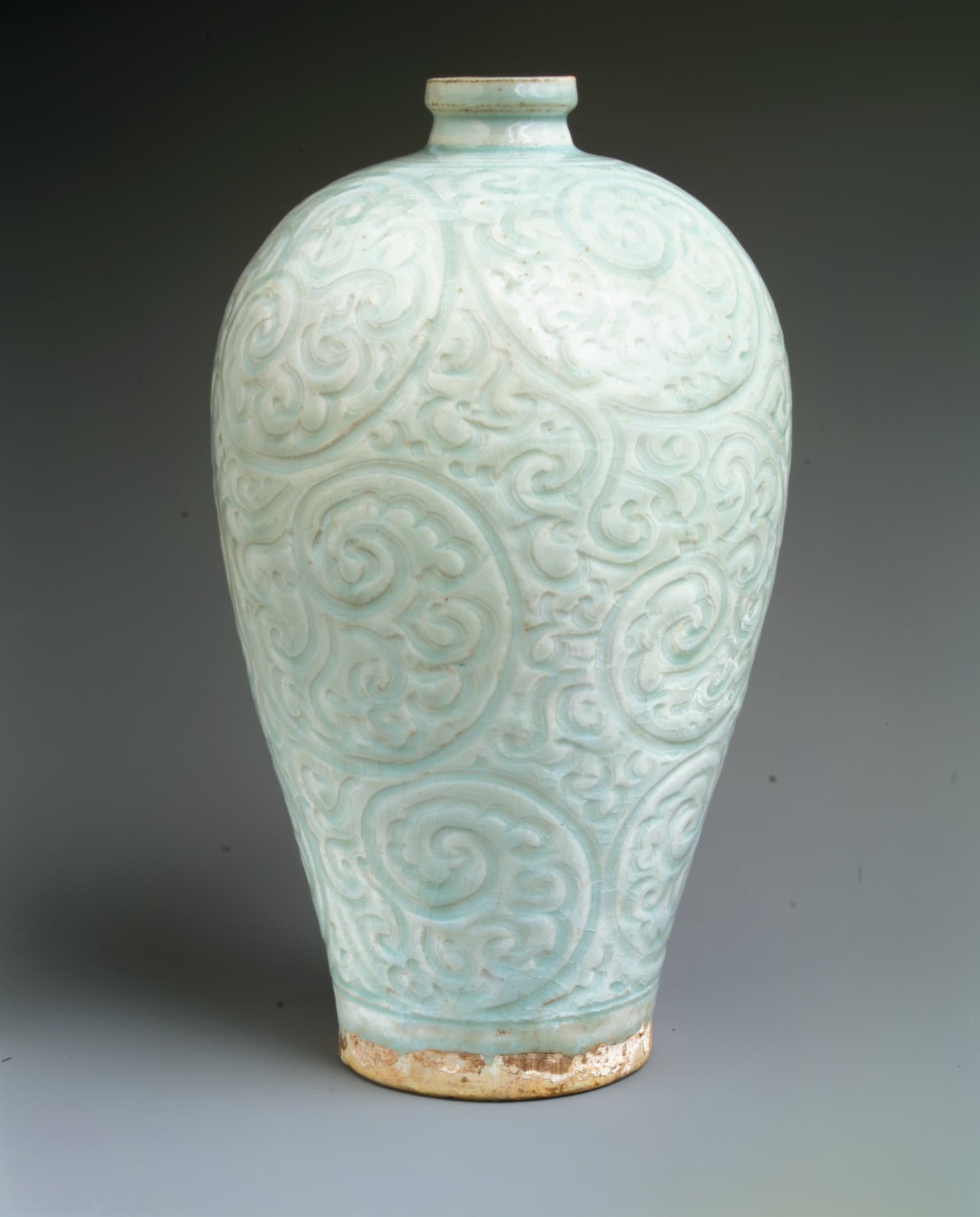
Image: Bottle with vegetal scrolls, late 13th century, Jingdezhen qingbai ware. The Metropolitan Museum of Art, Public Domain.
Seventy-Two Hands
Traditional accounts of Jingdezhen porcelain use the expression guoshou qishier — “passing through seventy-two hands”. It should not be read as a rigid claim that every cup was handled by exactly 72 people or completed in exactly 72 fixed steps. It is a way of describing how radically specialised the work became.
Clay had to be mined, crushed, washed and refined. Bodies were formed and trimmed. Other workers prepared pigments, drew outlines, added washes of colour, applied glazes, packed kilns, controlled firing and sorted the finished pieces. Inside those stages were still finer distinctions. One specialist might paint outlines while another filled them with colour.
No individual worker needed to master the entire chain. Skill accumulated across workshops, neighbourhoods and generations. The result was both precision and scale: thousands of hands could reproduce demanding forms while still leaving room for technical experiment.
The Blue That Arrived From Elsewhere
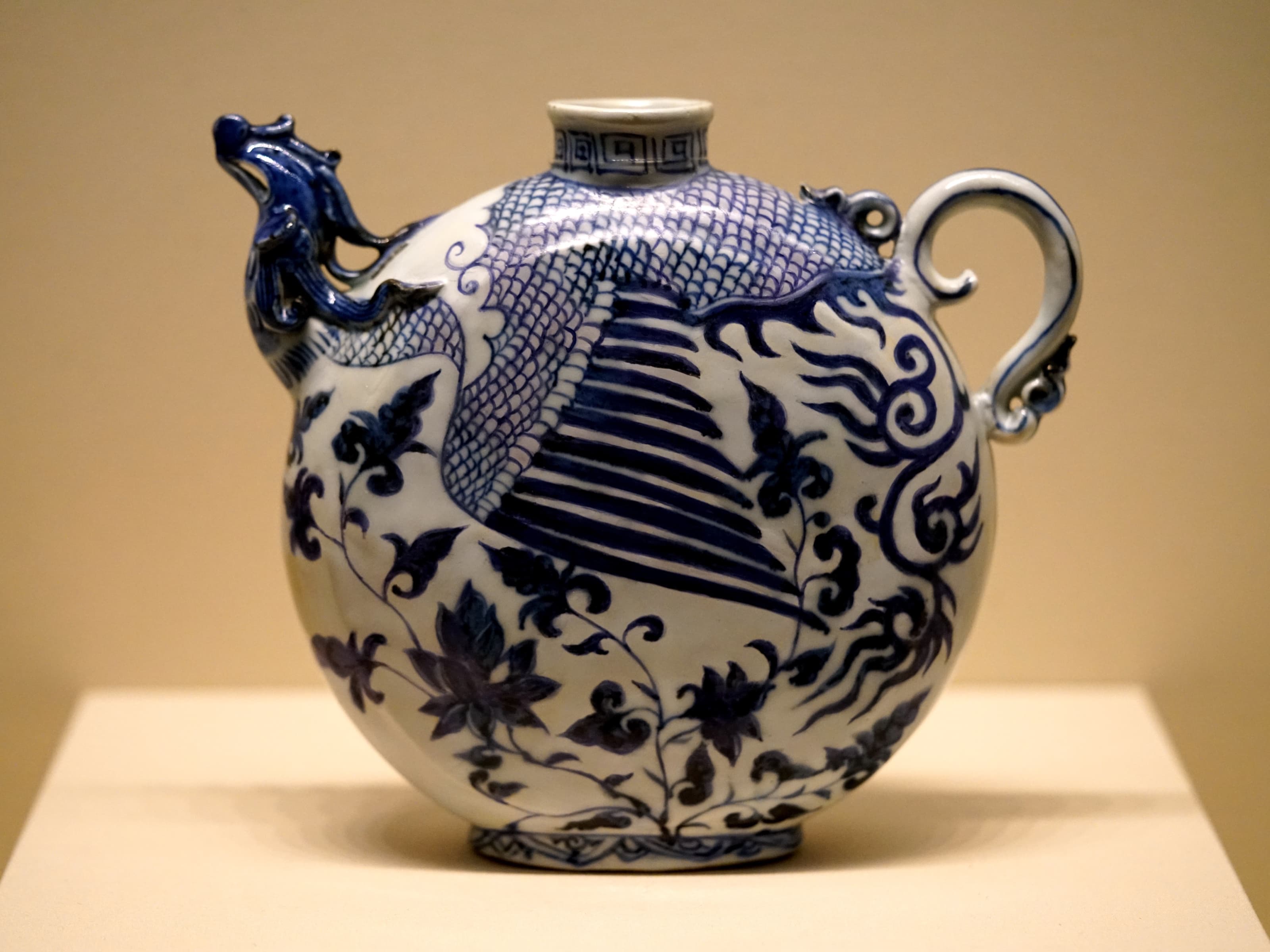
Jingdezhen’s most famous colour tells a story that reaches far beyond China. Blue-and-white porcelain is painted with cobalt pigment beneath a transparent glaze. Some cobalt was sourced in China, including from Yunnan; some arrived through trade with the Islamic world. During the Yuan dynasty, Jingdezhen potters combined the pigment with improved porcelain bodies and high-temperature firing.
The result was not simply a Chinese object exported abroad. It was a product shaped by exchange. Vessels made in Jingdezhen travelled to Japan, Korea, Southeast Asia, the Middle East and Africa. Foreign forms and decorative tastes returned in the opposite direction, influencing what Jingdezhen workshops produced.
Globalisation Left Its Mistakes in the Glaze
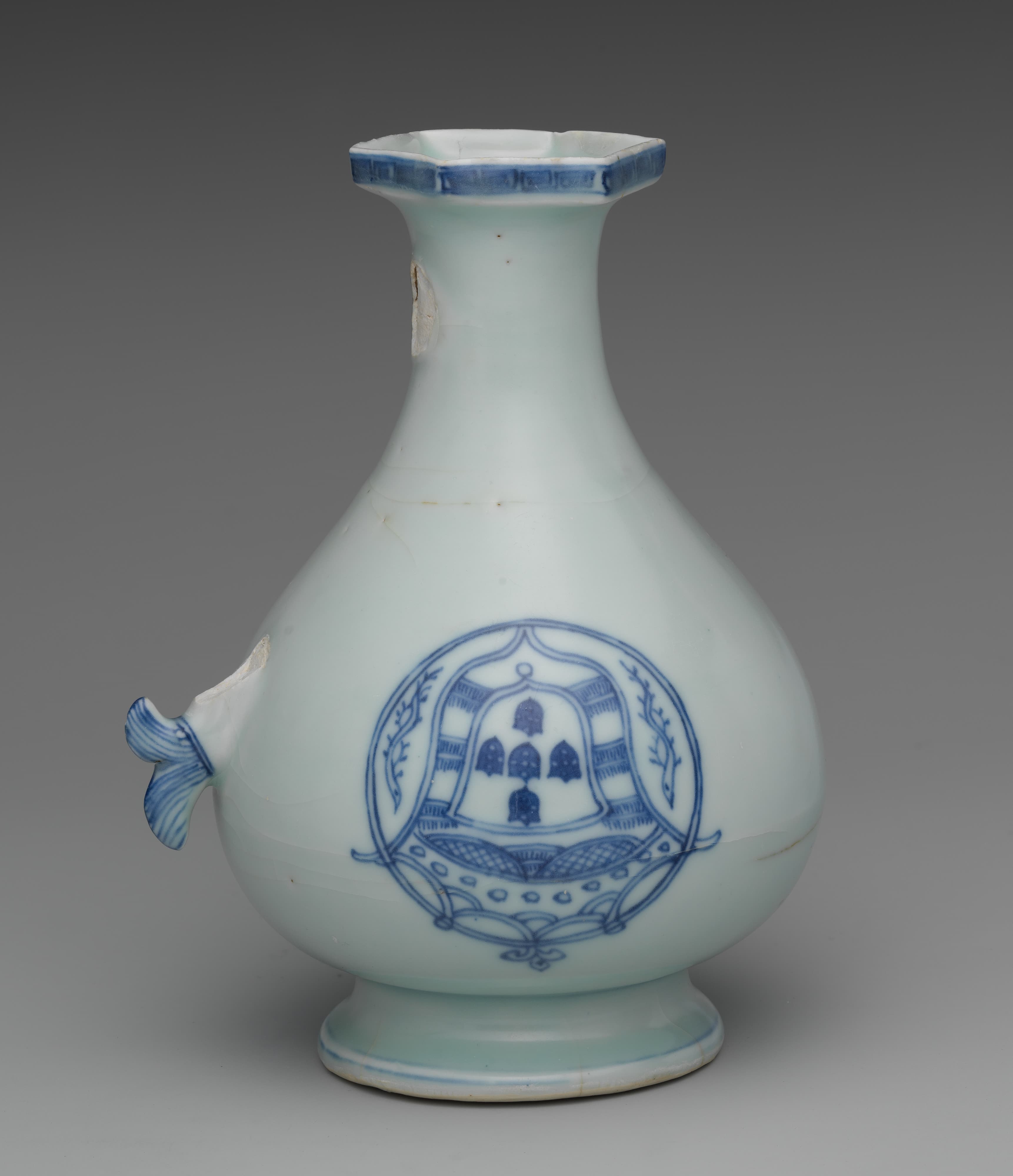
One object in the Metropolitan Museum of Art makes this exchange unusually visible. Made in Jingdezhen around 1520–1540 for the Portuguese market, the jug carries the Portuguese royal arms — but the arms were painted upside down.
The mistake is more revealing than embarrassing. Somewhere between a European commission, a transmitted drawing and a Chinese workshop, information changed shape. The vessel itself drew on an Islamic metalwork form, was decorated in China and was intended for a European buyer. Three visual traditions met in one object and did not completely understand one another.
Image: Jug with Portuguese arms, ca. 1520–1540. The Metropolitan Museum of Art, Public Domain.
Objects Built to Travel — and Remember
Chinese porcelain also travelled in a surprisingly practical position aboard European ships. Because it resisted water and could be packed densely, ceramics were sometimes placed low in the vessel as ballast, with valuable tea stored above. Objects now displayed alone in museum cases once crossed oceans stacked closely together in the dark.
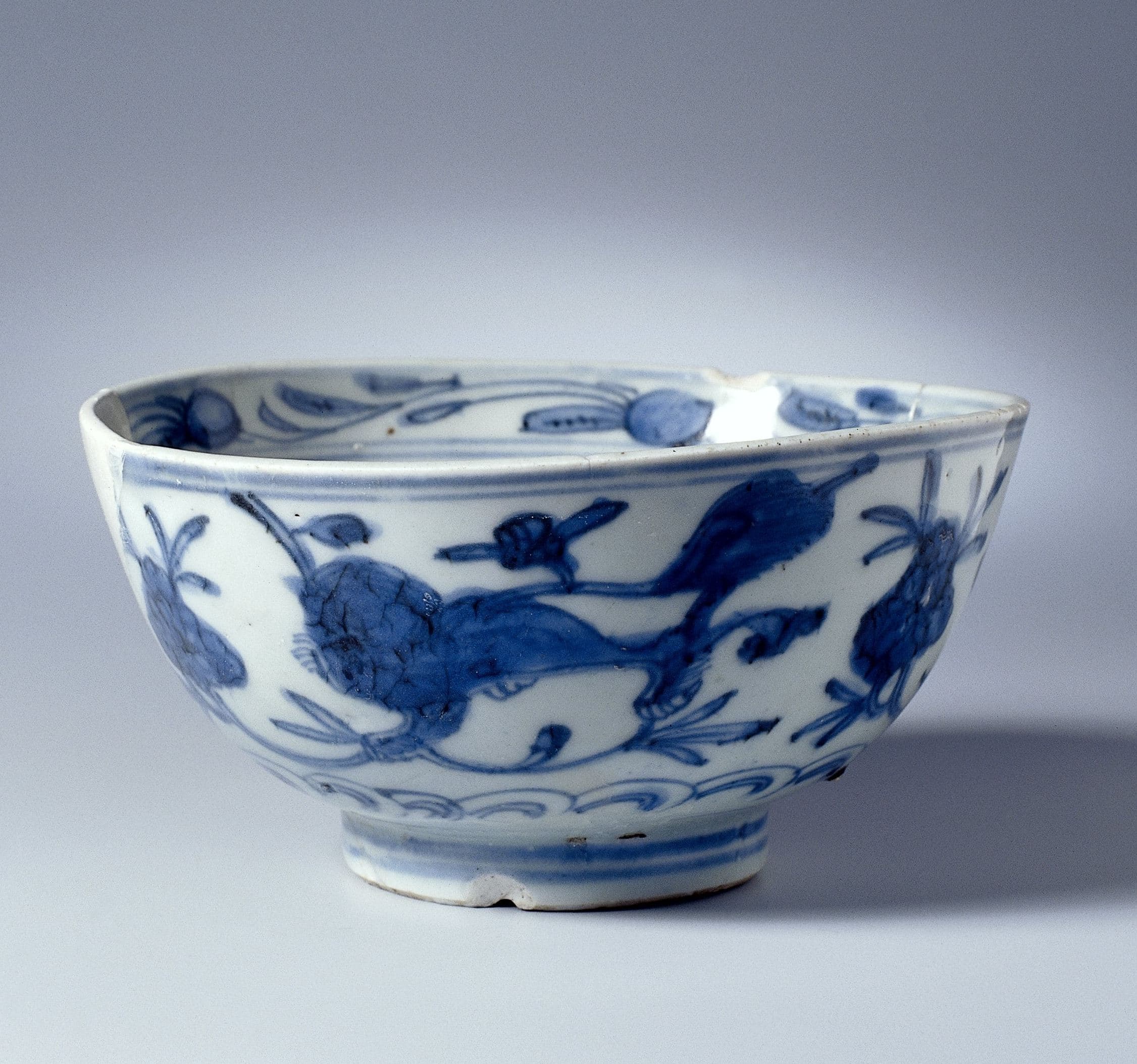
Shipwreck finds give that journey a physical record. A blue-and-white bowl recovered from the Dutch ship Witte Leeuw, which sank in 1613, survived where people and cargo did not. The chips and marine history around such objects remind us that “export porcelain” was not an abstract art-historical category. It was freight. It had weight. It occupied real space on dangerous voyages.
A Gathering Preserved in Porcelain
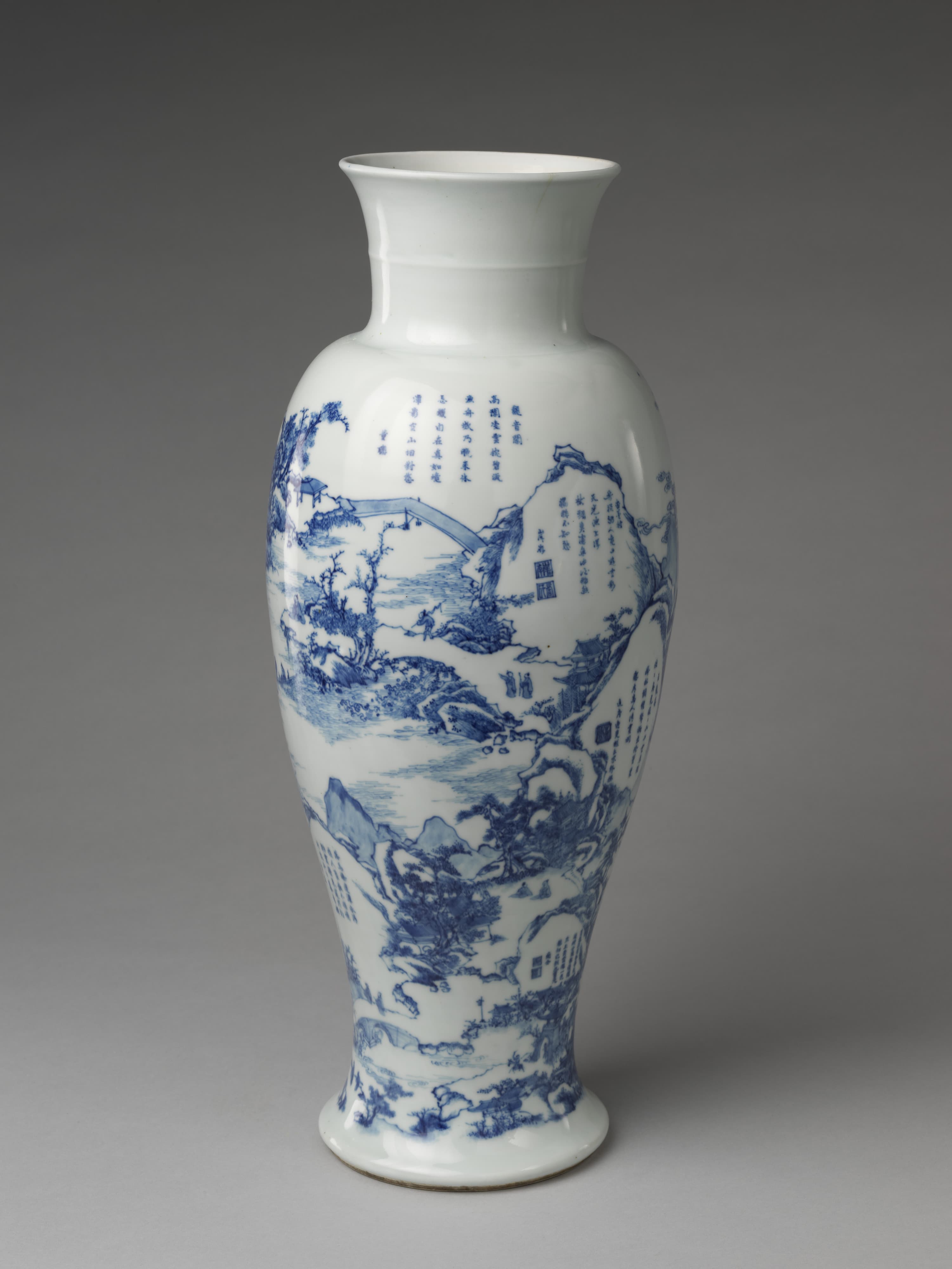
Porcelain could carry more than merchandise. A Jingdezhen vase made in the 1690s preserves a literary gathering between a local official and two visiting scholars. Its surface combines local scenery with an essay and ten poems composed for the occasion.
The vessel turns a private meeting into a durable object. A conversation that would otherwise have disappeared was painted onto porcelain, fired and carried into the future. Jingdezhen did not only manufacture tableware and court objects; at times, it made memory portable.
Image: Vase with poems in a panoramic landscape, ca. 1690s. The Metropolitan Museum of Art, Open Access, Public Domain.
What Perfection Tried to Erase
Imperial porcelain was expected to appear effortless. Its symmetry, glaze and painted surface were meant to conceal the labour — and the failures — that created it. The fragments discovered beneath Jingdezhen reverse that logic.
A distorted rim, an uneven colour or an unsuccessful firing might disqualify a vessel from court use. Once broken and buried, however, the rejected object preserved evidence that a perfect example could not: abandoned designs, transitional colours, kiln accidents and experiments that never entered official circulation.
This is why the duck-shaped incense burners reconstructed from the 1979 discovery matter. They are not merely restored antiques. They show how archaeological fragments can recover a chapter of ceramic history that official collections had almost erased.
A Tradition That Refuses to Stand Still
Jingdezhen is often described as an ancient porcelain capital, but treating it only as a historic city misses the point. Its deeper tradition has never been repetition alone. It has been the ability to reorganise knowledge whenever materials, markets and tastes change.
The former state-owned Universe Porcelain Factory, established in 1958, offers one modern example. Beginning in 2013, the industrial complex was transformed into Taoxichuan, a district of studios, workshops and cultural spaces used by young makers and international artists. The buildings changed purpose, but the underlying system remains recognisable: people with different skills working close enough to exchange materials, techniques and ideas.
In 2026, the Jingdezhen Porcelain Industry Heritage Sites were inscribed on UNESCO’s World Heritage List. The recognition honours a manufacturing system that developed over centuries, but it should not freeze Jingdezhen in the past. The city matters because porcelain is still being made, questioned and reinvented there.
Pick up a white cup and it appears to be a solitary object: quiet, smooth and complete. Look closer, and it contains a mountain, a river, imported cobalt, anonymous specialists, imperial standards, overseas merchants, failed firings and centuries of accumulated knowledge.
The final surface is calm. Its history is not.